In the realm of industrial automation and process control, precision measurement is paramount. Among the leaders in this field stands Sick AG, a German company renowned for its high-quality sensor solutions. Sick laser sensors, in particular, represent a pinnacle of non-contact measurement technology, offering unparalleled accuracy, reliability, and versatility across countless applications. This article delves into the core technology, key application areas, and essential considerations for selecting the right Sick laser sensor for your needs.
At the heart of Sick's laser sensor technology lies the principle of optical triangulation or time-of-flight measurement, depending on the model and intended use. Laser triangulation sensors project a visible or invisible laser spot onto a target object. The reflected light is captured by a receiving element at a specific angle. By calculating the position of this reflected spot on the receiver, the sensor precisely determines the distance to the object. This method is ideal for high-precision tasks at short to medium ranges, such as measuring tiny gaps, checking part presence, or profiling surfaces. For longer ranges or challenging environmental conditions, Sick utilizes time-of-flight (ToF) technology. Here, the sensor measures the time it takes for a laser pulse to travel to the target and back, directly calculating the distance. This technology excels in applications like bulk level monitoring in silos or position detection on large conveyor systems.
The application spectrum for Sick laser sensors is remarkably broad. In automotive manufacturing, they ensure precise gap and flush measurement between body panels, guaranteeing quality and aesthetics. On packaging lines, they accurately detect label positions, check fill levels in bottles, and control the height of stacked products. Within the electronics industry, these sensors perform critical tasks such as measuring component coplanarity on PCBs or verifying the precise placement of microchips. Logistics and material handling benefit immensely from Sick's laser sensors for palletizing, dimensioning parcels, and guiding automated guided vehicles (AGVs) through warehouses with millimeter precision. Furthermore, in harsh environments like steel mills or foundries, ruggedized Sick laser sensors reliably monitor roll diameters, slab positions, or molten metal levels, where other technologies might fail.
Selecting the appropriate Sick laser sensor requires careful analysis of several parameters. First, define the measurement task: Is it distance measurement, height profiling, edge detection, or simply presence checking? Next, consider the required measuring range and resolution. A sensor for micron-level precision in a clean lab environment differs vastly from one monitoring a 50-meter silo. The target object's properties—its color, material, surface texture (shiny, matte, transparent)—significantly influence the sensor's performance and may necessitate models with specialized background suppression or diffuse reflection technology. Environmental factors are crucial; exposure to dust, moisture, vibration, or extreme temperatures demands sensors with corresponding IP ratings and robust housings. Finally, the output interface must align with your control system, whether it's analog voltage/current, discrete switching signals, or digital protocols like IO-Link or PROFINET.
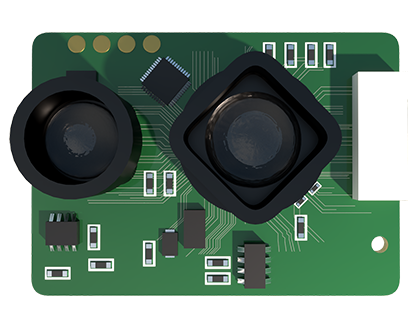
Sick offers a comprehensive portfolio to meet these diverse needs. Series like the OD (for outdoor and challenging conditions), OLM (for long-range time-of-flight), and DT (for high-precision triangulation) are just a few examples. Many modern Sick laser sensors come equipped with intelligent features such as integrated evaluation electronics, programmable switching windows, and teach-in functions via buttons or software, simplifying setup and integration.
In conclusion, Sick laser sensors are more than just measurement devices; they are enablers of efficiency, quality, and safety in modern industry. Their advanced optical engineering, combined with robust construction and smart functionalities, provides solutions for the most demanding tasks. By thoroughly understanding the measurement principle, clearly defining the application requirements, and leveraging Sick's extensive product expertise, engineers and system integrators can harness this technology to optimize processes, reduce waste, and drive innovation in automation. As Industry 4.0 progresses, the role of precise, reliable, and connected sensing, as exemplified by Sick laser sensors, will only become more critical.