In the rapidly evolving field of industrial automation and electrical engineering, proximity sensors are indispensable components. Their primary function is to detect the presence or absence of an object without physical contact, enabling precise control, safety, and efficiency in countless applications. However, the global market presents a complex landscape of classification standards, which can be challenging for engineers to navigate. This article provides a detailed overview of the major international and regional standards governing proximity sensor classification, focusing on technical parameters, performance criteria, and application domains.
The International Electrotechnical Commission (IEC) sets the foundational global benchmarks. The key standard is IEC 60947-5-2: Low-voltage switchgear and controlgear - Part 5-2: Control circuit devices and switching elements - Proximity switches. This standard is paramount. It classifies proximity sensors primarily by their sensing technology and output characteristics. The major technological classifications include Inductive, Capacitive, Ultrasonic, and Photoelectric (often categorized separately but functionally similar). For inductive sensors, a critical classification is based on the sensing distance, termed the "rated operating distance (Sn)." The standard defines precise testing conditions (e.g., a standard target made of mild steel for inductive types) to ensure consistent performance measurement across manufacturers. Furthermore, IEC 60947-5-2 rigorously defines output types (e.g., PNP/NPN, analog, IO-Link), protection classes (IP ratings), and electrical characteristics like switching frequency and hysteresis. Compliance with this standard is often seen as a baseline for international market entry.
In Europe, the CE marking is mandatory, indicating conformity with health, safety, and environmental protection standards for products sold within the European Economic Area. For proximity sensors, this involves demonstrating compliance with several European Norm (EN) standards, which are often harmonized versions of IEC standards. Key among these is EN 60947-5-2, which is identical to the IEC standard. Additionally, electromagnetic compatibility is governed by EN 61000-6-2 (Immunity for industrial environments) and EN 61000-6-4 (Emission standards for industrial environments). These standards classify sensors based on their resilience to and emission of electromagnetic interference, a crucial factor in electrically noisy industrial settings.
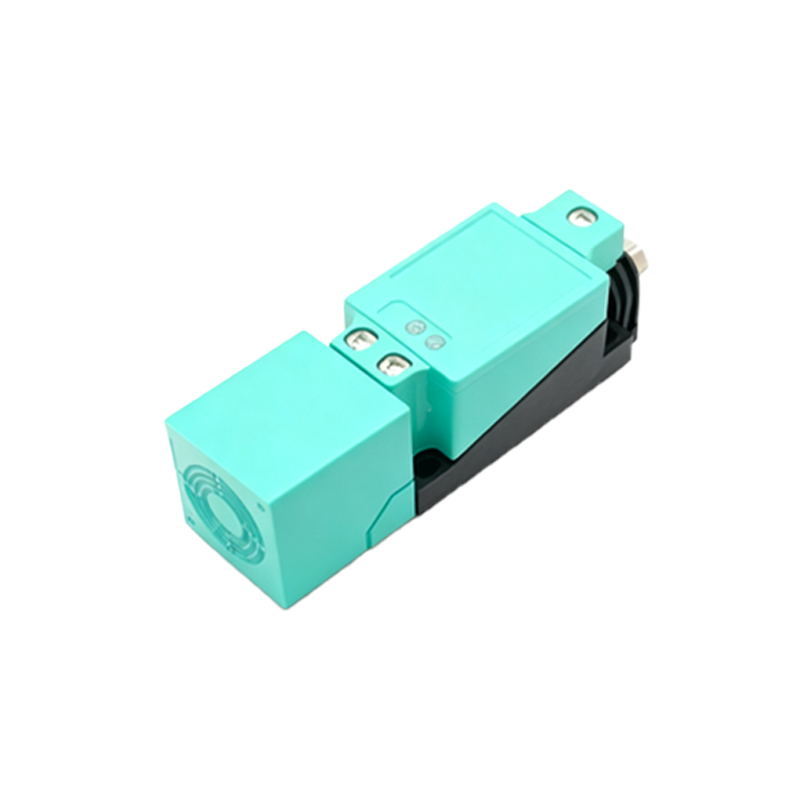
North America follows a distinct but parallel path. Underwriters Laboratories (UL) and the Canadian Standards Association (CSA) provide vital safety certifications. The relevant standard is often UL 508 / CSA C22.2 No. 14 for industrial control equipment, which encompasses proximity switches. While the technical parameters are similar to IEC standards, the approval process and testing protocols differ. For instance, North American classifications place significant emphasis on specific hazardous location certifications (like Class I, Division 2 for potentially explosive atmospheres) as per the National Electrical Code (NEC) and standards from the National Fire Protection Association (NFPA). Furthermore, the NEMA (National Electrical Manufacturers Association) ratings, such as NEMA 4X for corrosion and water resistance, are widely used to classify enclosure types, which is an integral part of sensor specification in this region.
Japan employs its own robust set of standards, primarily managed by the Japanese Industrial Standards Committee (JISC). The key standard is JIS C 8201-5-2, which aligns closely with IEC 60947-5-2 but may include specific national deviations or supplementary tests. Additionally, the Japanese Electrical Safety & Environment Technology Laboratories (JET) and Product Safety Electrical Appliance & Material (PSE) certifications are critical for market access. Japanese classifications sometimes feature unique performance metrics or form-factor specifications tailored to high-density manufacturing environments common in the country.
Beyond these geographical standards, application-specific classifications are equally important. For use in explosive atmospheres, the IECEx system (based on IEC 60079 series) and the European ATEX directive (2014/34/EU) provide a detailed classification. Sensors are classified by Equipment Groups (I for mining, II for surface industries), Equipment Categories (1, 2, 3 indicating level of protection), and Types of Protection (e.g., "Ex i" intrinsic safety, "Ex d" flameproof enclosure). This forms a complete taxonomy for hazardous area equipment.
In practice, a high-quality industrial proximity sensor today will often carry multiple certifications—IEC, UL, CE, and possibly ATEX/IECEx—reflecting its design for a global audience. Engineers must carefully cross-reference these standards when selecting a sensor. Key classification parameters to compare include: Sensing Technology, Rated Operating Distance, Repeat Accuracy, Output Configuration, Supply Voltage Range, Housing Material, Protection Class (IP & NEMA), Temperature Range, and specific compliance marks for target markets.
Understanding this mosaic of standards is not merely an administrative task;