Laser distance sensors represent a pivotal technology in the realm of industrial automation and precision measurement. Operating on the principle of time-of-flight (ToF), phase-shift, or triangulation, these devices emit a focused laser beam towards a target and calculate the distance by analyzing the reflected light. The core advantage lies in their non-contact nature, enabling measurements of objects that are fragile, hot, moving, or otherwise inaccessible to physical probes. Modern iterations offer remarkable accuracy, often down to the sub-millimeter range, with measurement ranges extending from a few centimeters to several hundred meters, depending on the model and technology employed.
The industrial applications are vast and transformative. In robotics, laser distance sensors are integral for navigation, obstacle avoidance, and precise positioning of robotic arms, particularly in automated guided vehicles (AGVs) and collaborative robots (cobots). The manufacturing sector relies heavily on them for dimensional control, thickness measurement, and profile scanning in continuous production lines, such as in steel, paper, and glass manufacturing. Warehousing and logistics utilize these sensors for palletizing, inventory management, and level detection in silos, significantly enhancing operational efficiency and safety.
Furthermore, the construction and surveying industries have been revolutionized by laser distance meters and scanners, enabling rapid, accurate measurements of distances, areas, and volumes. In the automotive sector, they are used for assembly verification, gap and flush measurement, and as part of advanced driver-assistance systems (ADAS). The technology also finds critical roles in aerospace for alignment tasks and in agriculture for monitoring crop growth and guiding machinery.

Recent technological advancements have focused on enhancing performance and integration. The development of Class 1 laser products ensures eye safety for widespread use. Improvements in signal processing algorithms allow for reliable operation in challenging environments with varying surface colors, textures, and ambient light conditions. The miniaturization of components has led to more compact and robust sensor designs suitable for tight spaces. Additionally, the integration of industrial communication protocols like IO-Link, PROFINET, and EtherNet/IP facilitates seamless data exchange with PLCs and higher-level control systems, paving the way for Industry 4.0 and smart factory applications.
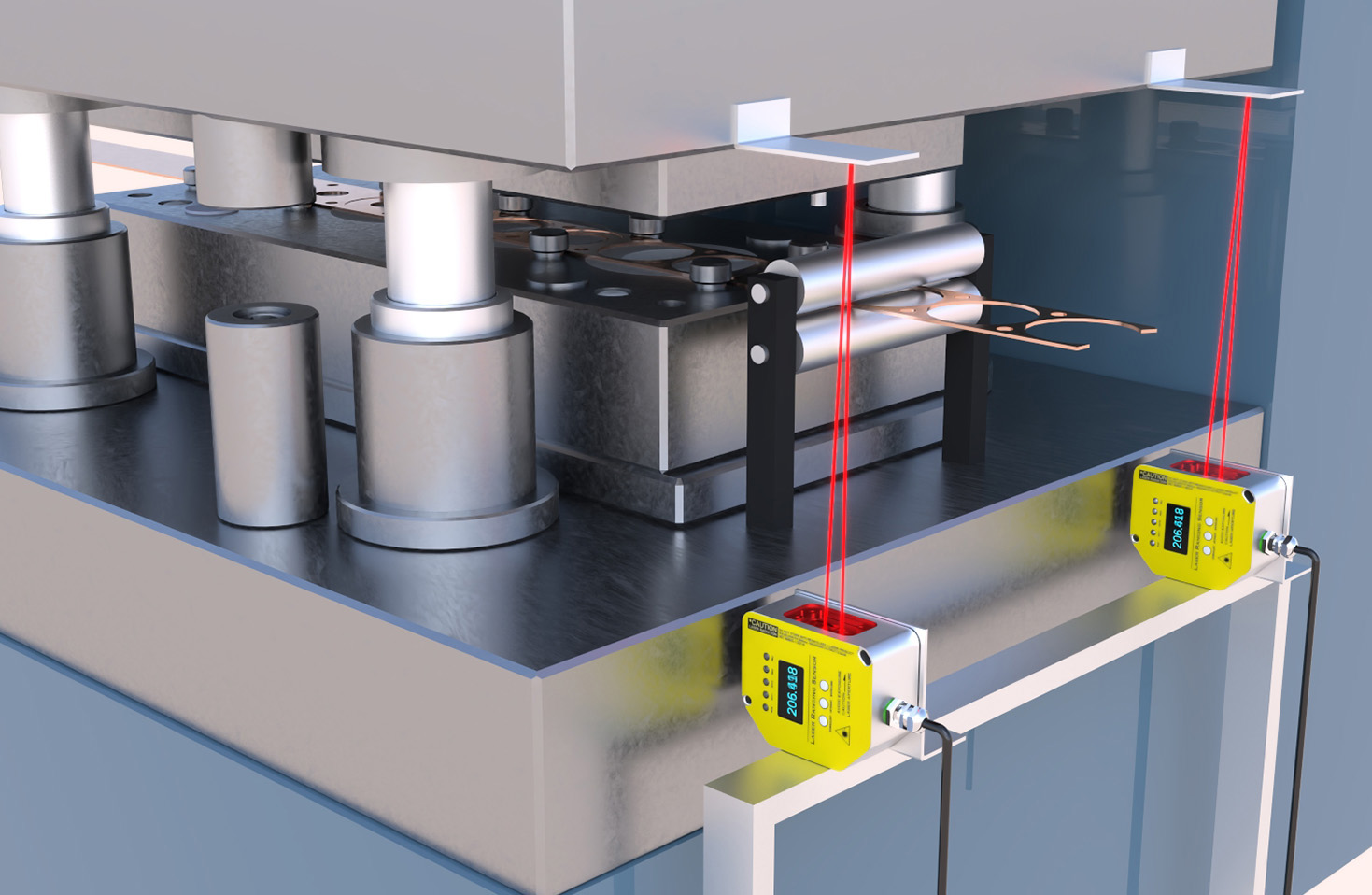
When selecting a laser distance sensor, engineers must consider several key parameters: the required measuring range, resolution, and accuracy; the response time or measurement frequency; the properties of the target surface (reflectivity, color, material); and the environmental conditions (temperature, dust, humidity). The choice between a ToF sensor for longer ranges and a triangulation sensor for higher precision at shorter distances is a fundamental decision.
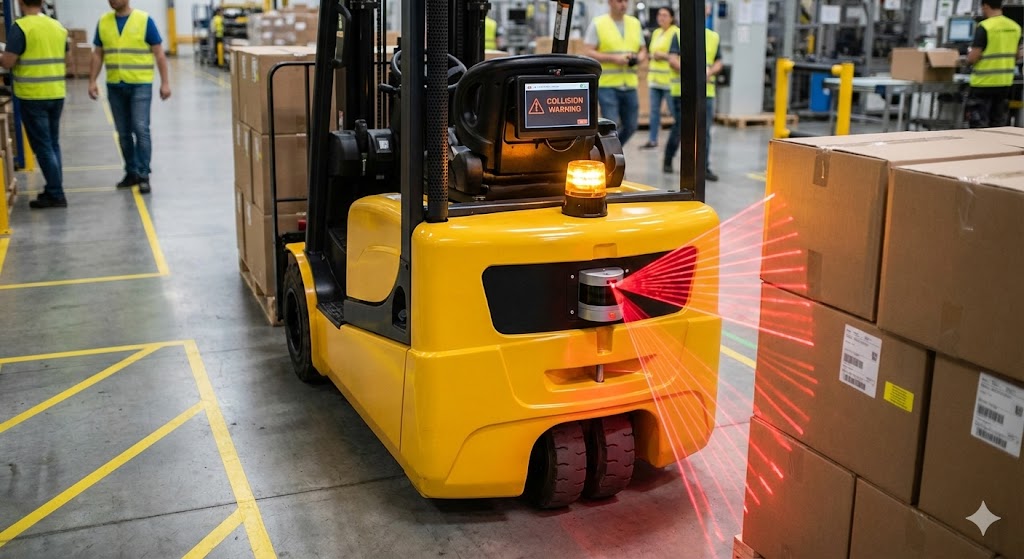
Looking ahead, the convergence of laser sensing with artificial intelligence and machine vision is creating even smarter systems capable of complex interpretation and decision-making. As costs continue to decrease and capabilities expand, laser distance sensors will undoubtedly become even more ubiquitous, driving further automation, quality improvement, and innovation across virtually every industrial domain. Their role as the "eyes" of automated systems is irreplaceable, providing the precise spatial data necessary for intelligent, responsive, and efficient industrial operations.