In the intricate world of industrial automation and machine control, proximity sensors stand as silent sentinels, enabling seamless, efficient, and safe operations. These non-contact sensing devices detect the presence or absence of an object within a defined range without any physical contact. Their fundamental role is to provide critical data to control systems, triggering actions, ensuring safety, and monitoring processes with remarkable precision and reliability.
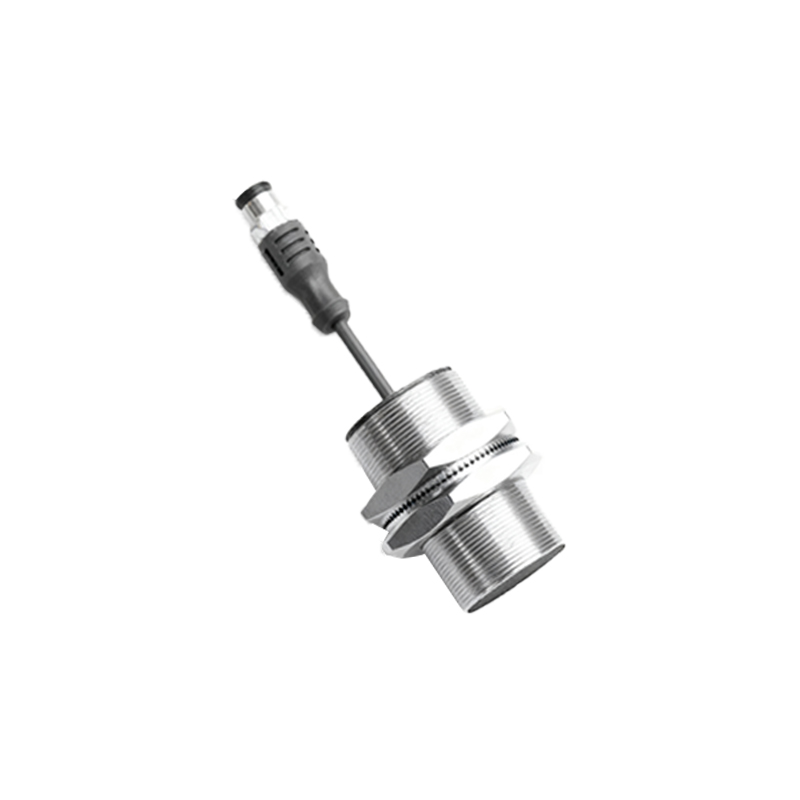
At their core, proximity sensors operate on various physical principles, each suited to specific applications and materials. Inductive proximity sensors are the workhorses for detecting metallic objects. They generate an electromagnetic field, and when a metal target enters this field, it induces eddy currents, causing a change in the sensor's oscillation amplitude. This change is detected and converted into a switching signal. These sensors are exceptionally robust, immune to environmental factors like dust, oil, and moisture, making them ideal for harsh manufacturing environments such as metal stamping, CNC machining, and automotive assembly lines.
Capacitive proximity sensors, on the other hand, can detect both metallic and non-metallic materials, including liquids, powders, plastics, and wood. They function by generating an electrostatic field. Any object entering this field alters the capacitance of the system, which is then measured. This versatility makes them perfect for applications like level detection in tanks (for liquids or granules), material handling of non-metallic products, and even detecting the presence of glass or cardboard in packaging lines.
For applications requiring longer sensing ranges or detection of any material regardless of color, reflectivity, or surface texture, photoelectric sensors are often employed. While technically a distinct category, they serve a similar proximity-sensing function using a beam of light. Ultrasonic sensors use sound waves for detection and are excellent for distance measurement and detecting transparent or irregularly shaped objects where other sensors might fail.
The applications of proximity sensors are vast and integral to modern industry. In automated production, they are used for precise object positioning, counting parts on a conveyor, verifying the presence of components in an assembly jig, and controlling the end positions of robotic arms. In material handling, they ensure smooth operation by detecting pallets, boxes, and products, initiating sorting and routing processes. A critical safety application is in machine guarding, where sensors create an invisible safety curtain; if breached, they immediately halt dangerous machinery to prevent accidents.
Furthermore, their role in predictive maintenance is growing. By continuously monitoring the position or vibration of rotating machinery (like motors or shafts), proximity sensors can detect minute deviations that signal impending failure, allowing for maintenance before a costly breakdown occurs. In the automotive sector, they are ubiquitous, used in everything from engine control units sensing crankshaft position to safety systems detecting seat occupancy.
The advantages of using proximity sensors are compelling. Their non-contact nature eliminates mechanical wear and tear, leading to exceptionally long service life and reduced maintenance. They offer high switching speeds, enabling fast-paced production lines. Their solid-state construction provides resistance to vibration and shock. Most importantly, they deliver consistent, repeatable accuracy, which is paramount for quality control and process reliability.
When selecting a proximity sensor, engineers must consider several key parameters: the sensing distance (rated and effective), the target material and size, the required output type (e.g., NPN/PNP, analog, IO-Link), environmental conditions (temperature, pressure, potential washdowns), and the required housing style (cylindrical, rectangular, slot-style). Proper installation is also crucial, as metallic backgrounds or adjacent sensors can interfere with their fields, necessitating careful mounting and shielding.
In conclusion, proximity sensors are fundamental components that bridge the physical and digital worlds in industrial settings. From enabling complex automation sequences to safeguarding human workers, their role is indispensable. As Industry 4.0 and the Industrial Internet of Things (IIoT) advance, the integration of smart proximity sensors with digital communication protocols like IO-Link will further enhance their functionality, providing not just binary presence data but rich diagnostic and process information, solidifying their status as a cornerstone of intelligent manufacturing and beyond.