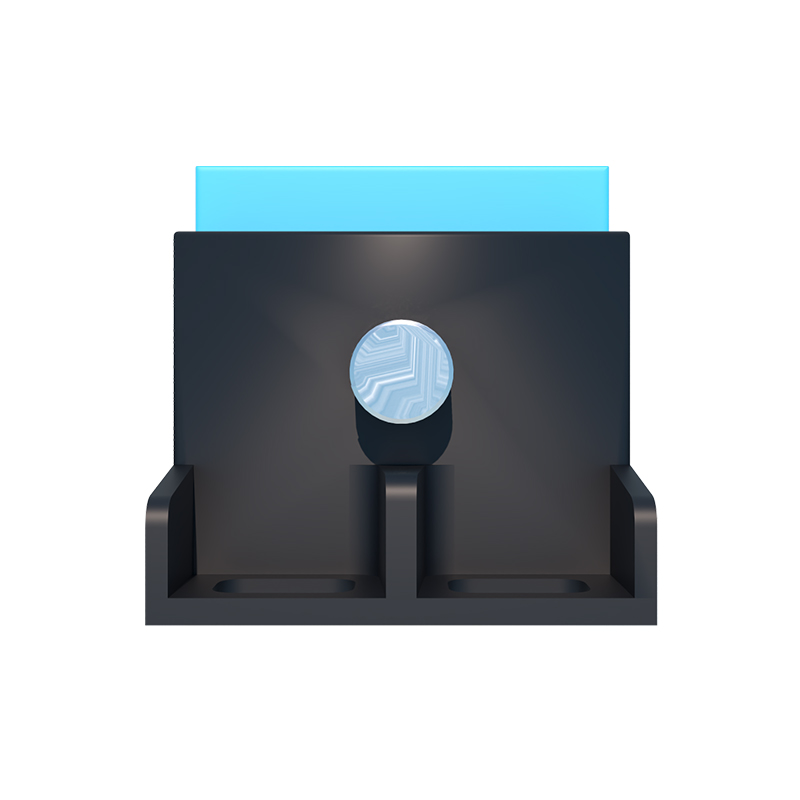
In the demanding landscape of industrial automation, proximity sensors are the silent sentinels, providing critical non-contact detection for countless processes. From monitoring robotic arm positions to counting products on a high-speed conveyor, their reliability is paramount. However, their performance and longevity are constantly threatened by a harsh operating environment. This is where the often-overlooked yet vital component comes into play: the proximity sensor protective cover. Far more than a simple accessory, a well-designed protective cover is a strategic investment in system uptime and sensor life.
The primary function of a protective cover is to act as a physical barrier between the sensor's sensitive face and external contaminants. In metalworking facilities, airborne conductive chips and grinding swarf can accumulate on the sensor, potentially causing false triggering or even short-circuiting. In food and beverage or pharmaceutical plants, coatings of sugar, flour, or chemical residues can insulate the sensing face, degrading performance. High-pressure washdowns, common in hygienic industries, pose a dual threat of direct water ingress and thermal shock. A robust, sealed cover prevents these substances from reaching the sensor's active surface, ensuring consistent detection signals.
Beyond contamination, mechanical damage is a significant risk. Sensors mounted near moving parts, on automated guided vehicles (AGVs), or in material handling areas are susceptible to impacts, abrasion, and crushing forces. A protective cover, typically manufactured from durable engineering plastics like PBT, PEEK, or polyamide, or metals like stainless steel, absorbs and distributes these forces. This shielding prevents cracks in the sensor housing, protects delicate wiring at the conduit entry, and safeguards the epoxy-potted sensing element from shock and vibration that could lead to internal component failure.
Selecting the appropriate cover requires careful consideration of several factors aligned with the application. The first is material compatibility. For inductive sensors detecting metals, the cover material must be non-metallic to avoid interfering with the electromagnetic field. Ultrasonic sensor covers require materials that efficiently transmit sound waves. For capacitive sensors, the dielectric constant of the cover material must be considered, as it will become part of the sensing field. Chemical resistance is equally crucial; the cover must withstand exposure to oils, coolants, solvents, or cleaning agents without degrading, swelling, or becoming brittle.

The design of the cover directly impacts its effectiveness. The sensing distance, a key parameter for any proximity sensor, will be reduced when a cover is installed. This reduction factor, often provided by the manufacturer, must be accounted for during system design to ensure the sensor still operates within its effective range. The cover's shape and mounting mechanism are also critical. A flush-mountable sensor will require a low-profile, thin-faced cover to maintain its ability to detect objects at the same plane. Cylindrical sensors need covers that provide a secure, often threaded, fit without compromising the seal. Proper sealing, achieved through integrated O-rings or gaskets, is essential for achieving high Ingress Protection (IP) ratings like IP67 or IP69K, which guarantee protection against dust and high-pressure water jets.
Installation and maintenance practices round out the strategy. A cover must be installed correctly, ensuring seals are not pinched or compromised. Even with a cover, periodic inspection is recommended to check for cracks, buildup between the cover and sensor face (which can sometimes occur with certain viscous materials), or degradation of the seal. For applications with heavy buildup, some cover designs feature a "self-cleaning" lip or a tapered shape that sheds accumulating material.
In conclusion, dismissing a proximity sensor protective cover as an optional extra is a costly misconception. It is an integral part of a holistic sensor installation strategy. By providing a dedicated defense against physical, chemical, and environmental hazards, these covers dramatically extend mean time between failures (MTBF), reduce unplanned downtime for sensor replacement, and ensure the consistent, accurate data that modern automated systems depend on. Specifying the correct protective cover is not just about protecting a component; it's about safeguarding productivity and operational integrity.