High-frequency proximity sensors are essential components in modern industrial automation, providing non-contact detection of metallic objects with high precision and reliability. These sensors operate based on the principles of electromagnetic induction, utilizing high-frequency oscillating circuits to detect changes in the electromagnetic field when a metal target enters their sensing range.
At the core of a high-frequency proximity sensor is an oscillator circuit that generates a high-frequency electromagnetic field from its sensing face. This field typically operates at frequencies ranging from 100 kHz to 1 MHz, depending on the sensor design and application requirements. When no target is present, the oscillator maintains a stable amplitude. However, when a metallic object approaches the sensing area, eddy currents are induced on the surface of the target. These eddy currents draw energy from the oscillator circuit, causing a reduction in oscillation amplitude.
The sensor's detection circuit continuously monitors the oscillator's amplitude. Once the amplitude drops below a predetermined threshold—indicating the presence of a metal object within the specified sensing distance—the sensor triggers an output signal. This output can be in the form of a digital switch signal (e.g., NPN or PNP transistor output) or an analog signal proportional to the distance between the sensor and the target.
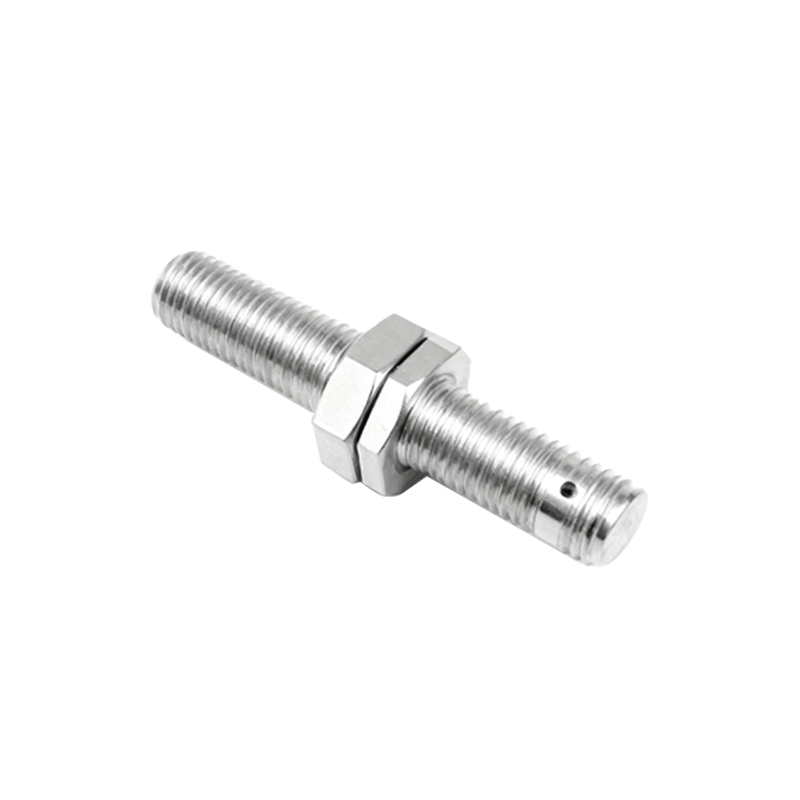
High-frequency proximity sensors offer several advantages over other sensing technologies. They are immune to environmental factors such as dust, oil, and moisture, making them suitable for harsh industrial environments. Additionally, they provide fast response times, often in the microsecond range, enabling high-speed detection in applications like conveyor systems, robotic arms, and assembly lines. Their non-contact nature eliminates mechanical wear, ensuring long operational life and minimal maintenance.
These sensors are commonly used for position detection, object counting, and speed monitoring in various industries, including automotive manufacturing, packaging, and material handling. When selecting a high-frequency proximity sensor, engineers must consider factors such as sensing distance, target material, operating frequency, and environmental conditions to ensure optimal performance.
In summary, high-frequency proximity sensors leverage electromagnetic induction and advanced circuitry to deliver accurate, non-contact detection of metallic objects. Their robustness, speed, and reliability make them indispensable in industrial automation, contributing to enhanced efficiency and productivity in modern manufacturing processes.