In the realm of industrial automation and machine safety, proximity sensors stand as critical components for non-contact detection. These devices, often unsung heroes on the factory floor, enable machinery to "sense" the presence or absence of an object without physical touch. Their operation hinges on emitting a field or beam and detecting changes in that field caused by a target object. This fundamental principle allows for reliable, wear-free operation in harsh environments where mechanical limit switches would fail.
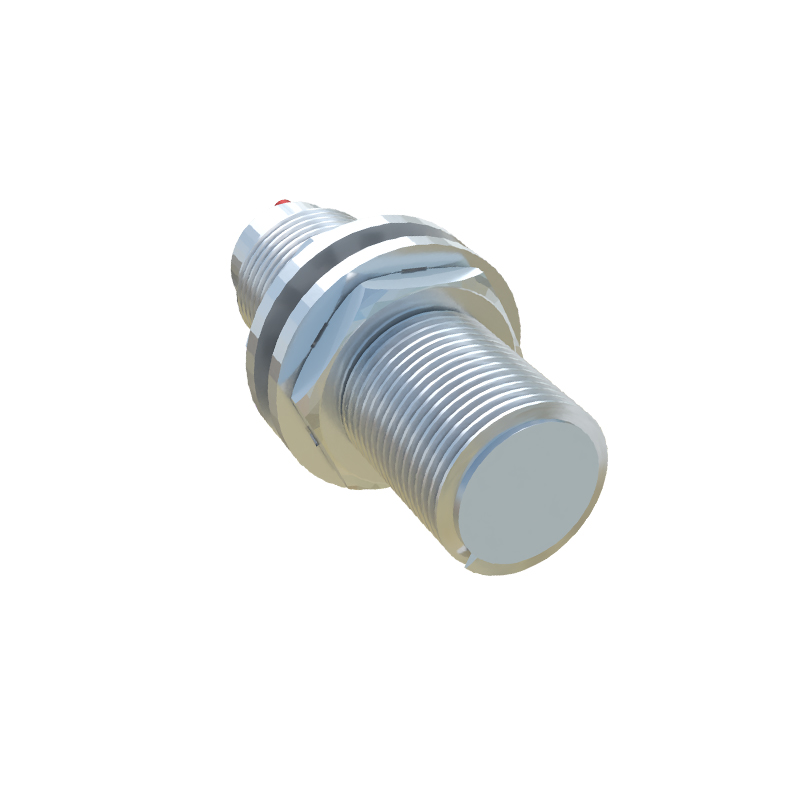
The primary types of proximity sensors are defined by their underlying technology. Inductive proximity sensors are the workhorses for metal detection. They generate an electromagnetic oscillating field. When a metallic object enters this field, it induces eddy currents within the target, causing a change in the sensor's oscillation amplitude. This change is detected and triggers a switching output. These sensors are ideal for detecting ferrous and non-ferrous metals, with typical sensing ranges from a few millimeters to about 60 millimeters. Their robustness makes them perfect for counting metal parts, determining position in CNC machines, or as end-of-travel detectors.
Capacitive proximity sensors, in contrast, can detect both metallic and non-metallic materials—including liquids, plastics, wood, and granules. They function by generating an electrostatic field. Any object that enters this field alters the capacitance of the system, which the sensor circuitry detects. This makes them versatile for applications like liquid level detection in non-metallic tanks, monitoring fill levels of powdered materials, or detecting the presence of glass or plastic bottles on a conveyor line. Their sensing range is generally similar to inductive types but can be influenced by the material's dielectric constant.
Ultrasonic sensors operate on a different principle altogether, using sound waves beyond human hearing. They emit high-frequency sound pulses and measure the time taken for the echo to return from a target object. This time-of-flight calculation allows them to determine not just presence, but also distance. They are excellent for detecting objects of virtually any material, shape, or color, and are unaffected by dust, smoke, or light interference. Common applications include precise distance measurement, pallet profiling, and loop control in winding machines.
Photoelectric sensors, another major category, use a beam of light (visible, infrared, or laser). The basic types are through-beam, retro-reflective, and diffuse. A through-beam sensor has separate emitter and receiver units; breaking the beam indicates an object. It offers the longest sensing range and high reliability. A retro-reflective sensor uses a single unit and a reflector, detecting an object when the reflected beam is interrupted. A diffuse sensor detects light reflected directly off the target itself. Photoelectric sensors are superb for long-range detection, small part sensing, and color or contrast differentiation.
Selecting the right proximity sensor requires a careful analysis of the application. Key criteria include: the target material (metal, plastic, liquid), the required sensing distance, the operating environment (temperature, presence of chemicals, washdown requirements), the required output type (PNP/NPN, analog, IO-Link), and the response speed. For instance, an inductive sensor is pointless for detecting plastic bottles, just as a capacitive sensor might be overly sensitive for a precise metal positioning task near other objects. Environmental factors are paramount; sensors in food processing may need stainless steel housings and high IP ratings for washdown, while those in welding areas require immunity to spatter and strong electromagnetic interference.
Installation and alignment are also crucial for consistent performance. Sensors must be mounted securely to prevent vibration-induced misalignment. One must consider the "dead zone" or blind spot area close to the face of some sensors. For inductive sensors, the sensing distance can be affected by the target's size, shape, and material type; a standard sensing distance is typically defined for a mild steel square target of a specified size. For ultrasonic sensors, the target's sound absorption characteristics and angle can affect performance.
The evolution of proximity sensors continues with the integration of smart features. Modern sensors now offer IO-Link communication, which allows for parameter setting, real-time diagnostics, and process data monitoring directly from the sensor. This enables predictive maintenance, as the sensor can report its operating health or warn of deteriorating conditions, such as lens contamination in a photoelectric sensor or buildup on a capacitive sensor face.
In conclusion, proximity sensors are indispensable for creating efficient, safe, and intelligent automated systems. Understanding the strengths and limitations of inductive, capacitive, ultrasonic, and photoelectric technologies is the first step. A methodical selection process that prioritizes the target material, environmental conditions, and required functionality will ensure optimal performance, reduce downtime, and contribute to a robust automation solution. As Industry 4.0 advances, the role of these smart sensors will only grow, providing the essential data needed for interconnected and adaptive manufacturing processes.