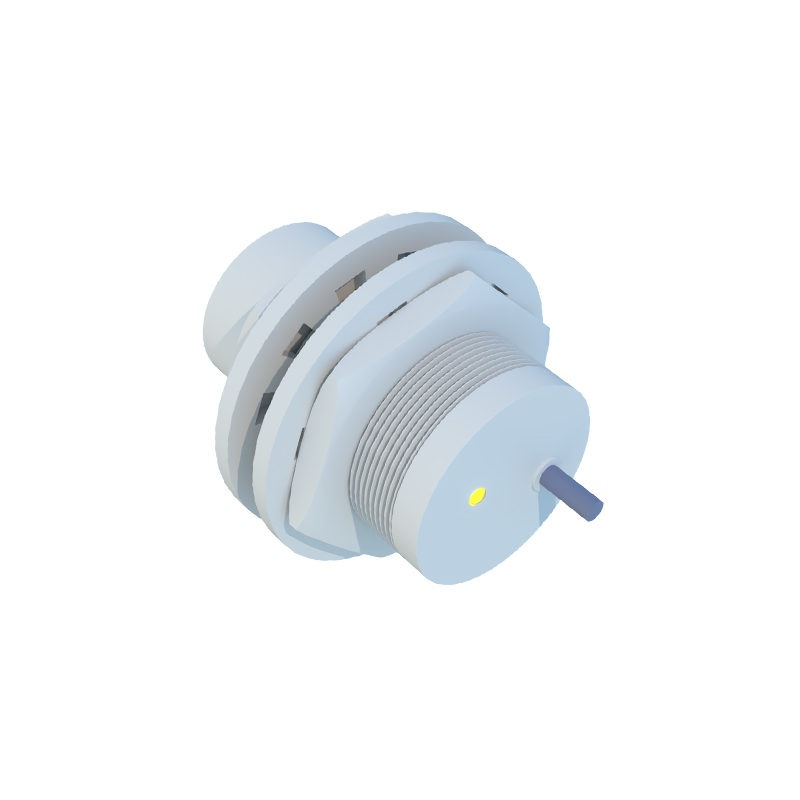
Proximity sensors are indispensable components in modern industrial automation, providing non-contact detection of objects within a defined sensing range. Their ability to operate without physical contact eliminates mechanical wear, ensures high reliability, and enables high-speed operation in harsh environments. Understanding their core characteristics is essential for selecting the right sensor for a specific application. This article delves into the defining features that differentiate various types of proximity sensors and influence their performance.
The fundamental operating principle is a primary distinguishing characteristic. Inductive proximity sensors generate an electromagnetic field to detect metallic objects, primarily ferrous metals like steel and iron. Their sensing range is relatively short, typically up to 60mm, and is influenced by the target material's properties, specifically its conductivity and permeability. Capacitive proximity sensors, in contrast, can detect both metallic and non-metallic materials (plastics, wood, liquids, granules) by sensing changes in capacitance caused by the target object entering an electrostatic field. This makes them versatile but also more susceptible to environmental factors like humidity or contamination. Ultrasonic sensors use sound waves to measure the time-of-flight for an echo to return, allowing them to detect objects of virtually any material, even transparent ones, over longer distances. Photoelectric sensors utilize a light beam (visible, infrared, or laser) and are excellent for long-range detection and sensing small objects, though they can be affected by ambient light, color, and surface reflectivity.
Several key performance characteristics define a sensor's suitability. Sensing distance, or nominal range, is the maximum distance at which a standard target can be reliably detected. It is crucial to note that the effective sensing distance can be reduced for non-standard targets or specific operating conditions. Repeat accuracy refers to the sensor's ability to consistently detect an object at the same point within its sensing field. High repeat accuracy is critical for precision positioning tasks. Hysteresis is the difference between the switch-on point (when the target approaches) and the switch-off point (when the target moves away). This characteristic prevents chattering or rapid on/off switching when a target is positioned at the edge of the sensing range, ensuring stable output signals. Response time, or switching frequency, indicates how quickly the sensor can react to a target's presence and absence, measured in Hertz (Hz). Fast response times are necessary for high-speed production lines.
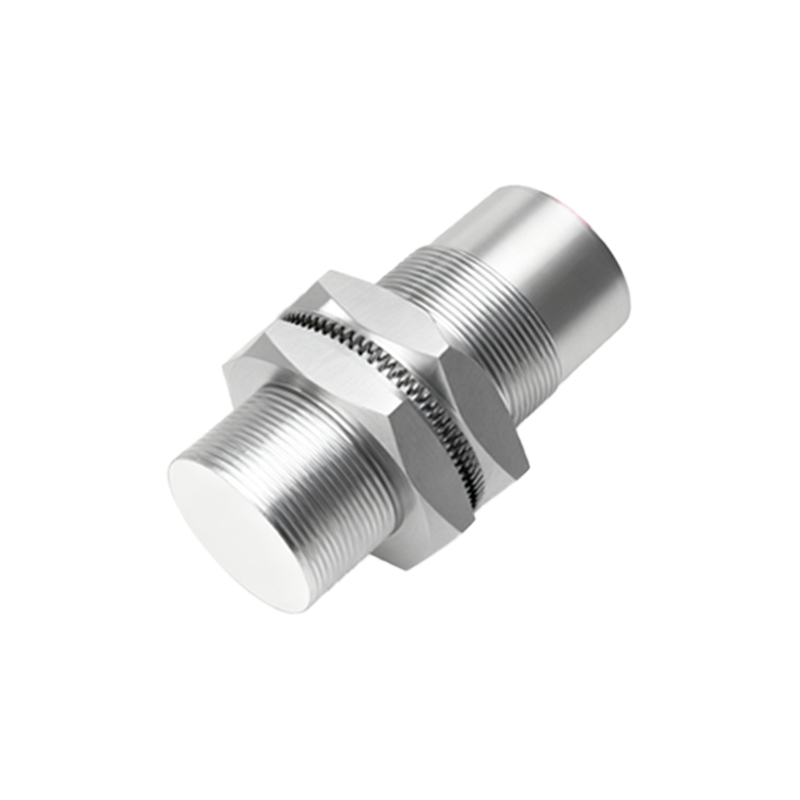
Environmental robustness is a non-negotiable characteristic for industrial settings. The Ingress Protection (IP) rating, such as IP67 or IP69K, defines the sensor's resistance to dust and liquids. Many proximity sensors are designed with welded stainless-steel housings to withstand washdowns, coolants, and corrosive atmospheres. Temperature range specifies the operational limits within which the sensor maintains its specified performance. Electromagnetic compatibility (EMC) is vital, as sensors must operate without interference from nearby motors, welders, or other sources of electromagnetic noise, and must not themselves emit disruptive interference.
Output configuration is another critical feature. Sensors typically provide digital switching outputs, either as Normally Open (NO) or Normally Closed (NC) contacts. The output type can be a discrete transistor (NPN sinking or PNP sourcing, crucial for compatibility with PLC input cards) or a relay. Analog output versions (4-20mA or 0-10V) are available for applications requiring continuous distance measurement or proportional control. Some advanced sensors also offer IO-Link communication, enabling digital parameter setting, diagnostics, and process data exchange as part of Industry 4.0 setups.
Finally, physical characteristics like housing shape (barrel, rectangular, ring), size, and mounting style (flush or non-flush for inductive sensors) play a significant role in mechanical integration. Flush-mounted inductive sensors can be installed embedded in metal without affecting their sensing field, while non-flush types offer longer ranges. Understanding the interplay of all these characteristics—operating principle, sensing performance, environmental ratings, electrical outputs, and form factor—enables engineers to make informed decisions, ensuring reliable detection, maximizing machine efficiency, and minimizing downtime in demanding automation environments.