In the realm of industrial automation and control systems, sensors act as the fundamental sensory organs, providing critical data on the presence, position, and properties of objects. Among the diverse sensor families, proximity sensors and capacitive sensors are two pivotal technologies, each with distinct operating principles and ideal application domains. This article delves into the core functionality, key differences, and practical considerations for selecting and deploying these essential components.
Understanding Proximity Sensors
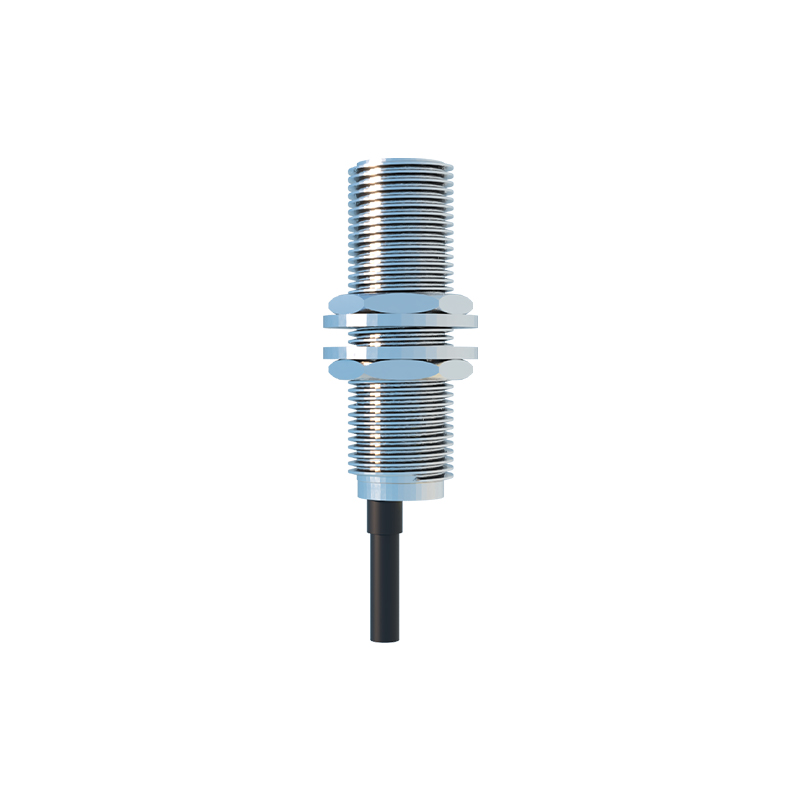
Proximity sensors are non-contact devices designed to detect the presence or absence of a target object within a specified sensing range without physical contact. The most prevalent type in industrial settings is the inductive proximity sensor. It operates on the principle of electromagnetic induction. The sensor generates an oscillating electromagnetic field from its active face. When a metallic object (ferrous or non-ferrous) enters this field, eddy currents are induced in the target, causing a change in the oscillation amplitude. This change is detected by the sensor's internal circuit, which subsequently triggers a switching output (e.g., PNP or NDC).
Key characteristics of inductive proximity sensors include:
Target Material: Primarily metals. The sensing distance can vary based on the metal type (standardized against mild steel).
Sensing Range: Typically from a few millimeters up to about 60 mm for standard models.
Environmental Robustness: Highly resistant to common industrial contaminants like dust, oil, and coolant splashes. They are unaffected by opaque materials, color, or surface finish.
Common Applications: Position verification of metal parts, counting metallic objects, limit switching in machinery, and detecting the end of a metal stroke in cylinders.
Understanding Capacitive Sensors
Capacitive sensors, like proximity sensors, also function without physical contact. However, their operating principle is based on detecting changes in capacitance. The sensor's active face acts as one plate of a capacitor, with the target object (or the background) acting as the other plate. The sensor generates an electrostatic field. Any object that enters this field alters the dielectric constant and thus the capacitance of the system. When the capacitance reaches a preset threshold, the sensor switches its output state.
Key characteristics of capacitive sensors include:
Target Material: Virtually any material—metals, plastics, glass, wood, liquids, granules, and powders. They can even detect through certain non-metallic container walls.
Sensing Range: Generally similar to or slightly less than inductive sensors for standard targets, but adjustable sensitivity allows for tuning to specific materials.
Environmental Factors: Can be influenced by humidity, extreme temperature variations, and conductive dust, as these factors alter the dielectric constant in the sensing field. Proper shielding and installation are crucial.
Common Applications: Level detection of liquids, pellets, or powders in non-metallic tanks; detecting presence of non-metallic objects (e.g., glass bottles, plastic caps, wood panels); and moisture content sensing.
Critical Comparison and Selection Criteria
Choosing between an inductive and a capacitive sensor hinges on the application's specific requirements:
1. Target Material: This is the primary differentiator. For metal-only detection, inductive sensors are typically the default, robust choice. For non-metallic materials or a variety of materials, capacitive sensors are necessary.
2. Sensing Environment: Inductive sensors excel in dirty, wet metallic environments. Capacitive sensors require a stable dielectric environment; they may false-trigger if background objects or humidity changes are within their adjustable field.
3. Installation and Setup: Inductive sensors are often "install and forget." Capacitive sensors usually feature a sensitivity potentiometer that must be carefully adjusted for the specific target and to ignore the background, which can require more precise commissioning.
4. Cost and Complexity: Standard inductive sensors are often more cost-effective for metal-sensing applications. Capacitive sensors may have a slightly higher unit cost but provide unique functionality for non-metallic detection.
Advanced Considerations and Best Practices
For reliable operation, engineers must consider factors beyond the basic type. The sensing distance listed in datasheets is a nominal value under ideal conditions (e.g., mild steel for inductive). Always account for reduction factors for different metals. Mounting in metal (flush mounting) versus non-metal (non-flush) surroundings affects the sensing field shape and range, particularly for inductive sensors. Electrical specifications such as output type (sourcing PNP, sinking NPN, analog), voltage range, and current rating must match the controller (PLC) input requirements. Environmental ratings like IP (Ingress Protection) and temperature range are vital for longevity in harsh conditions.
In conclusion, both proximity (inductive) and capacitive sensors are indispensable tools in the automation engineer's toolkit. The inductive sensor stands as the rugged, reliable specialist for metallic target