Capacitive proximity sensors are versatile and reliable components widely used in industrial automation for non-contact detection of a vast range of objects. Unlike their inductive counterparts that only detect metals, capacitive sensors can detect virtually any material, including liquids, plastics, wood, glass, and granular substances. This unique capability makes them indispensable in numerous applications across diverse industries, from food and beverage to packaging, chemical, and material handling.
The fundamental operating principle is based on the concept of capacitance. A capacitive sensor essentially functions as one plate of a capacitor, with the target object acting as the other plate. The sensor generates an electrostatic field. When a target enters this field, it alters the dielectric constant and thus the capacitance of the system. The sensor's internal oscillator circuit detects this change in capacitance. Once the change exceeds a predefined threshold level, the sensor's output state switches, signaling the presence of the object. A key feature is the adjustable sensitivity or sensing distance, typically via a potentiometer. This allows engineers to fine-tune the sensor to ignore certain materials (like a container wall) and detect the desired material (like the liquid inside).
Several key characteristics define capacitive sensor performance. The nominal sensing distance (Sn) is specified for a standard target (usually grounded steel). It's crucial to note that the effective sensing distance can vary significantly with different materials; non-conductive materials generally require a shorter distance. The hysteresis is the difference between the switch-on and switch-off points, providing stability against output chatter. Response frequency indicates how quickly the sensor can detect objects passing by. Environmental factors like temperature, humidity, and the presence of dust or contaminants can influence performance, though many industrial-grade sensors are designed with robust housings (often in IP67 or IP69K ratings) and are resistant to common chemicals.
The applications for capacitive proximity sensors are extensive. In liquid level detection, they are perfect for monitoring the fill level of tanks containing water, chemicals, milk, or granular solids like flour or powder, through non-metallic container walls. They are used on packaging lines to detect the presence of plastic bottles, glass jars, or cardboard boxes on conveyors. In the wood and paper industry, they count sheets or detect log positions. Another critical use is in touch interfaces, where they act as non-mechanical, wear-free buttons, ideal for hygienic or harsh environments.
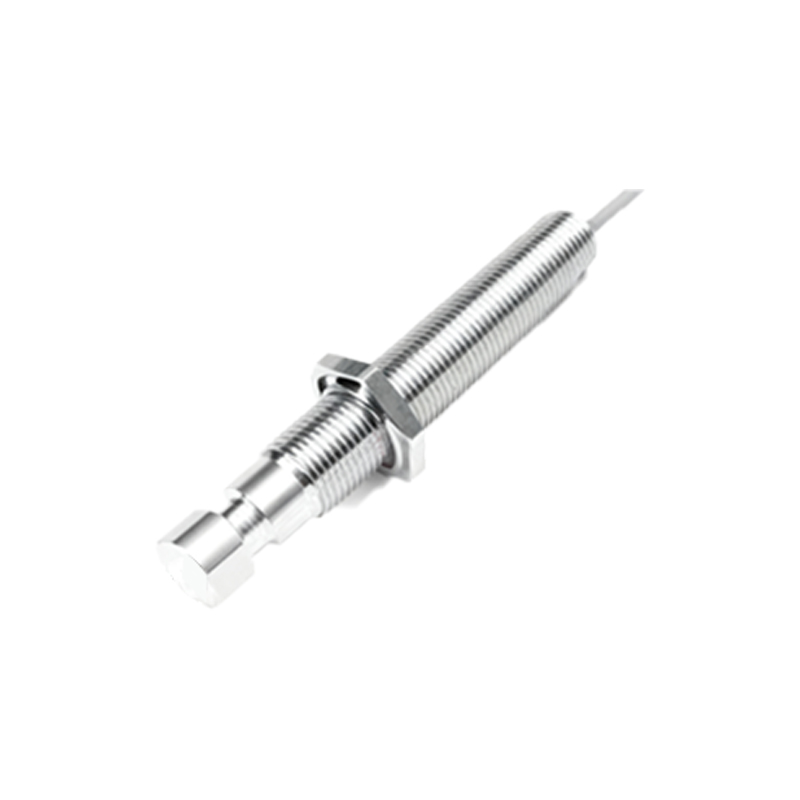
Selecting the right capacitive sensor requires careful consideration of several parameters. First, identify the target material and its properties (conductive/non-conductive). For non-conductive materials, ensure the sensor's stated range is sufficient, applying derating factors as per the datasheet. The required sensing distance should be chosen with a safety margin. The housing material and form factor (cylindrical, rectangular, ring-shaped) must suit the mechanical installation. Output type is critical: PNP (sourcing) or NPN (sinking) transistor outputs are standard for DC sensors, while some offer analog (4-20mA, 0-10V) or IO-Link outputs for advanced diagnostics and parameterization. The supply voltage must match the control system (e.g., 10-30V DC). Environmental conditions dictate the necessary Ingress Protection (IP) rating and any specific chemical resistances.
Installation and commissioning are straightforward but demand attention to detail. Sensors must be mounted securely, and the influence of the mounting material (especially metals) on the sensing field must be considered, often requiring a non-metallic bracket or maintaining a minimum clearance around the sensor head. During setup, use the sensitivity adjustment to calibrate the sensor with the actual target material present, ensuring reliable detection while avoiding false triggers from background objects. Regular maintenance is minimal but should include periodic checks for buildup of material on the sensing face, which can cause false actuation, and verification of electrical connections.
In conclusion, capacitive proximity sensors offer a flexible and robust solution for object detection challenges where material variety is a factor. Their ability to sense through non-metallic barriers and their insensitivity to color or surface finish provides design engineers with powerful tools to enhance automation system reliability and functionality. A thorough understanding of their operating principle, coupled with a methodical approach to selection and installation, ensures optimal performance and longevity in demanding industrial environments.