In the field of industrial automation and electrical engineering, proximity sensors are indispensable components for detecting the presence or absence of objects without physical contact. Understanding their English names and terminology is crucial for professionals working with international standards, datasheets, and technical documentation. This guide provides a comprehensive overview of proximity sensor classifications, common English terms, and key specifications to enhance clarity in design, procurement, and maintenance processes.
Proximity sensors are broadly categorized based on their detection principles. The most common types include inductive proximity sensors, capacitive proximity sensors, ultrasonic proximity sensors, and photoelectric sensors. Inductive proximity sensors detect metallic objects through electromagnetic fields and are widely used in manufacturing lines. Capacitive sensors can detect both metallic and non-metallic materials by measuring changes in capacitance, making them suitable for liquid level detection or plastic material handling. Ultrasonic sensors utilize sound waves to measure distance or presence, often applied in harsh environments where dust or moisture is present. Photoelectric sensors, though sometimes considered a distinct category, function as proximity devices using light beams to sense objects.
Key English terminology associated with these sensors includes "switching distance," which refers to the maximum range at which a sensor can reliably detect a standard target. "Hysteresis" is another critical term, describing the difference between the switch-on and switch-off points to prevent output fluctuation. "Shielded" and "unshielded" designs indicate whether the sensor's magnetic field is concentrated axially (shielded) or radiates laterally (unshielded), affecting installation proximity to metal surfaces. Output configurations are denoted as "NO" (normally open) or "NC" (normally closed), while "PNP" and "NPN" specify transistor output types, essential for compatibility with PLCs and control systems.
When selecting a proximity sensor, engineers must consider parameters such as "operating voltage," "current consumption," "response frequency," and "environmental ratings" like IP67 for dust and water resistance. Misinterpreting these terms can lead to system failures or safety issues. For instance, confusing "short-circuit protection" with "reverse polarity protection" might result in incorrect circuit design. Additionally, terms like "flush mountable" or "non-flush mountable" describe installation styles that influence sensing ranges and mechanical integration.
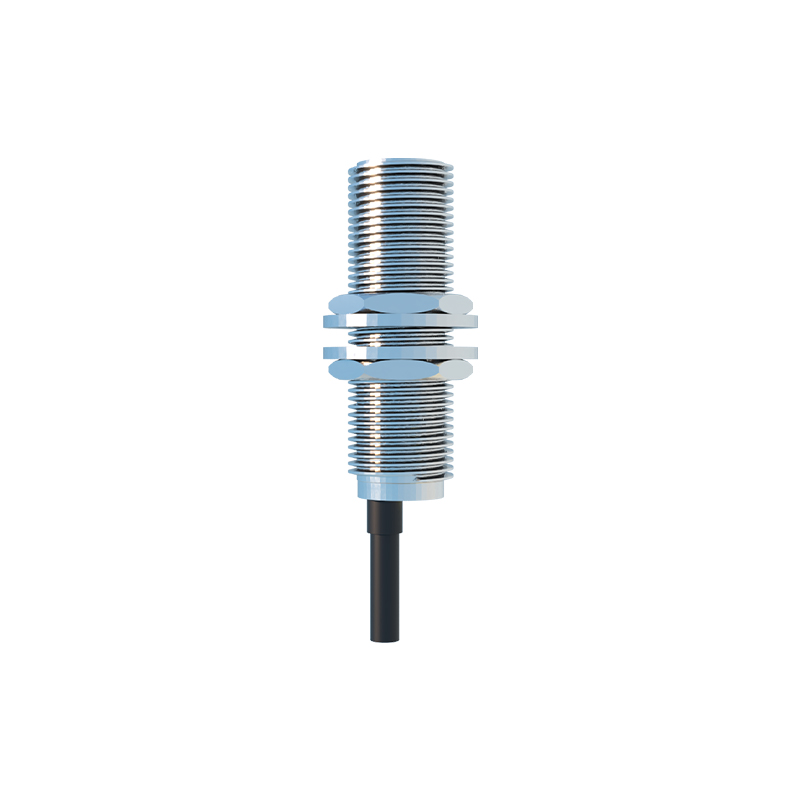
In global supply chains, part numbers and model codes often embed this terminology. A typical model name might include abbreviations like "IN" for inductive, "CAP" for capacitive, or "US" for ultrasonic, followed by specifications for size, output, and connection type. Familiarity with these conventions accelerates component sourcing and reduces errors in international projects.
Regular updates to standards from organizations like IEC (International Electrotechnical Commission) and ISO (International Organization for Standardization) ensure terminology remains consistent. Engineers are advised to consult datasheets and manuals that use precise English terms to avoid ambiguities. For example, "leakage current" in off-state conditions or "repeatability" in detection performance are nuanced concepts that require clear understanding.
Ultimately, mastering the English nomenclature of proximity sensors enhances collaboration across borders, supports accurate documentation, and optimizes system reliability. As automation evolves with IoT and smart manufacturing, terms like "IO-Link enabled" or "programmable output" are becoming standard, underscoring the need for continuous learning in professional vocabulary.