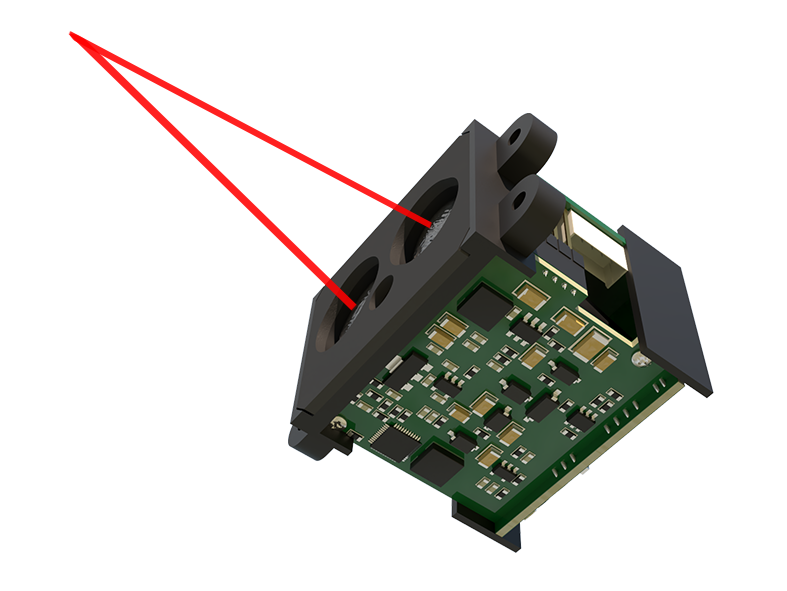
In the realm of industrial automation, precision measurement is not just a requirement; it is the cornerstone of efficiency, quality control, and operational safety. The H1030 laser sensor emerges as a pivotal technology in this landscape, offering a blend of high accuracy, reliability, and versatility that meets the rigorous demands of modern manufacturing and process control environments. Unlike conventional sensors, the H1030 utilizes a focused laser beam to detect objects, measure distances, or inspect surfaces with micron-level precision. Its operating principle is based on the time-of-flight or triangulation method, where the sensor calculates the distance to a target by measuring the time it takes for the laser light to reflect back or by analyzing the angle of the reflected beam. This allows for non-contact measurement, which is crucial for applications involving delicate, hot, or fast-moving objects where physical contact could cause damage or inaccuracies.
The core advantages of the H1030 laser sensor lie in its robust performance characteristics. It typically features a high sampling rate, enabling real-time data acquisition even in high-speed production lines. The sensor's resolution is exceptionally fine, allowing it to detect minute variations in position, thickness, or presence that would be invisible to other sensing technologies. Furthermore, its measurement range is configurable and often extensive, catering to diverse scenarios from close-range precision alignment to longer-distance object detection. Environmental resilience is another key strength. Many H1030 models are designed with IP67 or higher ingress protection ratings, making them resistant to dust, water sprays, and oil mist commonly found in industrial settings. They can also maintain stability across a wide temperature range, ensuring consistent performance whether installed in a climate-controlled clean room or near a furnace.
Practical applications of the H1030 laser sensor span numerous industries. In automotive manufacturing, it is deployed for precise gap and flush measurement between body panels, ensuring perfect alignment and aesthetic quality. In electronics assembly, it verifies the placement of tiny components on printed circuit boards (PCBs). Within the packaging industry, the sensor monitors fill levels in bottles or checks the height of stacked items on a conveyor. It also plays a vital role in robotics for accurate positioning and guidance of robotic arms, and in logistics for dimensioning parcels. The sensor's ability to provide a digital or analog output (e.g., 4-20 mA, 0-10 V, or via industrial networks like IO-Link, PROFINET, or EtherNet/IP) allows for seamless integration into existing Programmable Logic Controller (PLC) systems and Supervisory Control and Data Acquisition (SCADA) networks, facilitating automated decision-making and process adjustments.
Selecting and implementing an H1030 laser sensor requires careful consideration of several parameters. The required measurement range, the desired resolution, the reflectivity and color of the target surface, and the ambient lighting conditions all influence sensor performance. For instance, a highly reflective or dark surface might require a sensor with automatic background suppression or special calibration. Proper mounting, alignment, and periodic maintenance are essential to preserve accuracy. Users should consult the manufacturer's datasheet and application notes to choose the correct model and configure it optimally for their specific task.
Looking ahead, the evolution of laser sensor technology continues. Future iterations of sensors like the H1030 may incorporate advanced features such as integrated artificial intelligence for edge computing, enabling pattern recognition and anomaly detection directly at the sensor level. Enhanced connectivity for the Industrial Internet of Things (IIoT) will further streamline data flow and predictive maintenance. For engineers and system integrators, the H1030 laser sensor represents more than just a component; it is a critical enabler of smarter, more responsive, and more efficient automated systems. By delivering unwavering precision in challenging environments, it helps industries reduce waste, improve product quality, and enhance overall operational productivity, solidifying its status as an indispensable tool in the automation toolkit.