In the realm of automation and robotics, precise control and accurate environmental sensing are paramount. Servo motors and proximity sensors are two fundamental components that often work in tandem to achieve this. While a servo motor provides controlled angular or linear motion, a proximity sensor acts as its "eyes," detecting the presence or absence of objects without physical contact. Understanding the working principle of a servo proximity sensor system is key to designing efficient and responsive automated solutions.
A servo motor is a rotary or linear actuator that allows for precise control of angular or linear position, velocity, and acceleration. It consists of a motor coupled with a sensor for position feedback (typically a potentiometer or an encoder) and a control circuit. The core principle is closed-loop control. The control circuit receives a desired position signal (a Pulse Width Modulation or PWM signal). It compares this command signal with the current position feedback from the sensor. If there is a discrepancy (an error), the circuit drives the motor in the direction that minimizes this error until the motor's shaft aligns with the commanded position. This feedback mechanism enables high precision and holding torque.
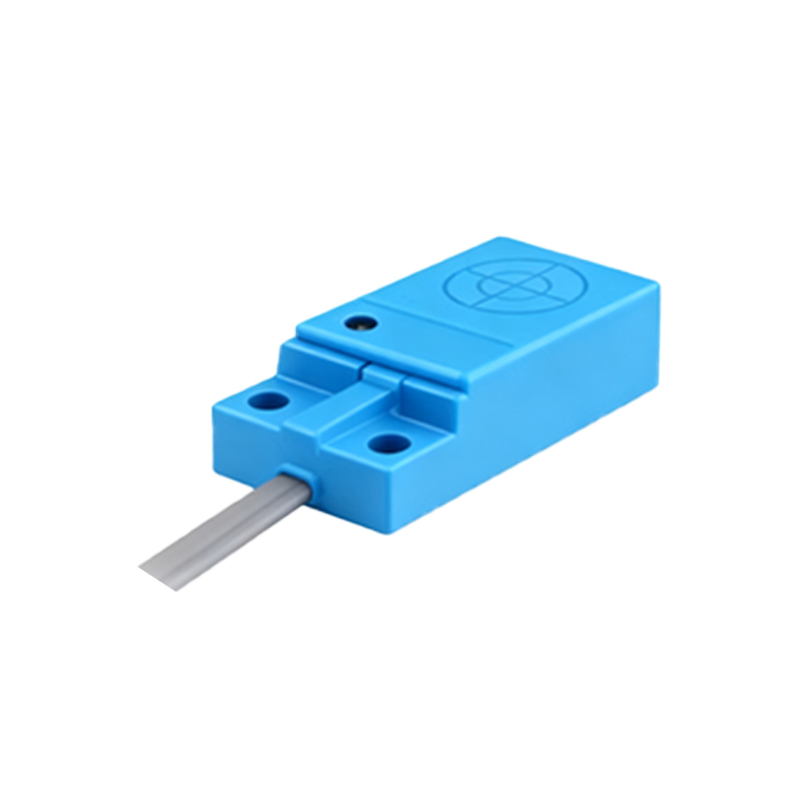
A proximity sensor, on the other hand, is a non-contact device that detects the presence or absence of an object within its sensing range. For integration with servos, inductive, capacitive, and ultrasonic sensors are common. An inductive proximity sensor generates an electromagnetic field. When a metallic object enters this field, it induces eddy currents in the object, which causes a change in the sensor's own oscillation amplitude. This change is detected by the sensor's circuitry, triggering an output signal. Capacitive sensors can detect both metallic and non-metallic objects by measuring changes in capacitance caused by the object's presence. Ultrasonic sensors emit high-frequency sound waves and measure the time for the echo to return, calculating distance.
The synergy between a servo and a proximity sensor creates an intelligent system. The proximity sensor provides the critical input or trigger for the servo's action. The fundamental working principle of such a combined system follows a logical sequence: First, the proximity sensor continuously monitors its designated area. Upon detecting a target object within its preset sensing range, it sends a discrete electrical signal (e.g., a HIGH or LOW voltage) to the system's controller, which could be a microcontroller like an Arduino, a PLC, or a dedicated servo controller. This signal acts as an event trigger.
The controller, pre-programmed with the desired logic, interprets this input. Based on the program, it then generates the appropriate command signal (the specific PWM pulse) for the servo motor. For instance, the command might be "rotate to 90 degrees" or "move to the home position." The servo motor receives this command and initiates its closed-loop operation to move to the new set position. After the movement is complete, the system may wait for the next trigger from the sensor or proceed to a subsequent programmed step. This creates a responsive, automated action-reaction loop.
Consider a simple automated sorting gate. A proximity sensor is positioned on a conveyor belt to detect incoming packages. When a package is sensed, the sensor sends a signal. The controller, upon receiving this signal, commands a servo motor to rotate a flap to a specific angle, diverting the package to the correct lane. After a timed delay, the controller commands the servo to return the flap to its default position, ready for the next package. This demonstrates how the sensor's detection event directly dictates the servo's precise movement.
The applications of servo proximity sensor systems are vast and cross-industrial. In robotics, they are essential for tasks like pick-and-place, where a proximity sensor confirms an object is in the gripper before the servo actuates the arm to move. In automated assembly lines, they ensure components are present before a servo-driven tool performs an operation like screwing or welding. In consumer electronics, they can be found in automated doors or adjustable fixtures. The combination allows for flexibility, as the servo's movement parameters and the sensor's sensitivity can be easily adjusted through software or calibration.
When implementing such a system, several factors must be considered. The choice of proximity sensor depends on the target material, required sensing distance, and environmental conditions (e.g., dust, moisture). The response time of the sensor must be compatible with the speed of the overall process. The servo motor must be selected with adequate torque and speed for the mechanical load it must move. Proper shielding and wiring are crucial to prevent electrical noise from the motor from interfering with the sensor's sensitive electronics. Calibration of both components ensures reliable operation.
In conclusion, the principle behind a servo proximity sensor system is elegantly simple yet powerful: sense, decide, and act. The proximity sensor provides the crucial environmental awareness, while the servo executes precise physical movement based on that information. This closed-loop of sensing and actuation forms the backbone of countless automated systems, enabling machines to interact intelligently and reliably with