Mirror laser sensors represent a sophisticated category of photoelectric sensors that utilize a reflective surface, or mirror, to complete the detection path. Their operation is rooted in the principles of optics and photoelectric conversion, offering unique advantages in specific industrial and commercial applications. Unlike through-beam sensors that require a separate emitter and receiver, or diffuse sensors that rely on light reflecting off the target itself, mirror sensors employ a dedicated reflector to bounce the emitted light back to a co-located receiver.
The core working principle begins with a light source, typically a laser diode, which emits a focused, coherent beam of light. This laser beam is directed towards a specially designed retro-reflective target or mirror. The key characteristic of this mirror is its ability to reflect light directly back to its source, regardless of the angle of incidence, within a specified range. This is often achieved using corner-cube reflectors or prismatic reflective tape. The reflected beam travels back along a path nearly parallel to the outgoing beam and is captured by a receiver housed in the same unit as the emitter.
The receiver contains a photodetector, such as a phototransistor or photodiode, which converts the incoming light signal into an electrical current. The sensor's internal circuitry continuously monitors the strength of this received signal. Under normal conditions, when nothing obstructs the beam between the sensor and the mirror, a strong, consistent signal is maintained, and the sensor outputs a "clear" state.
Detection occurs when an object interrupts the light path. The object's presence prevents the laser beam from reaching the mirror or blocks the reflected beam from returning to the receiver. This causes a significant drop—or complete loss—of the received light intensity. The sensor's electronics detect this change and trigger a switching action, changing its output state to signal an "object detected" condition. Advanced models incorporate background suppression or triangulation methods to enhance reliability, filtering out ambient light or reflections from shiny objects that might otherwise cause false triggers.
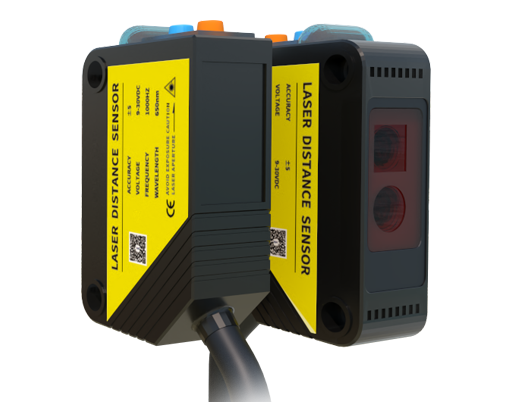
A critical component for reliable operation is the polarizing filter. Many mirror laser sensors are equipped with a polarizing filter in front of the emitter and a cross-polarized filter in front of the receiver. The emitted light becomes polarized in one plane (e.g., vertical). A standard retro-reflector does not maintain this polarization, but a corner-cube retro-reflector or a specialized polarized reflector will rotate the polarization plane by 90 degrees (e.g., to horizontal). The receiver's filter is oriented to only allow light polarized in this rotated plane to pass. This design effectively ignores direct reflections from glossy objects like metal or plastic, which tend to reflect light with the same polarization as the source. These objects will not rotate the polarization, so their reflected light is blocked by the receiver's filter, preventing false positives.
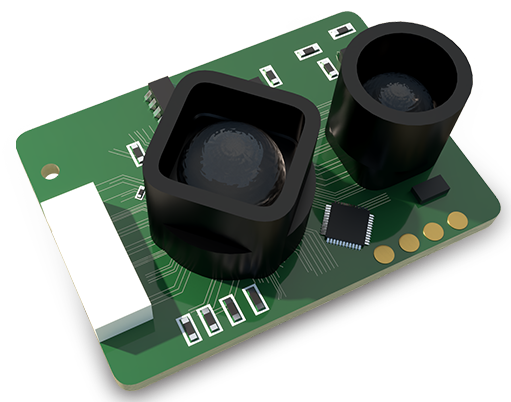
The use of a laser source, as opposed to a standard LED, provides significant benefits. The highly collimated beam allows for precise detection over long ranges, sometimes exceeding 100 meters, with a very small and well-defined sensing spot. This enables the detection of minute objects or precise positioning. The coherent nature of laser light also contributes to excellent signal-to-noise ratio and stability.
Applications for mirror laser sensors are vast and varied. They are indispensable in automated manufacturing for presence detection, part counting on conveyor belts, and verifying the correct positioning of components. In packaging machinery, they ensure labels are applied or flaps are closed. They serve as safety curtains or light barriers in hazardous areas to protect personnel by detecting entry into a dangerous zone. In material handling and logistics, they monitor object height on shelves or control automated guided vehicles (AGVs). Their ability to work reliably over long distances makes them ideal for large-scale applications like warehouse door monitoring or vehicle detection in toll systems.
When selecting a mirror laser sensor, key parameters to consider include sensing range, beam spot size, response time, environmental ratings (IP67 for dust and water resistance is common), and output type (PNP/NPN, analog, or IO-Link). Proper alignment between the sensor and the reflector is crucial for optimal performance, though the retro-reflective nature of the target provides a generous alignment tolerance compared to through-beam systems.
In summary, mirror laser sensors operate by establishing a closed optical loop between an emitter-receiver unit and a reflective target. Detection is achieved through the interruption of this loop. The integration of polarized light and laser technology creates a robust, precise, and versatile sensing solution capable of performing reliably in demanding environments where accuracy, range, and immunity to interference are paramount.