Proximity magnetic sensors are fundamental components in modern automation, automotive systems, and consumer electronics. Their ability to detect the presence or absence of a magnetic field or a ferromagnetic object without physical contact makes them invaluable. The core principle revolves around the interaction between a sensor element and a magnetic field, leading to a measurable electrical change.
The most common type is the Hall-effect sensor. When a current-carrying conductor or semiconductor is placed in a perpendicular magnetic field, a voltage difference, known as the Hall voltage, is generated across it. This phenomenon, discovered by Edwin Hall in 1879, is the cornerstone. In a proximity application, a permanent magnet is typically attached to the target object. As the magnet approaches the sensor, the magnetic flux density increases, causing a proportional increase in the Hall voltage. An integrated circuit then processes this voltage, triggering a clean digital output signal (ON/OFF) or providing an analog output proportional to distance. These sensors are highly reliable for detecting position, speed, and proximity of moving parts, such as in gear tooth sensing or window lift motors.
Another major category is the magnetoresistive (MR) sensor. These devices exploit the magnetoresistance effect, where the electrical resistance of a material changes in the presence of a magnetic field. Common types include Anisotropic Magnetoresistance (AMR) and Giant Magnetoresistance (GMR) sensors. In an AMR sensor, made typically of a thin permalloy film, the resistance is maximum when the magnetization is parallel to the current flow and minimum when perpendicular. By configuring Wheatstone bridge circuits with these elements, extremely small changes in magnetic field direction—not just strength—can be detected with high sensitivity. This makes them ideal for precise angular position sensing and low-field detection. GMR sensors, with layered ferromagnetic and non-magnetic materials, offer even greater sensitivity and are prevalent in read heads of hard drives and high-resolution rotary encoders.

For detecting ferromagnetic metals (like iron or steel) without an attached magnet, inductive proximity sensors with a magnetic core are often used. While primarily based on electromagnetic induction, they incorporate a magnetic aspect. The sensor contains a coil wound around a ferrite core, forming an inductor in an oscillator circuit. When a ferromagnetic object enters the magnetic field generated by the coil, it increases the coil's inductance. This change alters the oscillation amplitude or frequency, which is detected by a threshold circuit to switch the output. These robust sensors are workhorses in industrial environments.
Key performance parameters include sensing range, hysteresis, repeatability, and temperature stability. The sensing range is limited by the magnetic field strength decay, which follows an inverse cube law for small magnets, meaning field strength drops dramatically with distance. Hysteresis is intentionally added to the switching threshold to prevent output chatter when the target is near the detection point. Environmental factors like external magnetic fields, temperature variations, and mechanical stress must be shielded or compensated for, often through sensor design and signal conditioning electronics within the package.
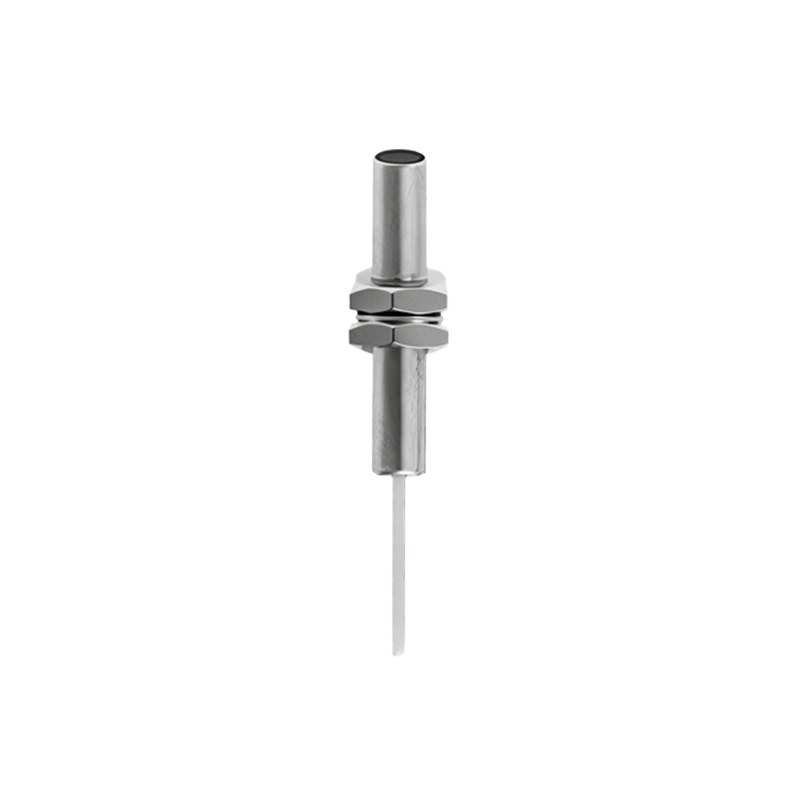
Modern proximity magnetic sensors are highly integrated systems-on-chip. They combine the sensitive element (Hall plate or MR strip), signal amplifiers, voltage regulators, temperature compensation circuits, and digital interfaces (I2C, SPI) in a single package. This integration enhances noise immunity, reduces system size, and simplifies design-in for applications ranging from smartphone flip covers and laptop lid closure detection to anti-lock braking systems and electric vehicle motor control.
The choice between Hall-effect, magnetoresistive, or inductive magnetic sensors depends on the specific requirement: required detection distance, sensitivity to field strength versus direction, target material, cost constraints, and environmental conditions. Their non-contact nature ensures long operational life with no wear and tear, enabling smarter, more reliable, and maintenance-free systems across countless industries. Continued advancements in materials science and integrated circuit technology promise even smaller, more sensitive, and energy-efficient magnetic proximity sensing solutions for the future.