In the world of automation and smart technology, few components are as ubiquitous yet understated as the sensor proximity switch. This device, a cornerstone of modern industrial and consumer electronics, operates silently and efficiently, enabling countless machines and gadgets to interact with their environment without physical contact. Understanding its function, types, and applications reveals the invisible hand that guides much of our automated world.
At its core, a sensor proximity switch is a non-contact sensor that detects the presence or absence of an object within a specific range. Unlike mechanical switches that require physical pressure or contact to activate, proximity switches work by emitting a field or beam and monitoring changes in that field caused by a target object. The key advantage is clear: no physical contact means no wear and tear, leading to higher reliability, longer lifespan, and the ability to detect fragile, fast-moving, or hazardous objects safely.
The principle of operation hinges on different physical phenomena, leading to several primary types. Inductive proximity switches are perhaps the most common in industrial settings. They generate an oscillating electromagnetic field. When a metallic object enters this field, it induces eddy currents within the metal, which dampens the oscillator's amplitude. The sensor's circuitry detects this change and triggers a solid-state switch. These sensors are ideal for detecting metals like steel, aluminum, or copper, but are ineffective for non-metallic materials.
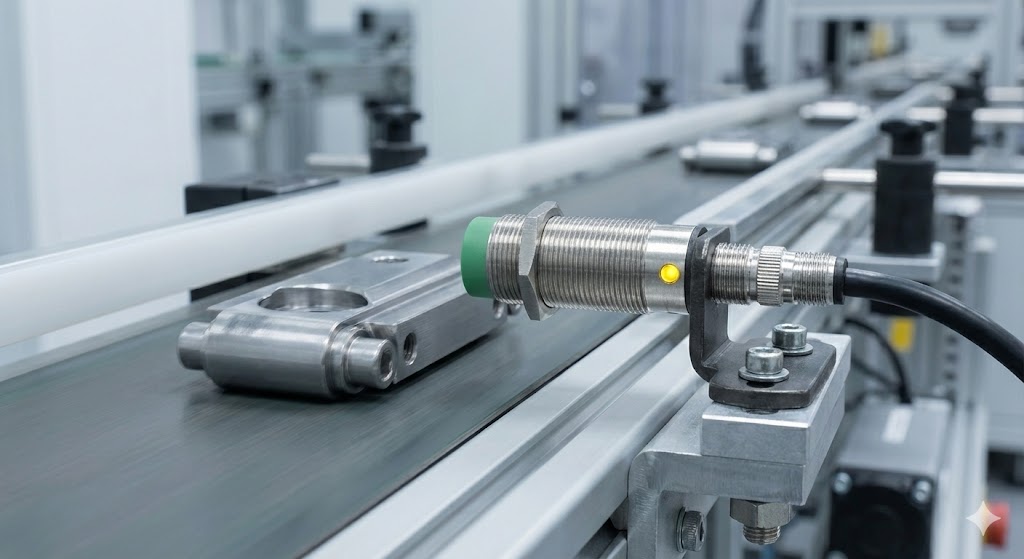
For non-metallic objects, capacitive proximity switches come into play. They function similarly but can detect a much wider range of materials, including liquids, plastics, glass, and wood. They generate an electrostatic field. Any object that enters this field alters its capacitance. The sensor measures this change to determine presence. This makes them perfect for applications like liquid level detection, material handling, or detecting packaged goods through cardboard.
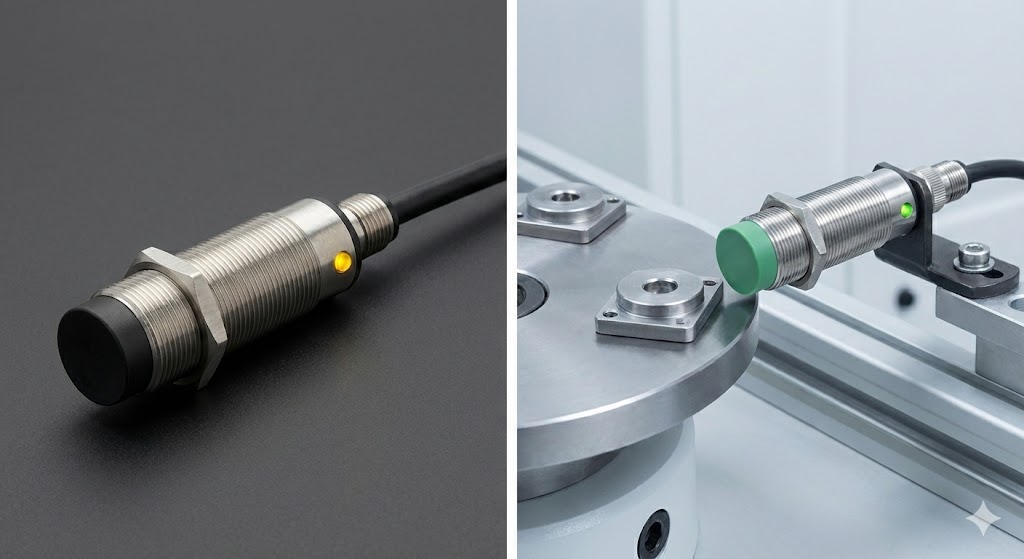
A third major category is the photoelectric proximity switch. This type uses a light beam, typically infrared, LED, or laser. The sensor contains an emitter to project the light and a receiver to detect it. In the most common "through-beam" configuration, the object breaks the beam between separate emitter and receiver units. In a "reflective" model, the sensor emits light and looks for its reflection off the target. These switches offer very long sensing ranges and can detect virtually any object, regardless of material, making them extremely versatile.
Ultrasonic proximity switches form another important group. They work on a principle similar to sonar, emitting high-frequency sound waves and listening for the echo. By calculating the time delay between emission and reception, they can not only detect presence but also measure distance. They are excellent for challenging environments with dust, smoke, or vapors where optical sensors might fail, and are commonly used in level sensing for tanks or collision avoidance in vehicles.
The output of these sensors is typically a simple on/off signal, often through a transistor or relay. This digital signal is easily read by programmable logic controllers (PLCs), microcontrollers, or other control systems to trigger actions—stopping a conveyor belt, counting items, opening a door, or activating a safety curtain.
The applications of sensor proximity switches are vast and integral to modern life. In manufacturing, they are the eyes of assembly lines, used for precise positioning of robotic arms, detecting the end of a roll of material, or ensuring proper part placement. In the automotive industry, they ensure robotic welders are in the correct position and count components on fast-moving production lines. Beyond heavy industry, they are found in everyday life: the automatic faucet in a public restroom uses a capacitive or infrared sensor; the elevator door that reopens when it senses an obstruction relies on photoelectric or ultrasonic sensors; modern smartphones use a miniature version to turn off the screen during a call when held to the ear.
Choosing the right proximity switch depends on several factors: the material of the target object, the required sensing distance, the environmental conditions (temperature, moisture, contaminants), the required response speed, and the electrical output needed. For instance, a wet, dirty factory floor might call for a rugged, sealed inductive sensor for metal parts, while a clean packaging line might use a fast photoelectric sensor to count plastic bottles.
In conclusion, the sensor proximity switch is a fundamental enabling technology. Its ability to provide reliable, non-contact detection has made it indispensable across sectors. From ensuring the smooth flow of industrial automation to adding convenience and safety to consumer products, these silent sentinels work continuously in the background. As technology advances, we see trends towards miniaturization, increased sensing ranges, enhanced intelligence with IO-Link communication for diagnostics, and greater resilience in harsh environments. The humble proximity switch, in its various forms, will undoubtedly continue to be a critical component in building a more automated and responsive world.