In the realm of precision measurement and industrial automation, the integration of Hall Effect technology with laser displacement sensing represents a significant advancement. This article delves into the operational principles, key applications, and critical selection criteria for Hall Effect laser displacement sensors, providing essential insights for engineers and technical professionals.
Fundamentally, a laser displacement sensor measures distance or position by projecting a laser beam onto a target and analyzing the reflected light. Common principles include triangulation for diffuse surfaces and time-of-flight for longer ranges. The integration of the Hall Effect introduces a robust method for detecting the presence, position, or motion of a component within the sensor's own assembly, often related to internal moving parts like a shutter or a range-finding mechanism. The Hall Effect is the production of a voltage difference (the Hall voltage) across an electrical conductor, transverse to an electric current in the conductor and a magnetic field perpendicular to the current. In a sensor context, a small permanent magnet is attached to a moving internal part. As this part moves, the magnetic field strength detected by a Hall element changes, generating a signal that precisely indicates the part's position. This internal feedback is crucial for functions such as confirming laser emission status, calibrating measurement cycles, or switching between operational modes, thereby enhancing the sensor's reliability and diagnostic capabilities.
The synergy of these technologies yields sensors with exceptional performance. They offer non-contact, high-speed, and high-accuracy measurements, typically in the micrometer to millimeter range. The Hall element adds a layer of internal state monitoring, making these sensors highly reliable in demanding environments. Key specifications to consider include measuring range, resolution, linearity, spot size, sampling rate, and the specific output signals (analog voltage/current, digital interfaces like IO-Link).
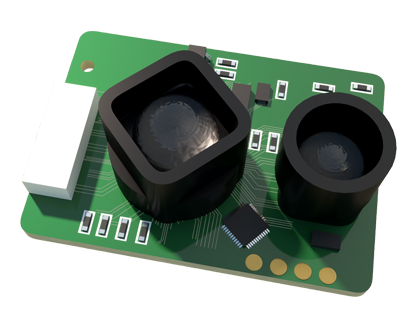
The applications for Hall Effect laser displacement sensors are vast and span numerous industries. In automotive manufacturing, they are indispensable for measuring component gaps, panel flushness, and brake disc thickness with extreme precision. In electronics assembly, they ensure the precise placement of components on printed circuit boards and measure solder paste height. The robotics sector relies on them for precise guidance, object detection, and bin-picking applications. In metal processing, they monitor thickness, warpage, and vibration. Furthermore, their ability to measure delicate or soft objects without physical contact makes them ideal for packaging, pharmaceutical, and food production lines.
Selecting the right sensor requires a careful analysis of the application's needs. The primary consideration is the target surface. Polished, mirror-like surfaces can reflect the laser beam specularly, causing measurement errors, while dark or absorbing materials may weaken the return signal. Many modern sensors offer specialized modes or filters to handle these challenges. Environmental factors are equally critical. Ambient light, dust, oil, steam, and temperature fluctuations can affect performance. Sensors with high IP ratings (e.g., IP67), robust housings, and temperature compensation are necessary for harsh factory floors. The required measurement performance—such as resolution, repeatability, and speed—must align with the process tolerances. Finally, integration ease is paramount. Consider the physical size for mounting, the required output signal compatibility with PLCs or data acquisition systems, and available software for configuration and diagnostics.
In conclusion, Hall Effect laser displacement sensors are powerful tools that combine the accuracy of optical measurement with the reliability of magnetic position sensing. Their role in enabling quality control, process automation, and robotic guidance continues to expand. A thorough understanding of their working principles, coupled with a methodical approach to selection based on target properties, environmental conditions, and performance requirements, is key to successfully deploying these sensors and unlocking their full potential for improving efficiency and product quality in modern industrial operations.