Laser sensors represent a cornerstone of modern industrial automation, measurement, and control systems. Their principle of operation is based on the precise emission, reflection, and detection of coherent light. A typical laser sensor system comprises three core components: the laser emitter, the optical system, and the photodetector. The emitter generates a highly focused, monochromatic beam. This beam is directed by the optical system towards the target object. Upon striking the target, the beam is reflected, scattered, or absorbed. The photodetector then captures the returning light signal and converts it into an electrical signal for processing. The key parameters defining sensor performance include measurement range, resolution, accuracy, response time, and spot size. Different types of lasers, such as red laser diodes, infrared lasers, or blue lasers, are selected based on application requirements like visibility, surface properties, or environmental conditions.
The primary advantage of laser sensors lies in their non-contact measurement capability. This eliminates mechanical wear, prevents damage to delicate objects, and allows for high-speed inspection of moving targets. Furthermore, laser beams can be focused to extremely small spots, enabling high-resolution measurements of minute features or edges. This makes them ideal for precision tasks unattainable by traditional contact probes or other optical methods. Their immunity to many environmental factors like electromagnetic interference, when properly shielded, ensures stable operation in challenging industrial settings.
Laser sensor technology is categorized into several types based on the measurement principle. Time-of-Flight (ToF) sensors calculate distance by measuring the round-trip time of a laser pulse. They are suitable for long-range measurements, such as in logistics for bin level detection or vehicle guidance. Triangulation sensors use a geometric approach: the laser spot is projected onto the target, and its position is viewed from an angle by a receiver. Displacement of the target causes a shift in the spot's position on the receiver, allowing for extremely precise distance and thickness measurements. This principle is widely used in profilometry and dimensional gauging. Confocal sensors utilize chromatic aberration to measure distance with nanometer-level resolution, perfect for transparent or multilayer material inspection. Laser contrast sensors excel at detecting marks, labels, or color differences on surfaces, while laser profile sensors scan a line across an object to create a detailed 2D or 3D contour map for shape inspection.
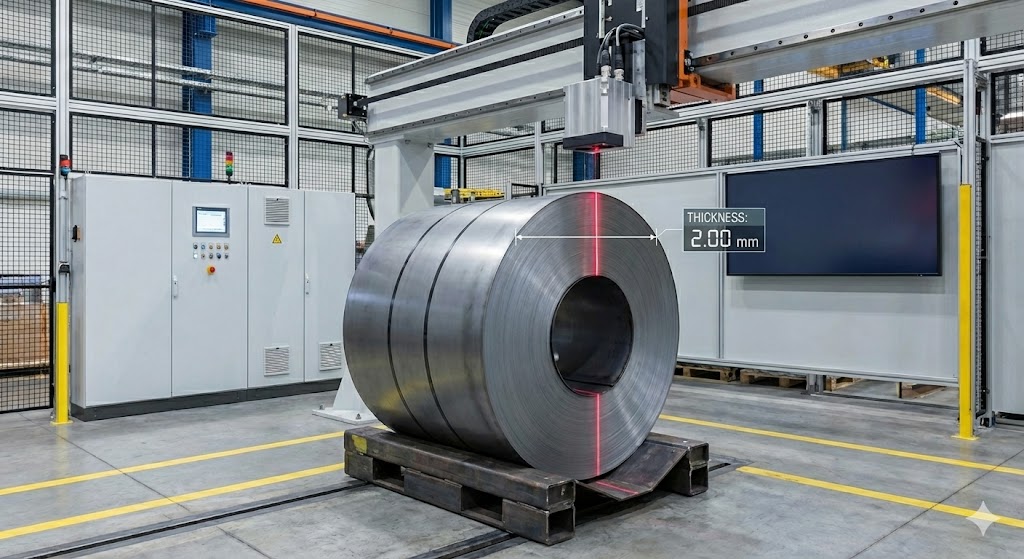
The applications of laser sensors span virtually every industry. In automotive manufacturing, they are indispensable for robot guidance, weld seam tracking, part presence verification, and panel gap inspection. In electronics, they measure component height, coplanarity of leads, and solder paste volume. The packaging industry relies on them for fill level control, label positioning, and tamper-evident seal inspection. In logistics and warehousing, laser scanners read barcodes and QR codes on packages moving at high speeds on conveyor belts. Furthermore, they play a critical role in quality control for measuring the thickness of materials like paper, metal, glass, and plastic films during production.
When integrating a laser sensor into a system, several critical factors must be considered. The target surface properties—its color, reflectivity, texture, and material—directly influence the signal strength. Highly reflective or transparent surfaces may require special sensors with adjustable sensitivity or specific wavelengths. The operating environment is another crucial factor; ambient light, dust, oil mist, or temperature fluctuations can affect performance. Selecting sensors with appropriate ingress protection (IP) ratings and robust housings is essential for harsh environments. Finally, the output signal format (analog voltage/current, digital IO, or serial communication like RS-485/Ethernet) must be compatible with the downstream PLC, robot controller, or data acquisition system.
Looking ahead, the evolution of laser sensor technology is geared towards smarter, more integrated, and more versatile solutions. The integration of Artificial Intelligence and machine learning algorithms allows sensors to not only capture data but also classify defects or make real-time decisions. Miniaturization continues, enabling their deployment in compact machinery and consumer electronics. The development of safer, eye-friendly laser classes expands their use in collaborative robot workspaces. Furthermore, the fusion of laser measurement data with other sensor inputs (like vision or tactile) in multi-sensor systems provides a more comprehensive understanding of complex production processes, driving the industry further towards intelligent, adaptive, and zero-defect manufacturing.
In conclusion, laser sensors are powerful, flexible, and reliable tools that provide critical data for automation and quality assurance. Their non-contact nature, high speed, and exceptional precision solve countless measurement and detection challenges. A deep understanding of their operating principles, types, and application considerations is vital for engineers and technicians to select the right sensor, ensure optimal installation, and maintain peak system performance, thereby maximizing return on investment and enhancing operational efficiency.
