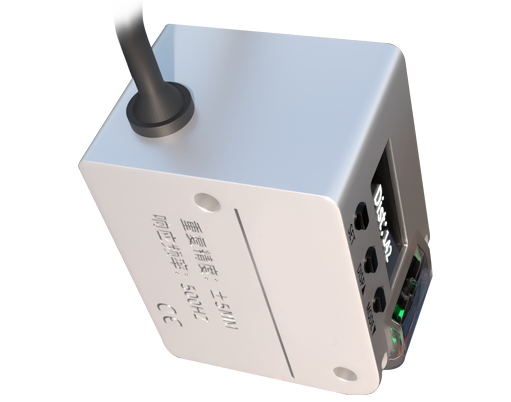
In the realm of industrial automation, precision and reliability are paramount. Among the array of sensing technologies available, Ultrasonic Laser Sensors (ULS) have emerged as a sophisticated solution for a multitude of applications, from distance measurement and object detection to level monitoring and positioning. This article delves into the operational principles, key advantages, and typical use cases of ULS laser sensors, providing a comprehensive overview for engineers and system integrators.
At its core, a ULS laser sensor operates by emitting a focused beam of laser light towards a target. The sensor then detects the reflected light, often using time-of-flight (ToF) or phase-shift measurement principles to calculate the distance to the object with high accuracy. Unlike standard ultrasonic sensors that use sound waves, the laser-based approach provides a significantly smaller beam spot, enabling precise detection of small objects and measurements at greater distances with minimal interference from environmental factors like air turbulence or background noise. The "ultrasonic" component in the name sometimes refers to the high-frequency modulation of the laser signal or, in some hybrid systems, denotes a complementary ultrasonic sensing capability for challenging conditions where laser light may be obstructed.

The advantages of implementing ULS laser sensors are substantial. First and foremost is their exceptional accuracy and resolution, capable of micron-level precision in controlled environments. They offer non-contact measurement, which is crucial for delicate surfaces or sterile processes. The response time is extremely fast, suitable for high-speed production lines. Furthermore, many modern ULS sensors feature robust housings with high Ingress Protection (IP) ratings, making them resistant to dust, moisture, and mechanical shocks commonly found in industrial settings. Advanced models incorporate intelligent functions such as background suppression, programmable switching outputs, and digital interfaces (e.g., IO-Link, Ethernet/IP) for seamless integration into Industry 4.0 and Industrial Internet of Things (IIoT) frameworks.
Typical applications span various sectors. In material handling and logistics, ULS sensors accurately measure package dimensions on conveyor belts or control crane positioning. Within the automotive industry, they ensure precise robot guidance during assembly and welding processes. In semiconductor and electronics manufacturing, they monitor wafer and component placement with sub-micron tolerances. For bulk solid and liquid level monitoring in tanks and silos, ULS sensors provide reliable data without physical contact with the medium. They are also pivotal in quality control, detecting minute defects, verifying fill levels, or checking for presence/absence on fast-moving production lines.

When selecting a ULS laser sensor, engineers must consider several parameters: measuring range, accuracy, repeatability, beam characteristics (spot size, divergence), environmental conditions (temperature, ambient light), and the required output signal. Proper alignment and installation are critical to performance, as is understanding the target surface properties; highly reflective or absorbent materials may require sensor calibration or the selection of a specialized model. Regular maintenance, primarily lens cleaning to prevent contamination, ensures long-term reliability.
In conclusion, ULS laser sensors represent a powerful fusion of optical precision and electronic robustness, addressing complex measurement and detection challenges in modern automation. As technology advances, we can anticipate further miniaturization, enhanced connectivity, and smarter adaptive algorithms, solidifying their role as indispensable components in the intelligent factory of the future. Their ability to deliver consistent, high-fidelity data makes them a cornerstone for efficiency, safety, and quality across countless industrial processes.