Proximity sensors are essential components in modern industrial automation, robotics, and safety systems. They detect the presence or absence of objects without physical contact, offering reliability, durability, and high-speed operation. This guide provides a detailed overview of the major types of proximity sensors, their working principles, applications, and selection criteria.
Inductive Proximity Sensors are widely used for detecting metallic objects. They operate based on electromagnetic induction. A coil generates an oscillating magnetic field; when a metal object enters this field, eddy currents are induced, altering the oscillation amplitude. This change triggers the sensor output. Inductive sensors excel in harsh industrial environments, resistant to dust, moisture, and vibrations. Common applications include position sensing in machinery, metal detection in conveyors, and part counting in assembly lines. Key specifications include sensing range (typically up to 60 mm), response frequency, and housing material (often stainless steel or nickel-plated brass).
Capacitive Proximity Sensors can detect both metallic and non-metallic materials, such as plastics, liquids, or wood. They function by measuring changes in capacitance. The sensor forms one plate of a capacitor, with the target object acting as the other plate. As the object approaches, the capacitance increases, triggering the output when a threshold is reached. These sensors are ideal for level detection in tanks, material handling, and packaging industries. They offer adjustable sensitivity to handle various materials but may be influenced by environmental factors like humidity.
Ultrasonic Proximity Sensors utilize sound waves beyond human hearing (typically 20 kHz to 200 kHz). They emit ultrasonic pulses and measure the time taken for echoes to return after hitting an object. This time-of-flight principle allows for precise distance measurement and detection of diverse materials, regardless of color or transparency. Ultrasonic sensors are versatile, used in object detection, liquid level monitoring, and collision avoidance in autonomous vehicles. However, they can be affected by temperature variations and acoustic interference.
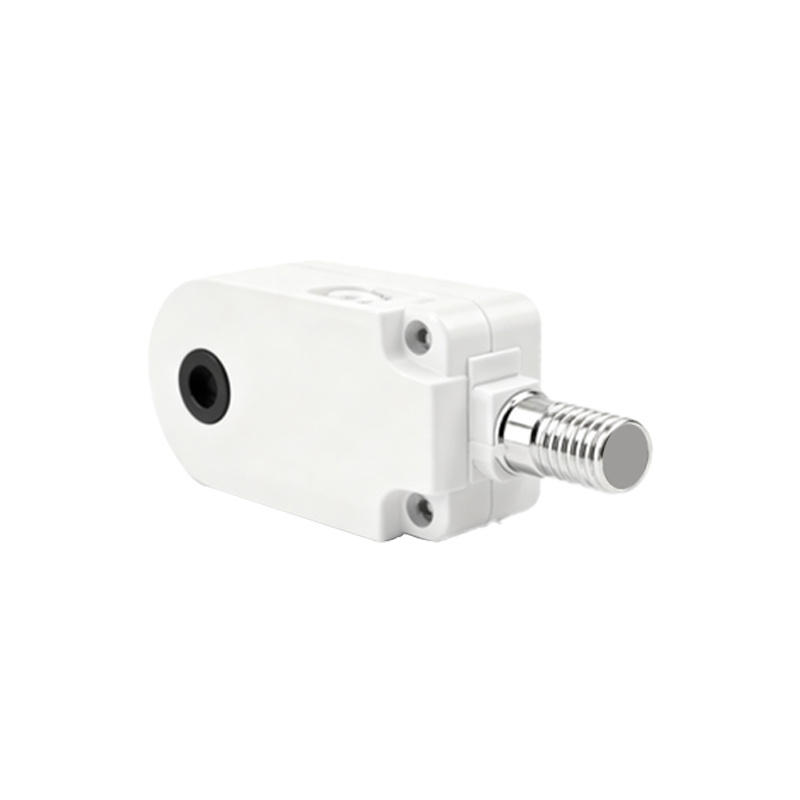
Magnetic Proximity Sensors detect magnetic fields, often from permanent magnets. Common types include reed switches and Hall effect sensors. Reed switches consist of ferromagnetic reeds in a sealed glass tube; when a magnet approaches, the reeds contact, closing the circuit. Hall effect sensors generate a voltage proportional to magnetic field strength. These sensors are compact, energy-efficient, and used in position sensing (e.g., door switches), speed measurement, and automotive systems. They are immune to non-magnetic materials but require a magnetic target.
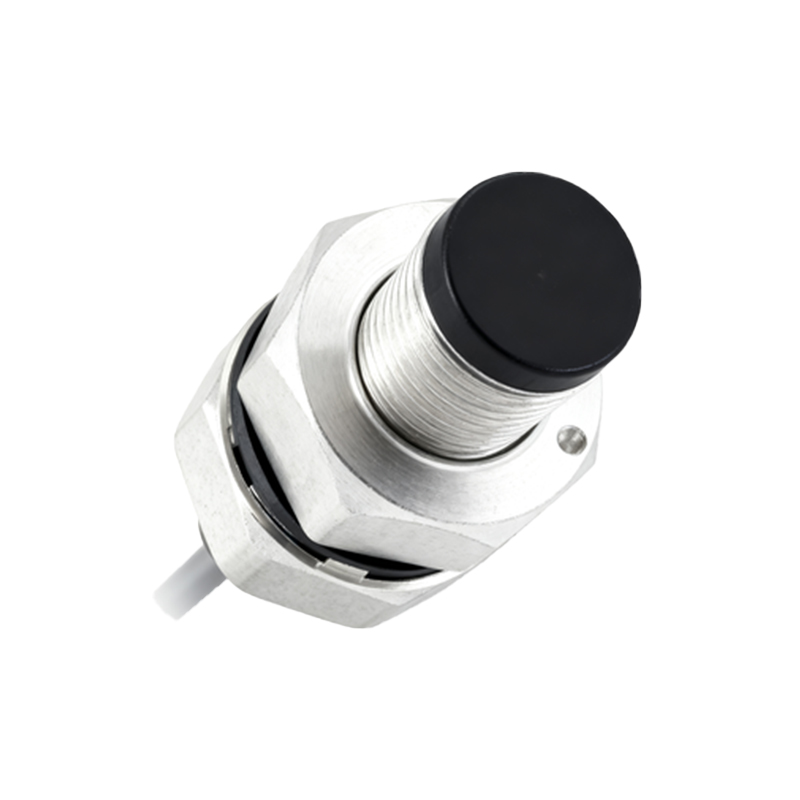
Photoelectric Proximity Sensors use light beams to detect objects. They comprise an emitter (usually LED or laser) and a receiver. Variations include through-beam, retro-reflective, and diffuse reflective types. Through-beam sensors have separate emitter and receiver units, offering long ranges and high accuracy. Retro-reflective sensors use a reflector to bounce light back, while diffuse sensors rely on light reflected directly from the target. Photoelectric sensors suit diverse applications, from packaging to pharmaceutical industries, capable of detecting small or transparent objects. Factors like ambient light and surface reflectivity can influence performance.
Infrared Proximity Sensors are a subset of photoelectric sensors, using infrared light for detection. They are common in consumer electronics (e.g., smartphones for screen control) and industrial automation. Infrared sensors can measure proximity based on intensity or time-of-flight, providing low-power operation but may be sensitive to environmental IR sources.
Selection of proximity sensors depends on factors such as target material, sensing distance, environmental conditions (temperature, humidity, contaminants), response time, and output type (digital or analog). Inductive sensors are best for metals in tough settings, capacitive for non-metallics, ultrasonic for versatile ranging, magnetic for compact magnetic detection, and photoelectric for precise light-based applications.
In summary, understanding proximity sensor types enables optimal integration into systems, enhancing efficiency and safety. Advances in technology continue to improve their accuracy, miniaturization, and connectivity, supporting Industry 4.0 and IoT-driven automation.