Laser autofocus distance sensors represent a pivotal advancement in precision measurement technology, widely adopted across electrical engineering, automation, and industrial applications. These sensors utilize laser beams to accurately determine the distance between the sensor and a target object, enabling real-time adjustments in focus or positioning. The core principle involves emitting a focused laser pulse toward the target and measuring the time it takes for the reflection to return—a method known as time-of-flight (ToF). Alternatively, phase-shift or triangulation techniques may be employed for enhanced accuracy in specific scenarios.
In electrical systems, laser autofocus distance sensors are integral to automated manufacturing lines, robotics, and quality control processes. For instance, in PCB assembly, these sensors ensure precise component placement by continuously monitoring distances to the board surface. They also facilitate alignment in optical systems, such as laser cutting or engraving machines, where maintaining a constant focal distance is critical for cut quality and efficiency. The non-contact nature of laser sensing eliminates mechanical wear, reduces maintenance needs, and allows operation in harsh environments where physical probes might fail.
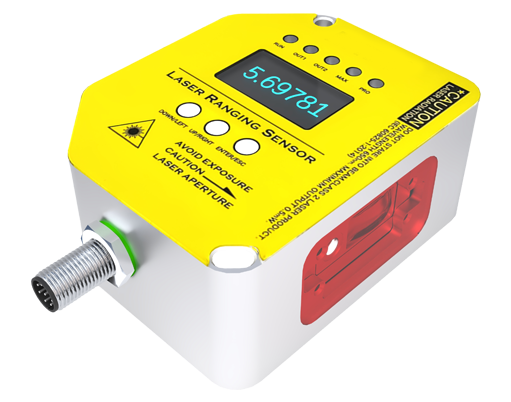
Key components include a laser diode for emission, a photodetector to capture reflected light, and a signal processor that converts data into distance readings. Modern sensors often integrate microcontrollers and communication interfaces (e.g., Ethernet, RS-485) for seamless integration with PLCs or industrial networks. Calibration is essential to account for environmental factors like ambient light, temperature, or material reflectivity, which can affect measurement consistency. Advanced models feature adaptive algorithms that compensate for such variables, ensuring reliability in dynamic conditions.
The benefits of laser autofocus distance sensors extend beyond accuracy. They offer high-speed response, with some devices achieving measurement rates exceeding 10 kHz, suitable for fast-moving production lines. Their compact design allows installation in space-constrained setups, while robust housings protect against dust, moisture, and vibrations. Energy efficiency is another advantage, as pulsed laser operation minimizes power consumption compared to continuous-emission systems.
Looking ahead, innovations in miniaturization and AI-driven analytics are expanding sensor capabilities. Integration with IoT platforms enables predictive maintenance, where sensors monitor equipment wear and trigger alerts before failures occur. In renewable energy sectors, these sensors assist in solar panel alignment or wind turbine blade inspection, enhancing system performance. As Industry 4.0 evolves, laser autofocus distance sensors will continue to underpin smart factories, contributing to automation, safety, and precision across electrical engineering domains.
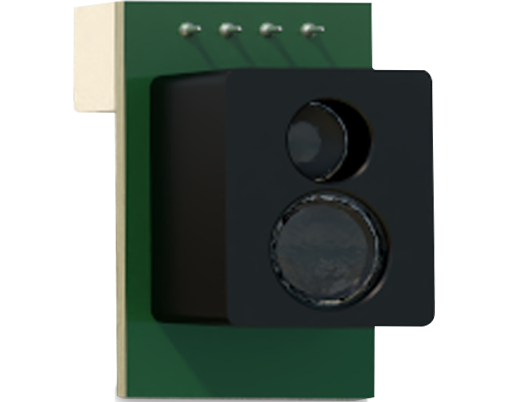
For engineers selecting a sensor, considerations include measurement range (from millimeters to several meters), resolution (often down to micrometer levels), and target surface properties. Dark or transparent materials may require specialized sensors with adjusted wavelength or sensitivity. Compliance with safety standards, such as IEC 60825 for laser products, is mandatory to prevent ocular hazards. Ultimately, leveraging laser autofocus distance sensors empowers electrical projects with enhanced control, reduced downtime, and improved product quality, driving innovation in an increasingly automated world.