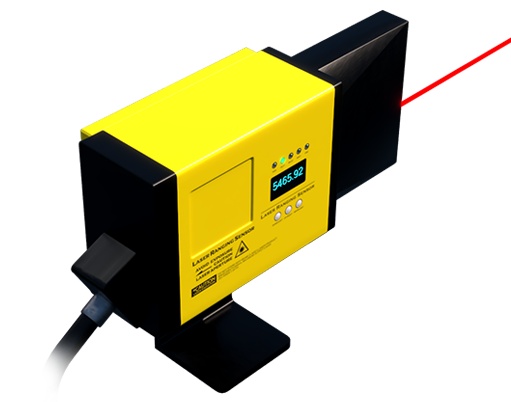
Laser distance sensors are critical components in modern industrial automation, offering high-precision non-contact measurement for various applications. However, deformation of these sensors can significantly impact their accuracy and reliability. Deformation typically arises from thermal expansion, mechanical stress, or material fatigue, leading to misalignment of optical components or shifts in the internal reference frame. In industrial environments, temperature fluctuations are a primary cause. Prolonged exposure to high temperatures can cause the sensor housing or internal mounts to expand, altering the path of the laser beam. Similarly, mechanical stress from improper mounting, vibration, or external impacts can bend the sensor body or displace the lens assembly. Material fatigue over time, especially in harsh conditions with dust, humidity, or chemical exposure, may also contribute to structural changes.
The consequences of deformation are often subtle but critical. Even minor deviations can result in measurement errors, affecting quality control in manufacturing, alignment in robotics, or safety in automated systems. For instance, in automotive assembly, a deformed sensor might inaccurately measure gap dimensions between panels. In logistics, it could misjudge parcel sizes on conveyor belts. Regular calibration can detect some errors, but deformation-induced issues may not be fully correctable through software adjustments, as they involve physical changes to the sensor's geometry.
To mitigate deformation, engineers should consider several strategies. Selecting sensors with robust housings made from materials like stainless steel or aluminum alloys with low thermal expansion coefficients is essential. Proper installation is crucial: sensors should be mounted on stable surfaces using vibration-dampening fixtures, avoiding over-tightening of fasteners. Thermal management, such as adding heat sinks or placing sensors away from heat sources, can reduce temperature-related effects. Additionally, implementing environmental protections like enclosures or cooling systems helps in harsh settings. Routine maintenance, including visual inspections for physical damage and performance validation against known references, can identify early signs of deformation.
In summary, while laser distance sensors are designed for durability, deformation remains a practical challenge in demanding industrial applications. By understanding its causes—thermal, mechanical, and material-related—and adopting preventive measures in design, installation, and maintenance, engineers can enhance sensor longevity and ensure consistent, accurate measurements. This proactive approach minimizes downtime and supports efficient automation processes.