Eddy current proximity sensors represent a fundamental technology in industrial automation, offering non-contact detection of metallic objects with exceptional reliability and precision. These sensors operate on the principles of electromagnetic induction, a phenomenon first described by Michael Faraday. At their core, they consist of a coil wound around a ferrite core, housed within a sensing face, and connected to an oscillator circuit. When an alternating electrical current flows through this coil, it generates an oscillating magnetic field that extends from the sensor's active face into the surrounding space.
The fundamental working principle unfolds when a conductive target, typically a metal object, enters this dynamic magnetic field. According to Faraday's Law of Induction, the changing magnetic flux induces circulating currents, known as eddy currents, on the surface of the target material. These eddy currents, in turn, generate their own opposing magnetic field, which interacts with the field produced by the sensor's coil. This interaction effectively loads the coil, altering its effective impedance. The key measurable change is a reduction in the amplitude of the oscillation within the sensor's resonant circuit, proportional to the distance to the target. The sensor's integrated electronics continuously monitor this oscillation amplitude. When the amplitude drops below a predefined threshold—indicating a target is within the specified sensing range—the sensor's output state switches, providing a clear digital or analog signal.
Several critical factors influence sensor performance and must be carefully considered during selection and application. The first is target material. Eddy currents form most readily in materials with high electrical conductivity. Therefore, sensors exhibit different sensing distances for different metals. For instance, the sensing distance for mild steel is typically the reference (100%). For aluminum, it might be 60-70%, for copper 50-60%, and for stainless steel (austenitic grades like 304) only 30-50% due to lower conductivity and magnetic permeability. The second factor is target size and shape. For optimal performance, the target should be at least equivalent to the sensor's sensing face diameter and flat to ensure consistent eddy current formation. Thickness is also crucial; the target must be thicker than the material's standard penetration depth to prevent the magnetic field from passing through it, which would diminish the sensing signal.
Temperature stability is another vital characteristic. High-quality eddy current sensors are designed with temperature-compensated circuits to minimize drift across their operating range, often from -25°C to +85°C. This makes them suitable for harsh environments found in metalworking, automotive manufacturing, and heavy machinery. Furthermore, these sensors are immune to common industrial interferences. They are not affected by dust, oil, coolant, or other non-conductive contaminants that may accumulate on the sensing face, as these materials do not conduct electricity and thus cannot generate eddy currents. This robustness stands in contrast to optical or capacitive sensors, which can be fooled by such substances.
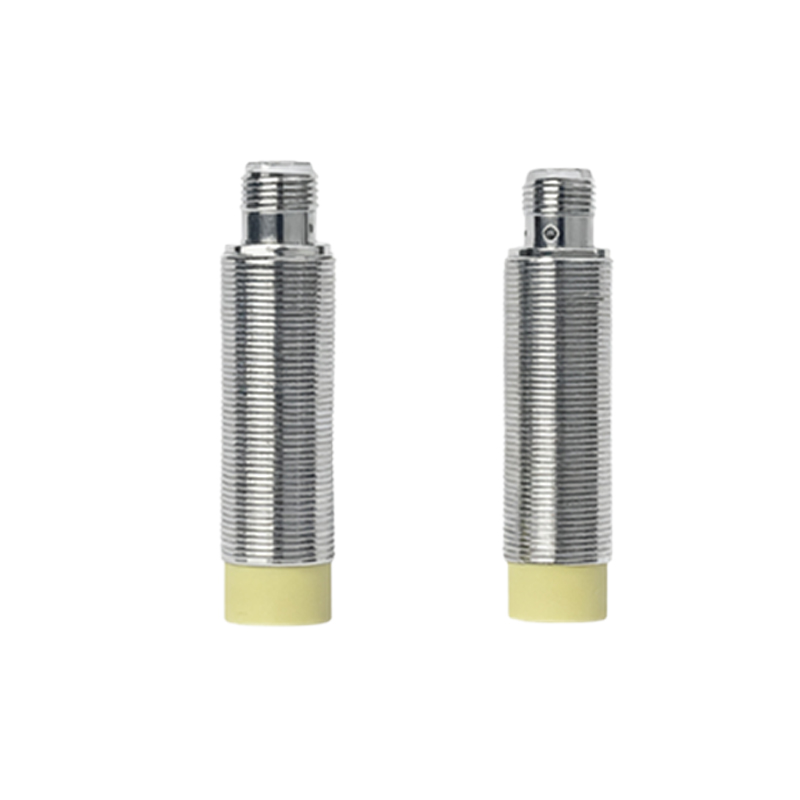
The applications for eddy current proximity sensors are vast and critical across numerous industries. In machine tools, they are used for precise position feedback of slides, spindles, and tool changers, as well as for part presence verification. In the automotive sector, they monitor crankshaft and camshaft position for engine timing, detect gear teeth, and control robotic welding arms. They are indispensable in vibration monitoring systems on turbines and motors, where they measure the displacement of shafts relative to bearings with micron-level resolution. Other common uses include counting metallic parts on conveyors, controlling roll gap in steel mills, and providing end-of-travel limits on automated machinery.
When selecting an eddy current sensor, engineers must evaluate the required sensing distance, target material, environmental conditions (temperature, potential for physical impact), electrical output type (PNP/NPN, analog 4-20mA or 0-10V), and housing style (threaded barrel, rectangular block). Proper installation is equally important; maintaining the recommended clearance around the sensor (free of any surrounding metal) prevents false triggering from the mounting hardware itself.
In summary, eddy current proximity sensors provide a robust, accurate, and maintenance-free solution for detecting metallic objects without physical contact. Their operation, rooted in the elegant physics of electromagnetic induction, translates into practical, high-performance sensing for the most demanding industrial automation challenges. Their immunity to contaminants and ability to function in dirty, oily, or wet environments ensure their continued prominence as a workhorse technology in factory automation and predictive maintenance systems worldwide.