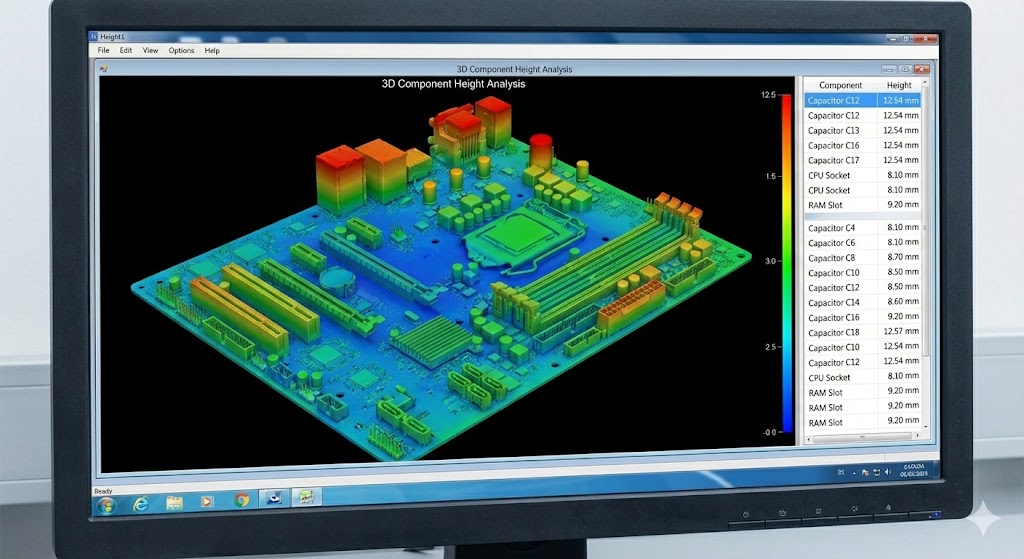
In the realm of industrial automation and precision measurement, Laser Optical Triangulation (LOT) sensors have established themselves as indispensable tools. These non-contact measurement devices offer unparalleled accuracy, speed, and reliability for a vast array of applications, from quality control on production lines to robotic guidance and 3D profiling. This guide delves into the operational principles, key advantages, diverse applications, and critical selection criteria for LOT sensors, providing a foundational understanding for engineers and system integrators.
At its core, the principle of Laser Optical Triangulation is elegantly simple yet powerful. The sensor projects a focused, visible or invisible laser spot onto the target surface. A high-resolution CMOS or CCD imaging element (camera), positioned at a known angle relative to the laser emitter, captures the reflection of this spot. As the distance to the target changes, the position of the reflected laser spot shifts on the imaging sensor's plane. Using precise trigonometric calculations, the sensor's onboard processor converts this pixel displacement into an exact distance measurement. This fundamental principle enables micron-level resolution and high repeatability.
The advantages of LOT sensors over traditional contact probes or other non-contact methods like ultrasonic sensors are significant. First and foremost is their exceptional precision, capable of detecting sub-micron changes in distance or height. They offer very high measurement speeds, often in the kilohertz range, making them suitable for dynamic, high-throughput processes. As non-contact devices, they eliminate issues of wear, mechanical hysteresis, and potential damage to delicate target surfaces. Their compact form factor allows for easy integration into tight spaces on machinery. Furthermore, modern LOT sensors are highly robust, featuring rugged housings rated for IP67 or higher, enabling reliable operation in harsh industrial environments with dust, coolant, and vibration.
The application spectrum for LOT sensors is remarkably broad. In automotive manufacturing, they are used for gap and flush measurement between body panels, tire tread depth inspection, and brake disc thickness monitoring. In electronics, they measure component coplanarity, solder paste height, and PCB warpage. In the pharmaceutical and packaging industries, they ensure precise fill levels, check seal integrity, and control web thickness. LOT sensors are also pivotal in robotics for precise bin-picking guidance, weld seam tracking, and assembly verification. Advanced models with line lasers or multiple spots enable full 2D profile scanning and 3D surface contouring for reverse engineering and defect detection.
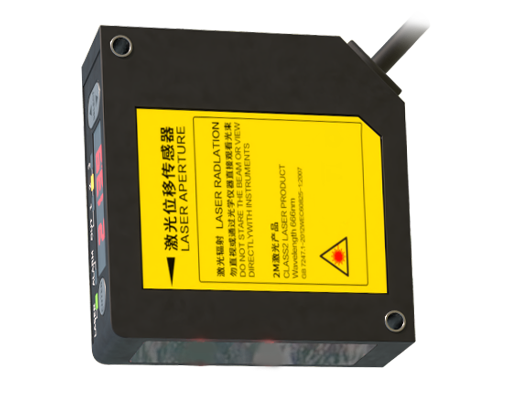
Selecting the appropriate LOT sensor for a specific task requires careful consideration of several parameters. The measuring range defines the minimum and maximum distances over which the sensor can operate accurately. The standoff distance is the optimal working distance from the sensor face to the target. Resolution indicates the smallest detectable change in distance, while linearity defines the accuracy across the entire measuring range. The spot size is crucial, as a smaller spot allows for higher resolution but can be affected by surface texture. Sampling rate determines how quickly measurements can be taken. Material properties of the target, such as color, reflectivity, and surface finish (matte, glossy, transparent), profoundly affect performance. For dark or absorbing surfaces, sensors with higher laser power or automatic exposure control are necessary. For shiny surfaces, models with specialized filters or diffuse reflection technology prevent saturation of the receiver.
Integration and setup have been greatly simplified with modern features. Many sensors offer intuitive teach-in functions for setting measurement windows and thresholds directly via buttons or software. Standard industrial communication interfaces like IO-Link, analog voltage/current outputs, and digital protocols (EtherNet/IP, PROFINET) facilitate seamless data transfer to PLCs and control systems. Built-in evaluation electronics can provide direct pass/fail outputs, reducing the load on the central controller.
In conclusion, Laser Optical Triangulation sensors represent a mature yet continuously evolving technology that is critical for modern smart manufacturing and Industry 4.0 initiatives. Their ability to deliver fast, precise, and reliable non-contact measurements solves complex inspection and control challenges across virtually every industrial sector. By understanding their operating principle, strengths, and application requirements, engineers can effectively leverage LOT sensors to enhance product quality, optimize processes, and drive automation efficiency to new levels.