In the world of industrial automation and machine control, the ability to detect the presence or absence of an object without physical contact is paramount. Among the various technologies enabling this capability, inductive proximity sensors stand out for their robustness, reliability, and precision in metallic environments. These non-contact electronic devices are workhorses on factory floors, seamlessly integrating into complex systems to ensure efficiency, safety, and consistent quality.
At its core, an inductive proximity sensor operates on the principle of electromagnetic induction. The key component is a coil wound around a ferrite core located at the sensor's active face. When an alternating current flows through this coil, it generates an oscillating electromagnetic field. When a conductive metal target enters this field, eddy currents are induced on the target's surface. These eddy currents draw energy from the sensor's oscillator circuit, causing a change in its amplitude. The sensor's evaluation circuit detects this amplitude drop and triggers a switching signal—typically turning a solid-state output ON or OFF. This entire process happens in microseconds, allowing for high-speed detection.
One of the most significant advantages of inductive sensors is their exceptional durability. With no moving parts and a hermetically sealed sensing face, they are immune to dust, dirt, oil, and coolant splashes. They can withstand significant mechanical shock and vibration, making them ideal for harsh industrial environments like machining centers, stamping presses, and welding lines. Their non-contact nature also eliminates wear and tear, leading to a long operational life measured in millions of cycles.
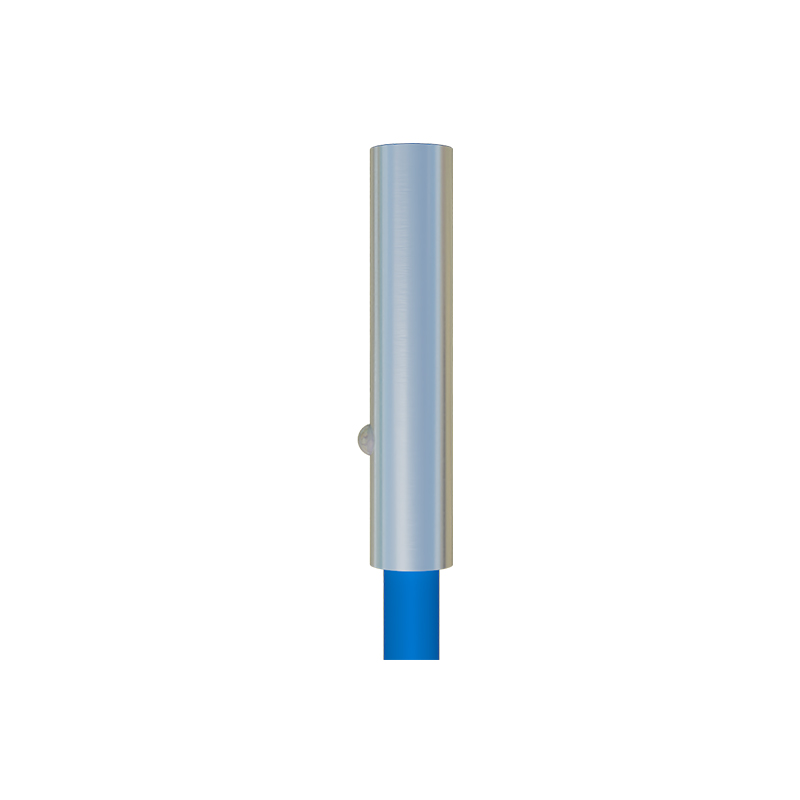
The applications for inductive proximity sensors are vast and varied. A common use is part presence verification. For instance, on an assembly line, a sensor can confirm a metal component is correctly positioned before a robotic arm performs a task, preventing errors and jams. They are extensively used for counting metallic objects, such as cans on a conveyor or bolts in a feeder system. In machine tools, they serve as precise limit switches to determine the end position of a slide or spindle, ensuring repeatable machining operations. They also play a critical role in safety systems, monitoring guard door positions or detecting the presence of tools.
When selecting an inductive proximity sensor, several key parameters must be considered. The sensing distance, or nominal range, is crucial and varies by model and target material. It's important to note that the rated sensing distance is defined for a standard mild steel target. For other metals like aluminum, brass, or stainless steel, a correction factor must be applied, as these materials typically reduce the effective range. The sensor's housing style is another critical choice; cylindrical threaded barrels (e.g., M8, M12, M18, M30) are common for easy mounting, while rectangular or block-style housings offer different mounting options. Output configuration is equally important: PNP (sourcing) or NPN (sinking) transistor outputs must match the controller's input card, while some sensors offer analog (4-20 mA or 0-10V) or IO-Link outputs for distance-proportional data. Environmental ratings, indicated by IP (Ingress Protection) codes like IP67 or IP69K, define the sensor's resistance to dust and water.
Installation and setup require attention to detail. Maintaining the proper mounting distance between sensors is essential to prevent mutual interference of their electromagnetic fields. The target material, size, and approach angle can affect performance; a target should generally be at least as large as the sensor's sensing face for reliable detection. Regular maintenance is minimal but should include periodic cleaning of the sensing face to remove any metallic swarf buildup that could cause false triggering.
In conclusion, inductive proximity sensors are a foundational technology in modern automation. Their simple yet effective operating principle, combined with rugged construction and versatile application possibilities, makes them indispensable for detecting metallic objects. By understanding their working principles, key specifications, and application nuances, engineers and technicians can effectively integrate these sensors to build smarter, safer, and more productive automated systems. As Industry 4.0 advances, these sensors continue to evolve, with integrated diagnostics and digital communication capabilities, ensuring they remain vital components in the connected factory of the future.