The global defense landscape is witnessing a paradigm shift, with directed-energy weapons and advanced sensor suites moving from science fiction to operational reality. Among the nations at the forefront of this technological revolution is Turkey, which has made significant strides in developing indigenous sensor and laser weapon systems. These advancements are not merely incremental improvements but represent a strategic pivot towards next-generation warfare capabilities, emphasizing precision, cost-effectiveness, and layered defense.
Turkey's journey in this domain is largely spearheaded by its leading defense contractor, ASELSAN. The company's flagship product, the ALKA Directed Energy Weapon (DEW) system, has garnered international attention. The ALKA is a dual-function system, capable of operating as a high-power laser weapon and a radio-frequency (RF) jammer. This dual capability allows it to engage a diverse threat portfolio. In laser mode, it is designed to disable or destroy small unmanned aerial vehicles (UAVs), rockets, artillery shells, and mortars by delivering concentrated photon energy to critical components, causing structural failure or ignition. The RF function can disrupt the electronic guidance systems of incoming threats, providing a soft-kill option. Field tests have demonstrated its efficacy against moving drone targets at tactically relevant ranges, showcasing a viable counter to the proliferating low-cost drone menace that has transformed modern battlefields.
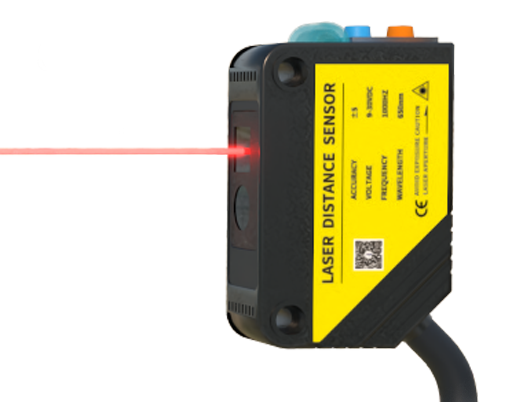
The effectiveness of any weapon system, especially one as precise as a laser, is fundamentally dependent on its sensors. Turkish defense engineering has placed immense emphasis on developing sophisticated, multi-spectral sensor packages to serve as the "eyes" for these systems. These sensor suites typically integrate high-resolution electro-optical (EO) cameras, thermal imagers, and radar systems. The integration process is crucial; a centralized battle management system fuses data from these disparate sensors to create a unified, real-time air picture. This sensor fusion enables rapid threat detection, classification, tracking, and prioritization—a process that must be completed in seconds for the laser engagement to be successful. Companies like ASELSAN and Meteksan Defense specialize in these perimeter defense radars and tracking systems, which are designed to detect small, low-radar-cross-section targets like drones from several kilometers away.

The operational rationale for investing in laser weapons is compelling. Unlike traditional missile-based air defense systems, a laser shot is virtually silent, travels at the speed of light, and its cost-per-shot is remarkably low, essentially the price of the electricity required to charge its capacitors. This presents a sustainable solution for neutralizing saturation attacks involving swarms of inexpensive drones, where using million-dollar interceptor missiles is economically prohibitive. Furthermore, laser systems provide a deep magazine, limited only by power supply and cooling, allowing for engagement of numerous sequential threats.
Turkey's development path reflects a clear national strategy of reducing external dependency and achieving technological sovereignty in defense. The projects are driven by the Presidency of Defense Industries (SSB), which funds and coordinates research between public institutions, private companies, and universities. This ecosystem has fostered rapid innovation cycles. Following ALKA, newer concepts like the *Laser Weapon System* for ship defense are under development, aiming to protect naval assets from asymmetric surface and air threats.
The potential deployment scenarios for these systems are extensive. They are envisioned for critical infrastructure protection—guarding airports, power plants, and military bases. They can be mounted on mobile land vehicles for frontline army units or integrated into naval platforms for fleet defense. The Turkish Armed Forces have already begun limited deployment and testing in operational areas, particularly in regions where drone threats are prevalent, providing invaluable feedback for further refinement.

However, the technological challenges are non-trivial. High-power laser weapons require immense electrical power and advanced thermal management to dissipate the heat generated during operation. Atmospheric conditions like fog, rain, or dust can scatter and attenuate the laser beam, reducing its effective range. Continuous research is focused on improving beam quality, adaptive optics to compensate for atmospheric distortion, and developing more efficient power generation and storage solutions for mobile platforms.
Internationally, Turkey's progress places it in a select group of nations actively deploying directed-energy weapons, alongside the United States, Israel, China, and Russia. While the power levels of Turkish systems are currently in the tactical range (tens of kilowatts), aimed at drones and munitions, the foundational technology and institutional knowledge are being established. The next logical steps involve scaling the power output to engage larger, faster targets and further miniaturizing the systems for broader deployment.
In conclusion, Turkey's sensor and laser weapon programs signify a decisive move into the future of military technology. By successfully developing and testing integrated systems like ALKA, Turkey is not only enhancing its national defense and deterrence but also establishing itself as a noteworthy player in the global high-tech defense market. These systems address contemporary asymmetric threats with a novel mix of speed, precision, and logistical efficiency, heralding a new era where light itself becomes a formidable tool of defense.