In the world of automation and smart technology, proximity sensors are the silent, unseen workhorses. They detect the presence or absence of an object within a specific range without any physical contact. This fundamental capability makes them indispensable across countless industries, from manufacturing and automotive to consumer electronics and security systems. Unlike limit switches that require physical touch, proximity sensors offer non-contact detection, leading to higher reliability, longer operational life, and faster response times.
The core principle behind most proximity sensors involves generating an electromagnetic field or a beam of radiation. When a target object enters this field, it causes a change in the signal. This change is then processed by the sensor's circuitry to produce an output signal, typically a simple ON/OFF switch. The specific technology used defines the sensor's type, range, and suitability for different materials.
Inductive proximity sensors are among the most common. They generate an oscillating electromagnetic field. When a metallic object—ferrous or non-ferrous—enters this field, it induces eddy currents within the metal, which dampens the oscillation. The sensor detects this damping and triggers an output. These sensors are ideal for detecting metal objects in harsh industrial environments, as they are robust, resistant to dirt, oil, and water, and offer high switching frequencies. However, they are ineffective for non-metallic targets.
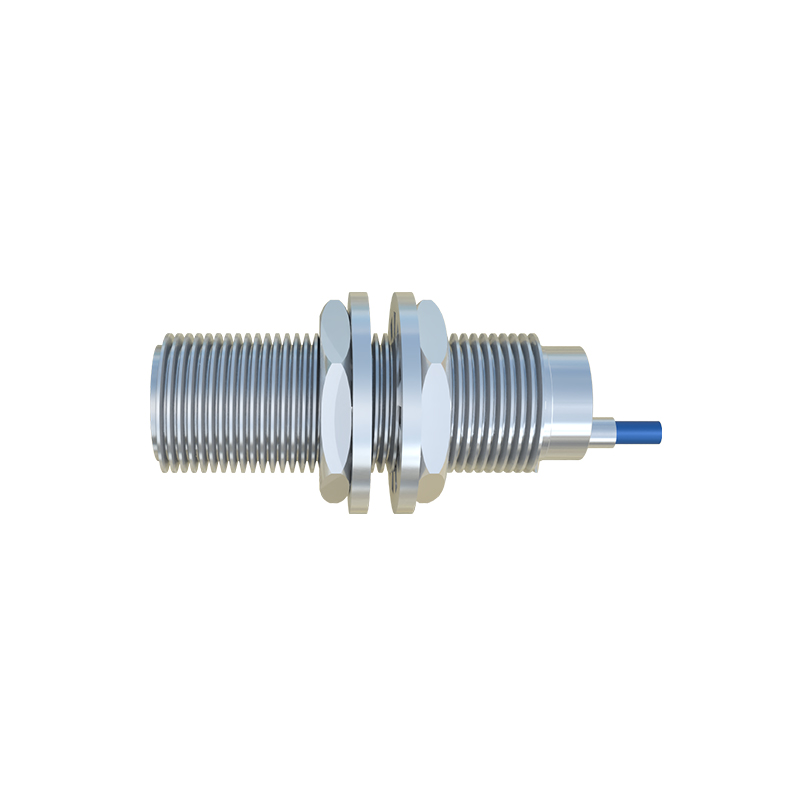
For detecting non-metallic objects, capacitive proximity sensors are the go-to choice. They function similarly to inductive sensors but can detect any material that affects capacitance, including liquids, plastics, wood, and granules. They generate an electrostatic field. The presence of any object with a dielectric constant different from air alters this field's capacitance, triggering detection. This makes them perfect for level detection in tanks, material handling, and touch-sensitive interfaces.
Photoelectric sensors, another major category, use light to detect objects. An emitter sends out a beam of light (visible, infrared, or laser), and a receiver detects it. The sensor triggers when the target object interrupts (through-beam mode) or reflects (reflective mode) this light beam. They offer very long sensing ranges and can detect objects of almost any material, color, or finish. They are widely used in packaging, material handling, and safety light curtains.
Ultrasonic proximity sensors operate on a principle similar to sonar. They emit high-frequency sound waves and measure the time it takes for the echo to return after bouncing off an object. By calculating this time-of-flight, they can determine both the presence and the distance of an object. These sensors are excellent for detecting clear, transparent, or irregularly shaped objects and are commonly used in liquid level control, collision avoidance in vehicles, and distance measurement.
When selecting a proximity sensor, several key parameters must be considered. The sensing range, or the maximum distance at which the sensor can reliably detect a standard target, is primary. The response time defines how quickly the sensor can react to a target's presence. Environmental factors like temperature, humidity, and the presence of chemicals or dust are critical for durability. The output type, such as NPN (sinking) or PNP (sourcing) transistor outputs, or analog outputs for distance measurement, must be compatible with the control system.
The applications are vast and varied. In automotive assembly lines, inductive sensors count gears and detect piston position. In smartphones, capacitive sensors deactivate the touchscreen when held to the ear. Photoelectric sensors count products on conveyor belts, while ultrasonic sensors manage parking assistance. In the food and beverage industry, capacitive sensors monitor plastic or glass bottle levels without contact, ensuring hygiene.
The future of proximity sensing is leaning towards miniaturization, increased intelligence, and integration. Sensors with IO-Link communication can transmit detailed diagnostic data, enabling predictive maintenance. The development of sensors that combine multiple technologies in one housing is also on the rise, offering greater flexibility. As the Internet of Things (IoT) expands, smart proximity sensors will become even more crucial nodes, providing essential data for automated and interconnected systems. Their role in enabling efficient, safe, and contactless operations continues to grow, solidifying their position as a foundational component of modern engineering.