In the realm of industrial automation and electrical control systems, terminology is crucial. A common point of inquiry, especially among those new to the field or specifying components for a project, is the classification of proximity switches. The straightforward answer is yes, proximity switches are unequivocally a type of sensor. However, this simple affirmation opens the door to a more nuanced technical discussion about sensor taxonomy, operating principles, and application contexts that every electrical engineer should understand.
Fundamentally, a sensor is any device that detects or measures a physical property and records, indicates, or otherwise responds to it. It converts a physical phenomenon—such as light, heat, motion, or presence—into an electrical signal that can be interpreted by a control system. Proximity switches, also known as proximity sensors, perform this exact function. Their primary role is to detect the presence or absence of a target object within a specified sensing range without any physical contact. The output is typically a discrete on/off signal, making them a subclass of sensors often referred to as "binary" or "digital" sensors.
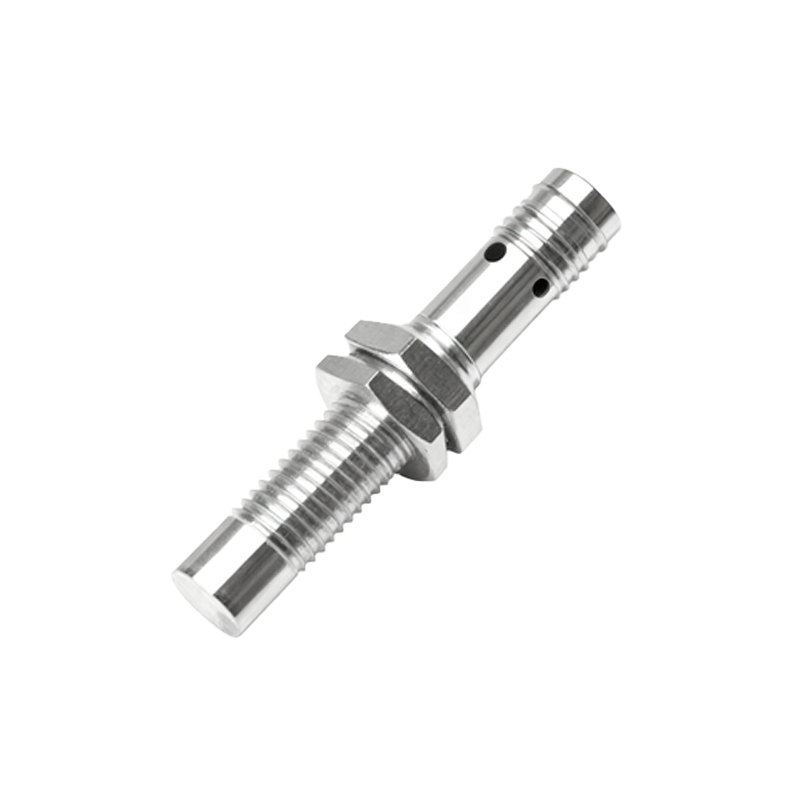
The core of the confusion often lies in the term "switch." In traditional electromechanical parlance, a switch implies a device that makes or breaks a physical electrical connection through mechanical action, like a limit switch with a lever arm. Proximity switches achieve the same functional outcome—controlling a circuit—but through entirely non-contact, solid-state means. They are, in essence, sensors with a switching output. The International Electrotechnical Commission (IEC) standard 60947-5-2 formally defines them as "non-contact position switches."
To solidify this classification, let's examine the primary technologies behind industrial proximity switches:
1. Inductive Proximity Switches: These are the most common type for detecting metallic objects. They generate an oscillating electromagnetic field from a coil in the sensing face. When a ferrous or non-ferrous metal target enters this field, it induces eddy currents, which dampen the oscillation. An internal circuit detects this change and triggers a solid-state output switch (typically PNP or NPN). They are ideal for harsh environments with dirt, oil, or vibration.
2. Capacitive Proximity Switches: These sensors can detect both metallic and non-metallic materials (plastics, wood, liquids, granules) by sensing changes in capacitance. The sensor forms one plate of a capacitor, the target object forms the other (or alters the dielectric constant), and the earth ground is the third element. The approach of a target changes this capacitance, triggering the output switch. They are commonly used for level detection and material handling.
3. Ultrasonic Proximity Switches: These operate by emitting high-frequency sound waves and evaluating the reflected echo. They measure the time-of-flight of the sound pulse to determine the presence and distance of an object. While often used for analog distance measurement, they can be configured with setpoints to function as a switch for presence detection, even with transparent or acoustically absorbent materials.
4. Photoelectric Switches: Although sometimes categorized separately, photoelectric sensors function as proximity switches. They use a light emitter (LED or laser) and a receiver. The presence of an object is detected by either interrupting the light beam (through-beam), reflecting it back (retro-reflective), or diffusing it (diffuse reflective). They offer the longest sensing ranges and are used for a vast array of object detection tasks.
The output stage is what makes them a "switch." This is usually a transistor (for DC models) or a triac (for AC models) that changes state—from non-conducting to conducting, or vice versa—based on the sensor's detection logic. This provides a clean, fast, and bounce-free signal to a Programmable Logic Controller (PLC), relay, or other control device, identical in function to a mechanical switch command.
In practical application within control panel design and machine automation, proximity switches are sensor components. They provide the critical input data for state monitoring: Is the pallet in position? Has the cylinder fully extended? Is the tank lid closed? Is the metal part present for machining? Their reliability, speed, and non-contact nature make them superior to mechanical limit switches in countless applications, reducing wear and maintenance.
Therefore, when specifying components or designing a system, an electrical engineer should view proximity switches as a specialized, robust category of industrial sensors designed for discrete object detection. The key takeaway is that all proximity switches are sensors, but not all sensors are proximity switches. Other sensor types, like thermocouples (temperature), pressure transducers, or encoders (speed/position), provide continuous analog signals representing a measured variable, whereas the proximity switch provides a definitive digital event