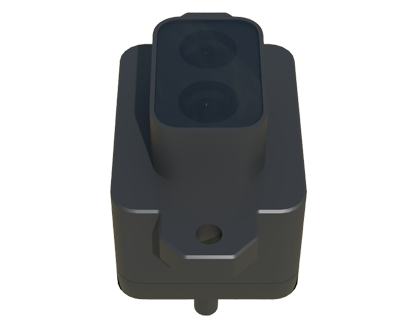
In the rapidly evolving landscape of industrial automation, precision measurement and reliable detection are paramount. Midwest laser sensors have emerged as a cornerstone technology, offering unparalleled accuracy and durability in demanding environments. These sensors utilize laser technology to perform non-contact measurements, detecting minute changes in position, distance, or presence with exceptional speed and consistency. The core principle involves emitting a focused laser beam towards a target; the reflected light is then analyzed to determine specific parameters such as distance, displacement, or profile. This method eliminates physical wear and tear associated with contact sensors, significantly enhancing operational longevity and reducing maintenance costs.
A key advantage of Midwest laser sensors lies in their versatility. They are engineered to perform flawlessly across diverse applications, from precise assembly line tasks in automotive manufacturing to stringent quality control checks in pharmaceutical packaging. For instance, in automotive welding processes, these sensors ensure exact component alignment, while in logistics, they facilitate accurate object dimensioning and sorting. Their robust construction typically features IP67 or higher ingress protection ratings, making them resistant to dust, moisture, and mechanical shock. This resilience ensures stable performance in harsh conditions, such as foundries or outdoor logistics yards, where temperature fluctuations and particulate matter are common challenges.
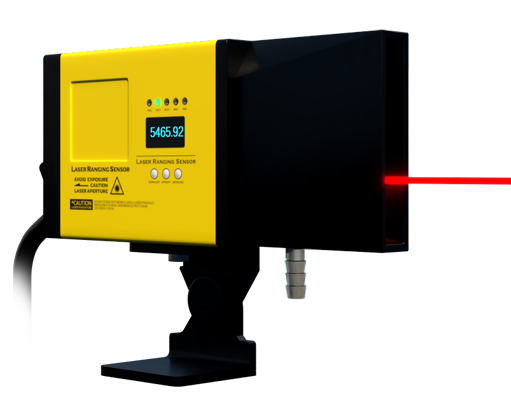
The technological sophistication of these sensors is further highlighted by their advanced features. Many models incorporate intelligent functions like background suppression, which allows the sensor to ignore irrelevant objects beyond the target, and teach-in capabilities for simplified setup and calibration. High-speed response times, often in the microsecond range, enable real-time process control, which is critical for high-throughput production lines. Furthermore, integration with industrial networks via standard interfaces like IO-Link, Ethernet/IP, or PROFINET facilitates seamless data exchange with PLCs and SCADA systems, enabling predictive maintenance and data-driven optimization.
When selecting a Midwest laser sensor for a specific application, several factors must be considered. The required measurement range, resolution, and repeatability are primary technical criteria. Environmental conditions, including ambient light interference and the target material's surface properties (e.g., color, reflectivity), also significantly influence sensor choice. For highly reflective or dark surfaces, sensors with specialized algorithms or adjustable sensitivity are essential to maintain accuracy. Additionally, the physical form factor—whether compact diffuse, retro-reflective, or through-beam models—must align with the installation space and detection geometry.
Looking ahead, the integration of Midwest laser sensors with Industry 4.0 frameworks is set to deepen. The convergence of precise laser measurement with IoT connectivity and AI analytics promises smarter, self-optimizing manufacturing systems. Sensors will not only collect data but also provide actionable insights for process improvement, enhancing overall equipment effectiveness (OEE). In conclusion, Midwest laser sensors represent a critical investment for industries aiming to boost precision, efficiency, and reliability. Their proven performance in delivering accurate, non-contact measurements under tough conditions makes them an indispensable tool for modern industrial automation, driving productivity and quality in an increasingly competitive global market.