Laser sensors have become indispensable components in modern industrial automation and measurement systems. Their ability to provide non-contact, high-precision, and rapid detection makes them superior to many traditional sensing technologies. This analysis delves into the operational principles, key types, performance characteristics, and prevalent applications of laser sensors, offering insights for engineers and system integrators.
At its core, a laser sensor operates by emitting a focused beam of coherent light—typically from a laser diode—towards a target. The sensor then detects the interaction of this beam with the target, which could involve reflection, scattering, or interruption. The most common measurement principles are based on triangulation, time-of-flight (ToF), and laser Doppler vibrometry. Triangulation sensors are excellent for high-resolution distance and displacement measurements at short to medium ranges. They work by projecting a laser spot onto the target; the reflected light is focused onto a position-sensitive detector (PSD or CMOS/CCD array). The position of the reflected spot shifts linearly with the target's distance, allowing for precise calculation. Time-of-flight sensors, conversely, measure the round-trip time for a laser pulse to travel to the target and back. This principle is ideal for longer-range distance measurement, such as in level monitoring of bulk materials or vehicle LiDAR systems. Laser Doppler sensors measure the frequency shift in reflected light caused by a moving target, enabling precise velocity and vibration analysis without physical contact.
Several key performance parameters define a laser sensor's suitability for an application. Resolution, often in the micrometer or even nanometer range for triangulation sensors, indicates the smallest detectable change. Accuracy defines how close the measurement is to the true value and is influenced by environmental factors and target surface properties. Repeatability is the sensor's consistency in returning the same value for an unchanged target position. Measurement range specifies the minimum and maximum distances over which the sensor operates effectively. Finally, response time or sampling rate is critical for dynamic processes, with high-end sensors capable of kHz or even MHz rates.
The choice of laser sensor type is heavily application-dependent. For precision manufacturing, confocal chromatic sensors and triangulation sensors are deployed for thickness gauging, weld seam tracking, and part dimension verification. In robotics, ToF sensors and laser profile scanners (line lasers) are crucial for navigation, obstacle avoidance, and bin picking. The logistics and packaging industries utilize laser photoelectric sensors, often in through-beam or retro-reflective modes, for high-speed object counting, presence detection, and label verification. Furthermore, laser micrometers provide non-contact diameter measurement of wires, fibers, and cylindrical components with exceptional accuracy.

Environmental considerations are paramount during selection and installation. Ambient light, particularly direct sunlight or strong artificial light, can saturate detectors and cause measurement errors. Dust, fog, or steam can scatter or attenuate the laser beam. The target's surface characteristics—its color, reflectivity, texture, and material—significantly impact performance. Highly reflective or transparent surfaces pose challenges that may require sensors with specialized algorithms or auxiliary lighting. Modern laser sensors often incorporate features like automatic exposure control, background suppression, and teach-in functions to adapt to varying conditions.
Integration into control systems is typically straightforward, with outputs ranging from analog (4-20 mA, 0-10 V) to digital (IO-Link, Ethernet/IP, PROFINET). The advent of Industry 4.0 and smart sensor technology has led to laser sensors with embedded diagnostics, predictive maintenance data, and seamless connectivity to PLCs and SCADA systems.
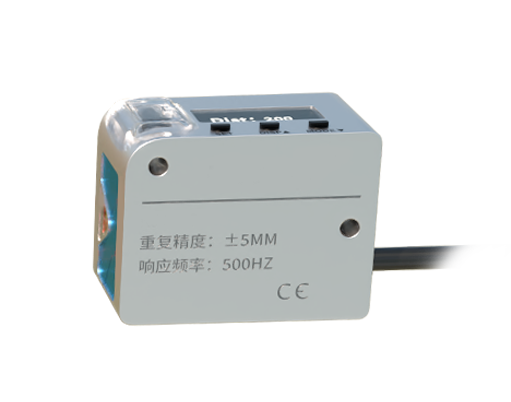
Looking ahead, advancements in laser diode technology, CMOS detector arrays, and signal processing algorithms continue to push the boundaries. Miniaturization is enabling integration into smaller devices, while improvements in eye-safe laser classes (e.g., Class 1, Class 2) are enhancing workplace safety. The fusion of laser sensing data with machine vision and artificial intelligence is opening new frontiers for complex inspection and adaptive process control.
In conclusion, laser sensors offer a versatile and powerful toolkit for solving myriad industrial measurement challenges. A thorough understanding of their principles, a careful analysis of application requirements against sensor specifications, and consideration of the operating environment are essential for successful deployment. As technology evolves, their role in enabling smarter, more efficient, and more precise industrial operations will only expand.