In the realm of modern digital photography and videography, the viewfinder serves as the critical interface between the photographer and the scene. While autofocus and image stabilization often steal the spotlight, a small yet profoundly impactful component operates silently to refine this interaction: the proximity sensor. Integrated into the viewfinder assembly of many cameras, from high-end DSLRs and mirrorless bodies to advanced compact cameras and even smartphones, this sensor plays a dual role in optimizing both user experience and power management.
Fundamentally, a proximity sensor in this context is a device that detects the presence or absence of an object—typically the photographer's eye or face—within a very short range, usually a few centimeters. The most common technology employed is the infrared (IR) sensor. A small IR LED emits an invisible infrared light beam. When an object, like an eye, approaches the viewfinder eyecup, this light is reflected back and detected by an adjacent IR photodetector. The sensor's circuitry then interprets this signal change to confirm "proximity." Some systems may utilize capacitive sensing, which detects changes in an electrostatic field caused by a nearby object, though IR remains dominant for its reliability and cost-effectiveness.
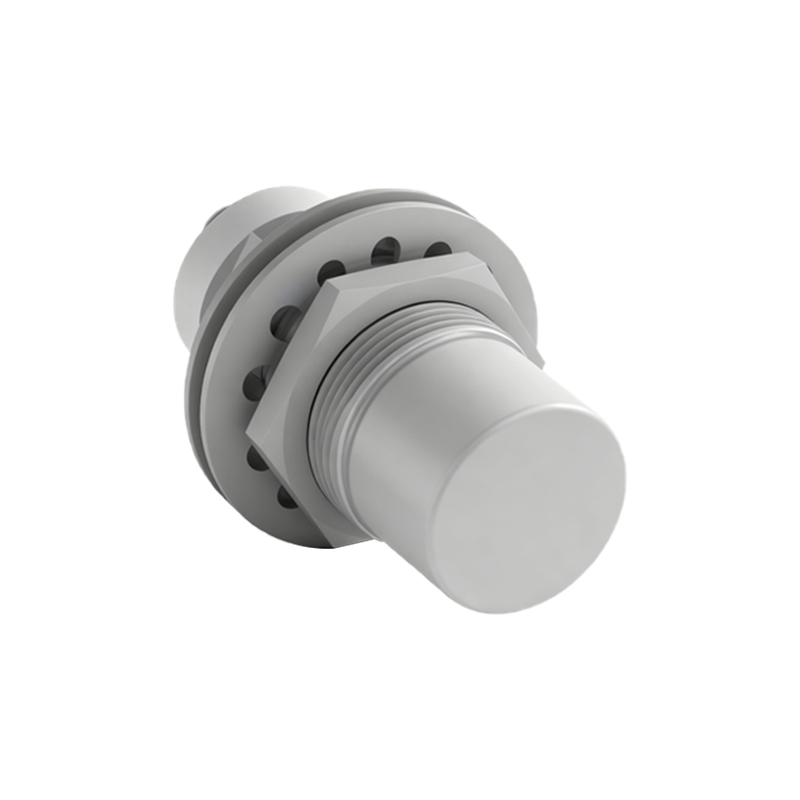
The primary function is intuitive: automatic viewfinder/LCD switching. When a user brings the camera to their eye, the proximity sensor detects this action and instantly activates the electronic viewfinder (EVF) or optical viewfinder display while simultaneously turning off the rear LCD screen. This seamless transition is more than a convenience; it is crucial for maintaining compositional focus and reducing distractions. In bright sunlight, where LCD screens can be washed out, the immediate switch to the sheltered, high-contrast viewfinder ensures the photographer never misses a shot. Conversely, when the user lowers the camera, the sensor detects the absence and reactivates the LCD for image review or menu navigation, creating a fluid, hands-free workflow.
Beyond convenience lies a significant contribution to energy conservation. Electronic viewfinders, particularly high-resolution OLED or LCD panels, are among the more power-hungry components in a camera. The rear LCD is similarly demanding. By ensuring that only one display is active at any given time—and more importantly, by powering down the EVF completely when not in use—the proximity sensor directly extends battery life. This is especially critical for mirrorless cameras, which rely solely on their EVFs for through-the-lens composition and thus have historically faced battery life challenges compared to optical-viewfinder DSLRs. The sensor acts as an intelligent gatekeeper, preventing unnecessary power drain during moments when the camera is carried on a strap or set aside briefly.
The implementation of this sensor also enhances the functionality of other features. For instance, it can work in tandem with the eye-start autofocus system found in many cameras. Upon detecting an eye at the viewfinder, the sensor can signal the camera to initiate autofocus pre-emptively, reducing the time from raising the camera to achieving focus lock. Furthermore, it helps prevent accidental inputs from the photographer's face or nose touching the touchscreen LCD when it is positioned near the viewfinder (a common design in many cameras). By deactivating the LCD's touch functionality during viewfinder use, it eliminates unintended setting changes or focus point shifts.
Design and calibration of these sensors present specific engineering challenges. The sensor must be precisely positioned within the viewfinder eyecup to reliably detect the eye without being triggered by stray light, the camera strap, or clothing. It requires careful shielding from ambient infrared light sources, such as sunlight or incandescent lamps, which could cause false triggers. The firmware must include a debounce algorithm—a short delay or hysteresis—to prevent rapid, jittery switching if the user's eye is marginally in and out of the detection zone. This ensures a stable and predictable user experience.
Looking forward, the role of proximity sensing is evolving with advancements in camera technology. The integration of more sophisticated time-of-flight (ToF) sensors or miniature LiDAR modules, already used for autofocus assistance, could offer more nuanced proximity data, potentially enabling features like user recognition to load personalized settings automatically. As augmented reality (AR) features begin to appear in professional imaging equipment, reliable detection of the user's eye position will become even more critical for overlaying information accurately within the viewfinder.
In conclusion, the proximity sensor is a quintessential example of thoughtful, user-centric engineering in camera design. It operates unobtrusively in the background, yet its impact is front and center: it streamlines the shooting process, conserves precious battery power, and prevents operational errors. By intelligently bridging the human-machine interface, this small component makes the complex tool that is a modern camera feel more intuitive, responsive, and efficient, allowing photographers to concentrate wholly on the art of capturing the moment.
SEO关键词