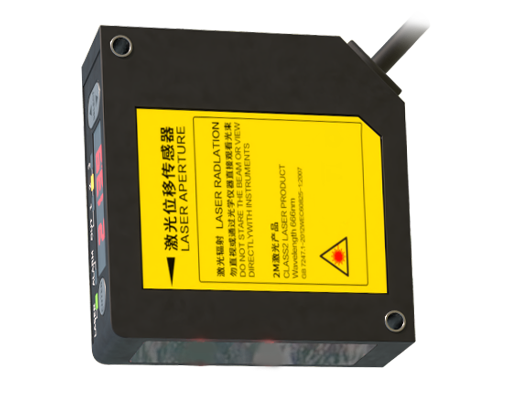
Laser sensors and level sensors are critical components in modern industrial automation, offering high precision, reliability, and versatility. Laser sensors operate by emitting a focused beam of light toward a target, measuring the time it takes for the reflection to return or analyzing changes in the beam's properties. This technology enables non-contact measurement of distance, position, thickness, and vibration with exceptional accuracy, often within micrometer ranges. Common types include time-of-flight (ToF) sensors, triangulation sensors, and confocal sensors, each suited for specific environments—from clean laboratory settings to harsh manufacturing floors with dust, humidity, or temperature variations. Applications span across automotive assembly lines for part alignment, semiconductor fabrication for wafer inspection, and packaging industries for fill-level control.
Level sensors, on the other hand, are designed to detect and monitor the height or volume of liquids, solids, or slurries within containers such as tanks, silos, or pipelines. They utilize various principles, including ultrasonic, radar, capacitive, and hydrostatic methods. Ultrasonic level sensors emit sound waves and calculate distance based on echo time, ideal for non-invasive measurements in corrosive or sticky media. Radar sensors use microwave signals, excelling in high-temperature or high-pressure environments like chemical processing. Capacitive sensors detect changes in electrical capacitance when material levels shift, suitable for granular solids. Hydrostatic sensors measure pressure at the bottom of a tank to infer level, commonly used in wastewater management.
Integrating laser and level sensors enhances industrial efficiency by enabling real-time monitoring and control. For instance, in the oil and gas sector, laser sensors assist in pipeline integrity checks, while radar level sensors track crude oil storage. In food and beverage production, laser sensors ensure precise bottle filling, and ultrasonic level sensors manage ingredient silos. Key advantages include reduced maintenance due to non-contact operation, improved safety by minimizing human intervention in hazardous areas, and cost savings through optimized material usage and minimized waste.

However, selecting the right sensor requires careful consideration of factors like media properties, environmental conditions, accuracy needs, and budget. Laser sensors may struggle with transparent or highly reflective surfaces, requiring calibration or complementary technologies. Level sensors can be affected by foam, vapor, or material buildup, necessitating regular cleaning or advanced signal processing. Emerging trends include the integration of IoT connectivity for predictive maintenance, AI-driven analytics for anomaly detection, and miniaturization for compact installations.
In summary, laser sensors and level sensors are indispensable tools in industrial automation, driving precision and productivity. Their evolving capabilities, coupled with smart technology integration, promise to further revolutionize sectors from manufacturing to energy, underscoring the importance of informed selection and application.