Linear laser receiving sensors are sophisticated optoelectronic devices designed to detect the position or presence of an object by sensing a line of laser light. Unlike point sensors, which detect a single spot, these sensors capture a linear profile, enabling precise measurement across a continuous axis. This capability makes them indispensable in modern industrial automation, robotics, and quality control systems.
The core principle of a linear laser receiving sensor involves the emission of a laser line onto a target surface. The sensor's receiver, typically a CMOS or CCD linear image sensor, captures the reflected or diffused light pattern. Any interruption, deformation, or shift in this line profile is analyzed by the sensor's internal processor. By calculating the changes in the light pattern, the sensor can determine precise measurements such as height, width, presence, or edge position. Key components include the laser diode for line generation, the linear image sensor for detection, and a processing unit that converts optical data into digital signals. Advanced models incorporate algorithms to filter ambient light and compensate for surface variations, ensuring reliable operation in diverse environments.
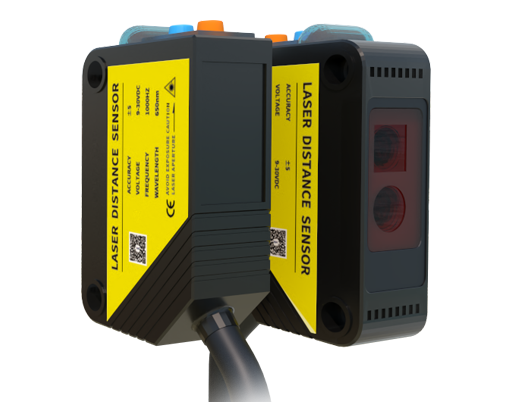
The applications of linear laser receiving sensors are vast and critical across multiple sectors. In manufacturing, they are pivotal for non-contact dimensional gauging, such as measuring the thickness of materials, verifying component heights on assembly lines, or inspecting sealant bead applications. Robotics utilizes these sensors for precise guidance and object recognition, enabling automated arms to locate and handle parts accurately. In logistics and warehousing, they facilitate package dimensioning and sorting by scanning parcel profiles on conveyor belts. Furthermore, they play a vital role in semiconductor fabrication for wafer alignment and in automotive industries for body panel gap inspection. Their ability to provide high-resolution, real-time linear data supports automation goals of increased speed, accuracy, and consistency.
Selecting the appropriate linear laser receiving sensor requires careful consideration of several technical parameters. First, the measurement range and resolution must align with the application's precision needs. A sensor with a 0.01mm resolution might be necessary for micro-electronic assembly, while a 0.1mm resolution could suffice for larger packaging tasks. Second, the sensing distance and the required field of view are crucial; some sensors are designed for long-range scanning, while others excel in close-quarters inspection. Third, environmental robustness is key. Factors like IP rating for dust and water resistance, operating temperature range, and resistance to vibrations or electrical noise must be evaluated for industrial settings. Fourth, the response time and output interface (e.g., analog voltage, digital I/O, Ethernet, or fieldbus protocols like PROFINET or EtherCAT) should integrate seamlessly with the existing control system. Lastly, the type of target surface influences the choice; highly reflective or dark, absorbent surfaces may require sensors with automatic gain control or specialized lighting techniques to ensure a clear signal.
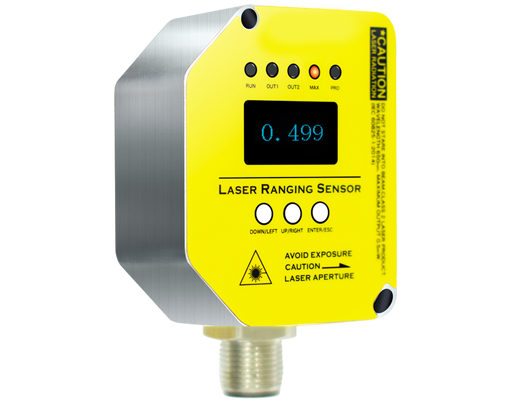
In conclusion, linear laser receiving sensors represent a cornerstone of precision measurement in automation. Their unique ability to capture continuous linear data translates into enhanced process control, quality assurance, and operational efficiency. As technology advances, we can expect further miniaturization, increased processing speeds, and smarter, AI-enhanced sensors that offer even greater adaptability and diagnostic capabilities. For engineers and system integrators, a thorough understanding of their operating principles and a methodical approach to selection based on application-specific demands are essential to harnessing their full potential and driving innovation in automated systems.