Proximity sensors are essential components in modern industrial automation and electrical systems. As an electrical engineer, understanding the accurate English terminology related to proximity sensors is crucial for reading technical documentation, communicating with international colleagues, and designing systems that meet global standards. This article provides a comprehensive guide to the English translation of key terms and concepts associated with proximity sensors.
First, let's define the core term: "proximity sensor." In English, this refers to a device that detects the presence or absence of an object within a specific range without physical contact. Common types include inductive, capacitive, and ultrasonic proximity sensors. Each type has distinct characteristics and applications, and their names are standardized in English technical literature. For example, an inductive proximity sensor detects metallic objects, while a capacitive sensor can detect both metallic and non-metallic materials.
When translating technical specifications, engineers often encounter terms like "sensing distance," which indicates the maximum range at which the sensor can reliably detect an object. Other critical terms include "output type" (e.g., NPN or PNP for DC sensors), "response time" (the speed of detection), and "housing material" (such as stainless steel or plastic). It's important to note that some terms may have regional variations; for instance, "proximity switch" is sometimes used interchangeably with "proximity sensor" in certain contexts, but technically, a switch implies a binary output.
In circuit diagrams and datasheets, abbreviations are common. "PNP" stands for positive-negative-positive, referring to the transistor output configuration, while "NPN" means negative-positive-negative. Engineers must also be familiar with terms like "NO" (normally open) and "NC" (normally closed) for contact configurations. Additionally, "IP rating" (Ingress Protection) describes the sensor's resistance to dust and water, which is vital for industrial environments.
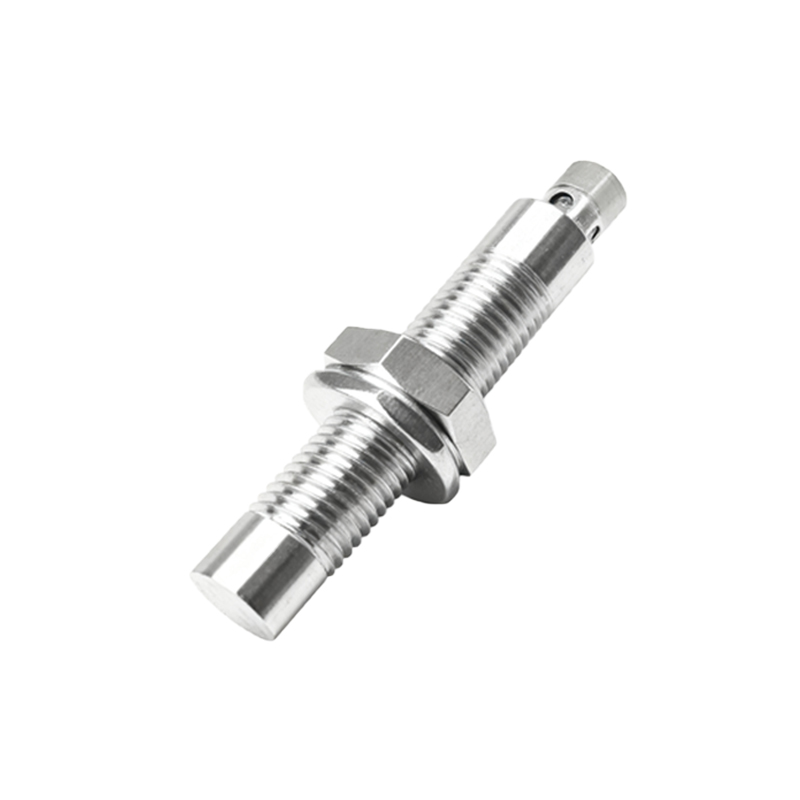
For installation and maintenance, terms like "mounting style" (e.g., flush or non-flush), "operating voltage," and "temperature range" are frequently used. In English documentation, you might see phrases like "shielded" or "unshielded" to indicate whether the sensor is protected from electromagnetic interference. Understanding these terms ensures proper sensor selection and integration into control systems like PLCs (Programmable Logic Controllers).
In practice, engineers should refer to international standards such as IEC (International Electrotechnical Commission) or ISO (International Organization for Standardization) for consistent terminology. For example, IEC 60947-5-2 covers proximity sensor specifications. When communicating in English, clarity is key—avoid direct translations from other languages that might cause confusion. Instead, use established terms like "target object" for the item being detected or "hysteresis" for the difference between switch-on and switch-off points.
Finally, staying updated with English technical resources, such as journals, manuals, and online forums, can enhance your proficiency. As automation evolves, new terms like "IO-Link" (a communication protocol for sensors) emerge, requiring continuous learning. By mastering this vocabulary, electrical engineers can improve collaboration, reduce errors, and contribute to efficient system designs worldwide.