In the realm of industrial automation and control systems, the classification of components is fundamental to system design and troubleshooting. A common point of inquiry among engineers and technicians is the nature of proximity sensors. Specifically, the question arises: What type of switch is a proximity sensor? To address this, we must delve into the operational principles and functional categorization of these ubiquitous devices.
Fundamentally, a proximity sensor is a non-contact electronic switch. This classification is paramount. Unlike traditional mechanical switches that require physical contact or actuation (like a limit switch being depressed by a machine part), a proximity sensor detects the presence or absence of a target object within its sensing range without any physical contact. This key characteristic defines its primary advantage: reliability, longevity, and the ability to operate in harsh environments where contamination, wear, or mechanical failure of moving parts would be detrimental.
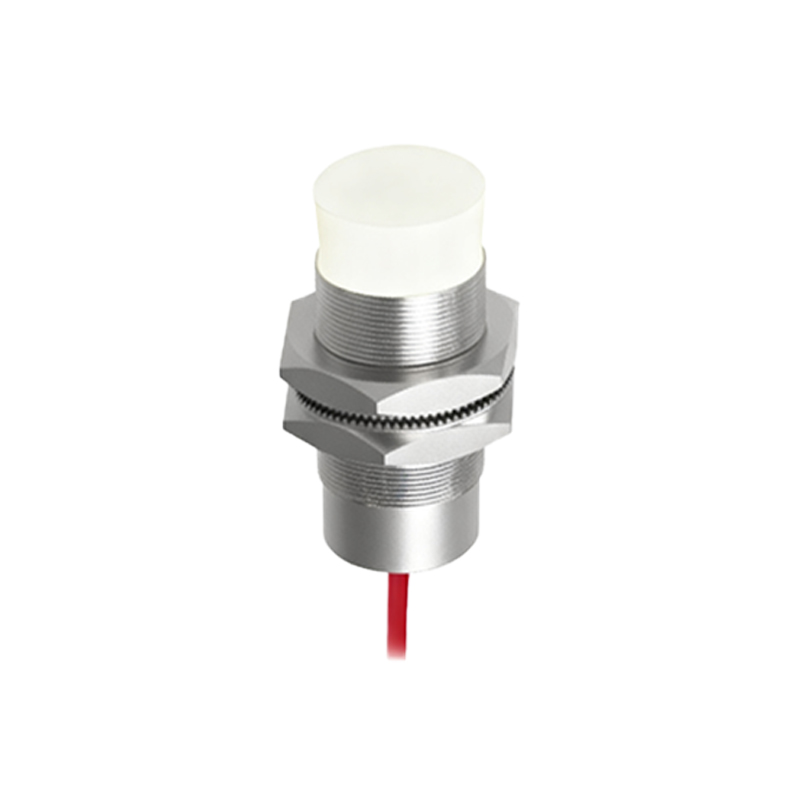
The core technology behind a proximity sensor determines its specific type and application. The most prevalent categories include:
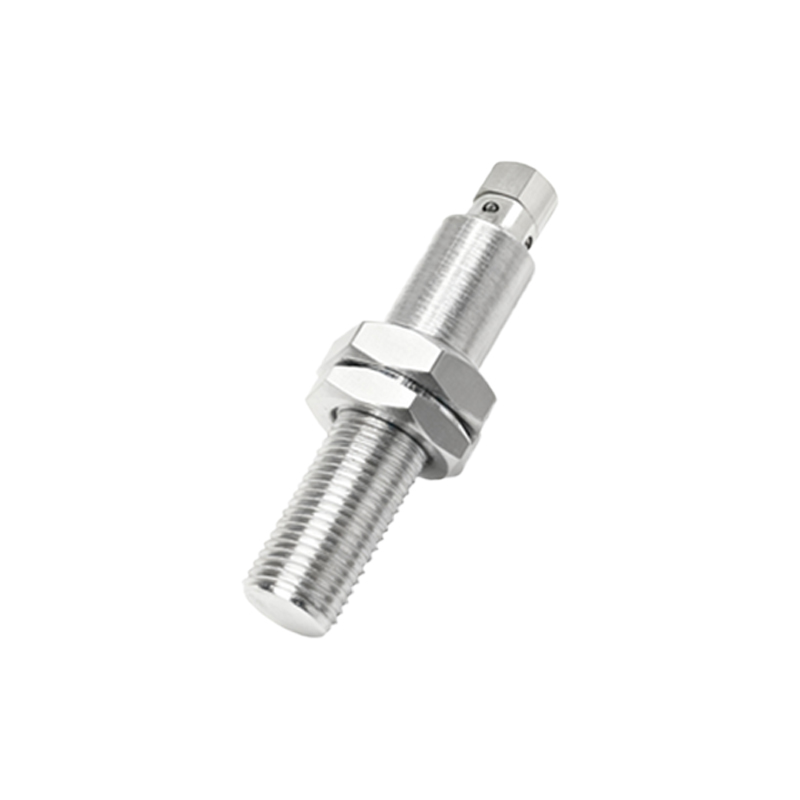
1. Inductive Proximity Sensors: These are the workhorses for detecting metallic objects, primarily ferrous metals like steel and iron. They operate by generating an electromagnetic field. When a conductive metal target enters this field, it induces eddy currents within the target, which in turn causes a change in the sensor's own oscillation amplitude. This change is detected by the sensor's circuitry, triggering a solid-state output switch. They are ideal for position sensing of machine parts, counting metal objects, or as end-of-travel detectors.
2. Capacitive Proximity Sensors: These sensors can detect both metallic and non-metallic materials, including liquids, plastics, glass, and wood. They function by generating an electrostatic field. Any object that enters this field alters the capacitance of the sensor's circuit. This alteration is measured, and when it exceeds a preset threshold, the sensor's output state changes. Common applications involve level detection of liquids or granular materials, and sensing non-metallic container presence.
3. Ultrasonic Proximity Sensors: These devices use sound waves beyond the human hearing range. They emit ultrasonic pulses and measure the time taken for the echo to return from a target object. Based on the time-of-flight principle, they can determine both presence and distance. They are excellent for detecting objects of virtually any material, transparent or opaque, and are used in distance measurement, level sensing, and object profiling.
4. Photoelectric Sensors: While often considered a separate family, they function as non-contact proximity switches. They use a beam of light (visible, infrared, or laser) and detect its interruption (through-beam mode) or reflection (retro-reflective or diffuse mode) by a target object. They offer very long sensing ranges and can detect tiny objects.
From a switching perspective, the output of a standard proximity sensor is a solid-state switch, typically in the form of a transistor (PNP or NPN sourcing/sinking) for DC models, or a triac for AC models. This output is binary: it is either "ON" (conducting) or "OFF" (non-conducting), analogous to the contacts of an electromechanical relay or a mechanical switch being closed or open. This output is integrated into the control circuit, such as a Programmable Logic Controller (PLC) input module, to provide a discrete signal indicating object detection.
The terminology is crucial: a proximity sensor is a "proximity switch." This term explicitly denotes its function as a switch activated by proximity rather than contact. Standards organizations, such as the International Electrotechnical Commission (IEC), define them under switchgear categories. They are often referred to as "non-contact position switches" in technical documentation.
The benefits of using a proximity sensor as a switch are extensive. The absence of moving parts eliminates mechanical wear, leading to a virtually infinite operational life in terms of switching cycles. They offer high switching speeds, suitable for fast-moving production lines. Their sealed housings (often rated IP67 or higher) provide resistance to dust, oils, and coolants. Furthermore, they are not susceptible to contact bounce—a common issue with mechanical switches that can cause erroneous signals in digital controllers.
In conclusion, categorizing a proximity sensor is straightforward when viewed through the lens of its function in a control circuit. It is unequivocally a switch—specifically, a solid-state, non-contact, position-sensitive switch. Its mode of operation, whether inductive, capacitive, ultrasonic, or photoelectric, defines its sensing capability, but its fundamental purpose remains to provide a clean, reliable, discrete on/off signal based on the presence of a target. For any electrical engineer or automation specialist, understanding this classification is essential for proper selection, integration, and maintenance within modern industrial control systems, where the demand for robust, maintenance-free switching solutions continues to grow.