In the rapidly evolving landscape of electrical engineering, laser image sensors have emerged as pivotal components, driving innovation across diverse sectors such as industrial automation, robotics, and autonomous systems. These sensors, leveraging the precision of laser technology, capture high-resolution images by emitting laser beams and analyzing their reflections. Unlike traditional optical sensors, laser image sensors excel in challenging environments—offering superior performance in low-light conditions, through obstructions like smoke or dust, and with minimal sensitivity to ambient light interference. This robustness makes them indispensable in applications requiring exact measurements, such as 3D scanning, quality control in manufacturing, and navigation for self-driving vehicles.
Internationally, leading manufacturers in Europe, North America, and Asia are pushing the boundaries of laser image sensor technology. Companies like Keyence in Japan, SICK in Germany, and Cognex in the United States are at the forefront, developing sensors with enhanced capabilities like faster data processing, higher accuracy, and integration with artificial intelligence (AI) and machine learning algorithms. For instance, modern laser image sensors can now achieve micron-level precision in real-time, enabling automated inspection systems to detect defects in electronics or automotive parts with unprecedented reliability. This advancement not only boosts productivity but also reduces human error, aligning with global trends toward smart factories and Industry 4.0 initiatives.
The operational principle of these sensors typically involves time-of-flight (ToF) or triangulation methods. In ToF-based sensors, the time taken for a laser pulse to return is measured to calculate distances, creating detailed depth maps. Triangulation sensors, on the other hand, use geometric angles to determine object positions, offering high resolution for close-range applications. Both techniques benefit from advancements in semiconductor materials and photonics, allowing for miniaturization and cost reduction. As a result, laser image sensors are becoming more accessible, fostering adoption in emerging fields like medical imaging, where they aid in non-invasive diagnostics, and environmental monitoring, for tasks like terrain mapping.
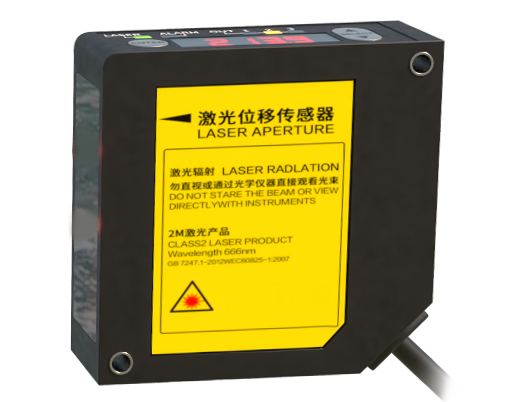
However, challenges persist in the global market. Issues such as high initial costs, complexity in calibration, and data security concerns in networked systems can hinder widespread implementation. Engineers must address these by optimizing sensor designs for energy efficiency and developing standardized protocols for interoperability. Looking ahead, trends indicate a shift toward multi-spectral laser sensors that can capture data beyond the visible spectrum, opening new possibilities in agriculture for crop health analysis or in security for biometric recognition. Collaboration across international research institutions and industry players will be crucial to harness these innovations, ensuring that laser image sensors continue to transform electrical engineering with smarter, more adaptive solutions.

In summary, laser image sensors represent a cornerstone of modern electrical engineering, offering unparalleled precision and versatility. As technology progresses, their integration with IoT and cloud computing will likely expand, enabling more connected and intelligent systems worldwide. For professionals in the field, staying abreast of these developments is essential to leverage their full potential in driving future advancements.