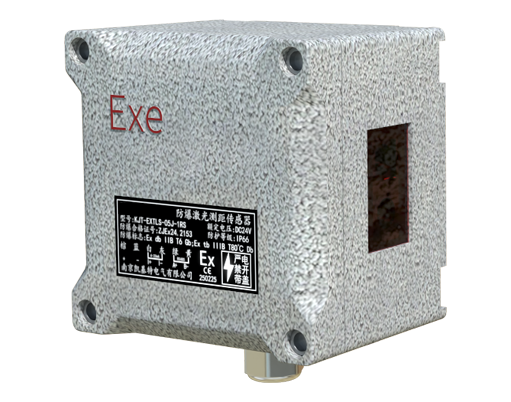
In the realm of industrial automation and precision measurement, the 30-meter laser sensor stands as a pivotal technology, enabling high-accuracy, non-contact detection across extensive distances. This advanced sensor operates on the principle of time-of-flight (ToF) or phase-shift measurement, emitting laser pulses and calculating distance based on the time taken for the light to reflect off a target and return. With a range of up to 30 meters, it caters to applications where traditional proximity sensors fall short, offering unparalleled reliability in challenging environments such as outdoor logistics, large-scale manufacturing, and infrastructure monitoring.
The core advantages of 30-meter laser sensors include their exceptional precision, often achieving millimeter-level accuracy, and immunity to ambient light interference, thanks to sophisticated filtering algorithms. These sensors are designed with robust housings, typically rated IP67 or higher, ensuring durability against dust, moisture, and temperature fluctuations from -20°C to 60°C. In automotive assembly lines, for instance, they facilitate precise positioning of vehicle components, while in warehouse automation, they enable real-time inventory tracking by measuring pallet heights and detecting object presence on conveyor belts spanning vast areas.
Integration into industrial systems is seamless via standard interfaces like IO-Link, Ethernet/IP, or PROFINET, allowing for easy data transmission to PLCs and SCADA systems. Modern variants incorporate smart features such as background suppression and programmable measurement zones, reducing false triggers and enhancing operational efficiency. For example, in agricultural robotics, these sensors guide autonomous vehicles by mapping terrain over long ranges, while in construction, they monitor structural deformations in bridges or buildings, providing early warnings for maintenance.
Despite their benefits, selecting a 30-meter laser sensor requires consideration of factors like target material and surface reflectivity; dark or absorbent surfaces may reduce effective range. Regular calibration is recommended to maintain accuracy, especially in high-vibration settings. Looking ahead, advancements in AI and edge computing are poised to augment these sensors with predictive analytics, enabling smarter, adaptive industrial ecosystems. In summary, the 30-meter laser sensor is a cornerstone of modern automation, driving efficiency and safety across diverse sectors by bridging the gap between long-distance sensing and meticulous precision.