Welcome to this comprehensive video tutorial on 3D laser sensors for industrial automation. As a senior electrical engineer with extensive field experience, I will guide you through the fundamental principles, key applications, and best practices for integrating these powerful devices into modern manufacturing and quality control systems.
3D laser sensors, often based on laser triangulation or time-of-flight principles, project a laser line or pattern onto a target object. A high-resolution camera, positioned at a known angle, captures the deformation of this pattern. Sophisticated onboard processors then analyze this data to generate a precise point cloud, representing the object's surface geometry in three dimensions. This non-contact measurement technology offers significant advantages over traditional tactile probes or 2D vision systems, especially for complex surfaces, delicate materials, or high-speed production lines.
The core of this tutorial will focus on practical implementation. We begin with sensor selection. Key parameters include measurement range, resolution (often in microns), scanning frequency (Hz), and the type of laser (typically red or blue, with blue offering better performance on shiny surfaces). Environmental factors like ambient light, vibration, and temperature must also be considered. We will compare popular models from leading manufacturers, highlighting their suitability for different tasks such as weld seam inspection, robotic bin picking, or electronic component coplanarity checks.
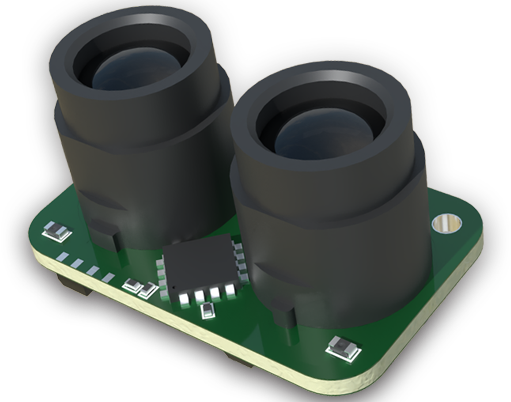
Next, we delve into system integration. A typical setup involves mounting the sensor on a robotic arm, a fixed gantry, or a conveyor-adjacent fixture. Proper calibration is paramount. Our video will demonstrate step-by-step calibration procedures using calibration plates or known artifacts to establish the relationship between the sensor's coordinate system and the world (or robot) coordinate system. This ensures measurement accuracy is maintained across the entire working volume. We will also cover wiring—connecting the sensor's GigE Vision or Ethernet/IP interface to a industrial PC or PLC, and configuring trigger signals for synchronized data acquisition.
Software configuration is another critical area. Most sensors come with proprietary software for initial setup, parameter tuning, and data visualization. We will explore essential settings: exposure time, laser power, and filtering options to handle noise. Furthermore, we will show how to integrate the sensor with common machine vision software platforms (like Halcon, VisionPro, or open-source libraries) to develop custom inspection algorithms. This includes point cloud processing steps: alignment, segmentation, and feature extraction (e.g., calculating volume, detecting gaps, or fitting geometric shapes).
A major section is dedicated to application case studies. First, *Dimensional Gauging*: Verifying the critical dimensions of machined parts against CAD models with statistical process control (SPC). Second, *Robotic Guidance*: Providing real-time 3D location data to a robot for precise assembly or material handling tasks. Third, *Surface Defect Detection*: Identifying scratches, dents, or porosity on painted car bodies or polished metal surfaces. For each case, the video will show real-world footage, explain the sensor configuration, and discuss common pitfalls and troubleshooting tips, such as dealing with reflective surfaces or overlapping objects.
Finally, we address maintenance and safety. Regular lens cleaning and verification checks with master parts are necessary to ensure long-term reliability. Always adhere to laser safety Class 2 (or applicable class) guidelines—never stare directly into the laser beam. Most industrial sensors are housed in robust, IP-rated enclosures for dust and water resistance.
By the end of this tutorial, you will have a solid, practical understanding of how to select, integrate, and leverage 3D laser sensor technology to enhance automation, improve quality, and increase productivity in your operations. The future points towards smarter sensors with embedded AI for edge computing, making this knowledge essential for any engineer in the field.