In the realm of industrial automation, proximity sensors play a pivotal role in enabling non-contact detection of objects, ensuring efficiency, safety, and precision. Among the various types, capacitive and inductive proximity sensors are two fundamental technologies, each with distinct operating principles and ideal application scenarios. This article delves into the technical intricacies of both, providing a clear comparison to guide selection for specific industrial needs.
Inductive proximity sensors are widely used for detecting metallic objects. Their operation is based on the principle of electromagnetic induction. The sensor generates an oscillating electromagnetic field via a coil and ferrite core arrangement. When a metallic target enters this field, eddy currents are induced on the surface of the metal. This causes a change in the oscillation amplitude or frequency within the sensor's circuit. An internal evaluation circuit detects this change and triggers a switching output—typically a solid-state transistor—to signal the presence of the object. A key characteristic of inductive sensors is their sensitivity to different metals; ferrous metals like iron and steel are detected at the rated sensing distance, while non-ferrous metals such as aluminum or copper may reduce the effective range. These sensors are robust, resistant to environmental factors like dust, oil, and coolant splashes, and are ideal for applications in metal machining, automotive assembly, and material handling where only metals need to be sensed.
Capacitive proximity sensors, in contrast, can detect a much broader range of materials, including metals, plastics, glass, wood, liquids, and granular substances. They function by measuring changes in capacitance. The sensor's active face forms one plate of a capacitor, with the target object acting as the other plate, and the intervening space as the dielectric. An internal oscillator generates an electrical field. When any material with a dielectric constant different from air enters this field, it alters the capacitance of the system. This change increases the oscillation amplitude until it reaches a threshold that triggers the output switch. A significant advantage is their ability to sense through non-metallic container walls, making them perfect for level detection of liquids, powders, or granules in tanks and hoppers. They are also commonly used in packaging, woodworking, and food and beverage processing. However, capacitive sensors can be more susceptible to environmental influences like humidity or moisture on the sensor face, which might cause false triggering if not properly installed or adjusted.
When selecting between the two, several factors must be considered. First is the target material: inductive for metals only, capacitive for nearly all materials. Second is the sensing distance: inductive sensors typically offer shorter, more consistent ranges for metals, while capacitive sensors may have variable ranges depending on the material's dielectric constant. Environmental conditions are crucial; inductive sensors excel in harsh, dirty metallic environments, whereas capacitive sensors require careful consideration of contaminants that could affect the dielectric property. Finally, cost and application specificity play a role; inductive sensors are often more cost-effective for standard metal detection, while capacitive sensors provide versatile but sometimes more application-specific solutions.
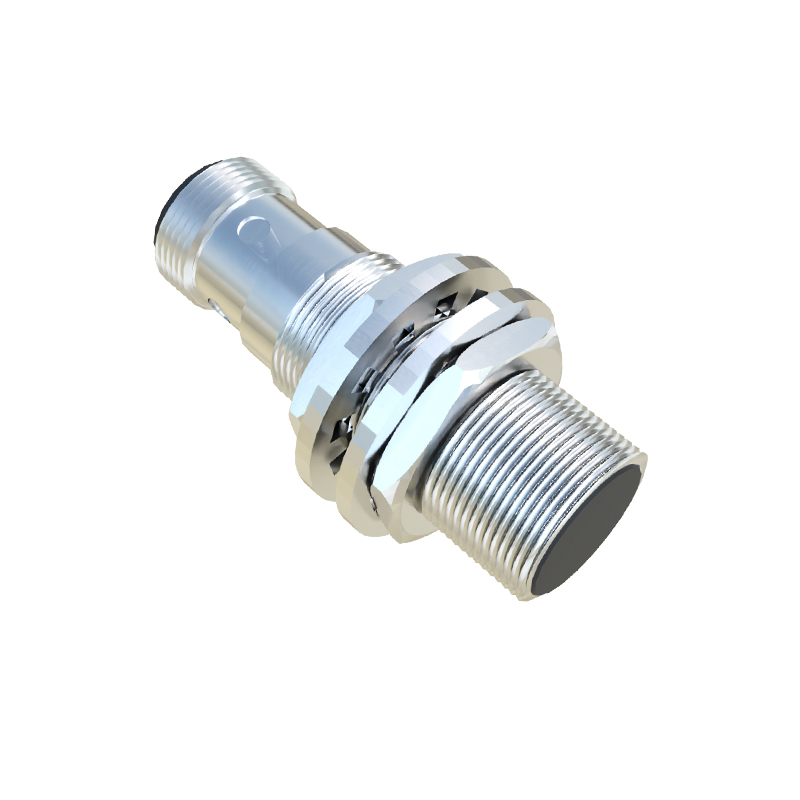
In modern industrial setups, both sensor types are integral. Understanding their core principles—electromagnetic induction for inductive and capacitance variation for capacitive—allows engineers to deploy them effectively. Proper selection enhances system reliability, reduces downtime, and optimizes automated processes. As technology advances, features like enhanced immunity to interference, longer sensing ranges, and miniaturization continue to evolve, but the fundamental choice between inductive and capacitive sensing remains rooted in the material to be detected and the operating environment.