In the realm of industrial automation and precision measurement, laser profile sensors have emerged as a cornerstone technology. These sophisticated devices, often referred to as line lasers or 2D/3D profilers, project a thin, fan-shaped laser line onto a target object. A high-resolution camera, precisely calibrated at a known angle to the laser emitter, captures the deformation of this line. Through advanced triangulation algorithms, the sensor calculates the precise height and depth variations across the object's surface, generating a detailed cross-sectional profile or a full 3D point cloud. This non-contact method provides unparalleled accuracy for inspection, guidance, and quality control.
The core principle behind laser profile sensing is optical triangulation. The laser diode emits a line that acts as a structured light source. When this line strikes an object, its shape contorts according to the object's topography. The camera, offset from the laser source, views this line from a different perspective. Any height variation causes a measurable displacement of the laser line in the camera's image plane. By analyzing this displacement pixel by pixel, the sensor's processor constructs a highly accurate height map. Modern sensors perform this calculation at speeds exceeding 10,000 profiles per second, enabling real-time inspection even on fast-moving production lines.
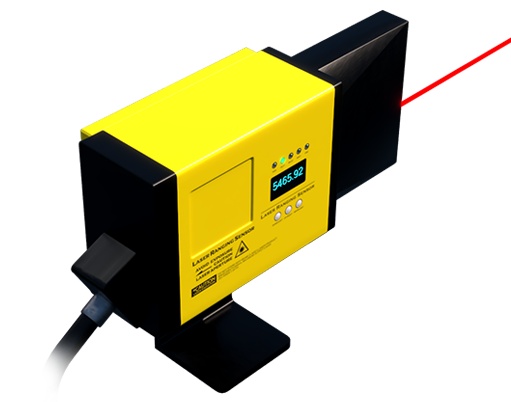
The applications for laser profile sensors are vast and transformative across numerous industries. In automotive manufacturing, they are indispensable for verifying gap and flush dimensions between body panels, inspecting weld seam quality, and guiding robots for precise part placement. In electronics, they measure component coplanarity, solder paste volume, and connector pin height with micron-level precision. The food and pharmaceutical industries utilize them for checking fill levels, detecting packaging defects, and ensuring product dimensional consistency. Furthermore, in logistics, they facilitate parcel dimensioning and volume calculation for automated sorting systems.
Selecting the appropriate laser profile sensor requires careful consideration of several key specifications. Measurement range, often called the Z-axis range, defines the maximum height difference the sensor can accurately capture. The X-axis width, determined by the laser line length and working distance, dictates the profile's lateral coverage. Resolution, both in the X and Z axes, is critical for detecting minute features. Environmental robustness is another vital factor; industrial-grade sensors feature IP67 or higher ratings, protective housings, and specialized filters to mitigate interference from ambient light. Integration ease, supported by standard interfaces like GigE Vision, Ethernet/IP, or PROFINET, and comprehensive software development kits (SDKs), significantly impacts deployment time and flexibility.
The advantages of implementing laser profile sensors are compelling. They offer high-speed, non-contact measurement that eliminates part wear and enables inspection of delicate or hot surfaces. Their ability to generate dense 2D/3D data provides a complete picture of an object's geometry, surpassing the limitations of single-point sensors. This rich data set allows for the detection of complex defects—scratches, dents, warpage, and shape deviations—that are invisible to traditional vision systems. Ultimately, this leads to enhanced product quality, reduced waste, lower production costs, and fully automated, objective inspection processes.
Looking ahead, the evolution of laser profile sensor technology is geared towards higher performance and smarter functionality. Trends include the integration of embedded artificial intelligence for on-sensor defect classification and decision-making, reducing the need for external PCs. Multi-sensor synchronization allows for the creation of complete 360-degree 3D models of objects. Furthermore, advancements in blue laser technology improve performance on shiny, reflective, or dark surfaces that traditionally challenge red lasers. As Industry 4.0 and smart factory concepts mature, laser profile sensors will increasingly serve as critical data-generating nodes within interconnected digital ecosystems, driving the next wave of manufacturing intelligence and flexibility.