In the realm of industrial automation, the demand for precise, reliable, and compact sensing solutions continues to drive technological innovation. Among the array of photoelectric sensors available, micro retro-reflective laser sensors have emerged as a critical component for applications requiring high accuracy in confined spaces. These sensors operate on a fundamental principle: a built-in laser emitter projects a focused beam toward a specialized reflector, often a corner-cube retro-reflector, which returns the light directly to the sensor's receiver regardless of the reflector's angular orientation. The sensor detects an object when it interrupts this beam path between the sensor and the reflector.
The core advantage of the laser light source lies in its coherence and minimal divergence. Unlike standard LED-based photoelectric sensors, laser beams maintain a tight, precise spot over long distances. This characteristic allows micro laser sensors to achieve exceptional sensing resolution, enabling the detection of very small objects or precise edges. Their compact "micro" housing, often measuring only a few millimeters in width, facilitates installation in machinery where space is at a premium, such as in semiconductor manufacturing equipment, precision assembly robots, or intricate packaging lines.
Performance specifications of these sensors are impressive. Typical models offer sensing distances ranging from several centimeters up to several meters, even with their miniature size. The high contrast provided by the laser beam ensures stable detection against challenging backgrounds and is less susceptible to ambient light interference. Many advanced units incorporate background suppression technology or adjustable sensing windows, allowing engineers to fine-tune the sensor to ignore objects beyond a specific range, thus eliminating false triggers from machinery parts or conveyor belts in the background.
Key industries leveraging this technology include electronics manufacturing, where they verify the placement of tiny components on PCBs; pharmaceutical packaging, ensuring blister packs are correctly filled; and automotive assembly, performing gap and flush measurements on vehicle panels. Their reliability in detecting transparent objects, like glass vials or clear films, is notably superior to many other sensing methods, as the concentrated laser beam provides a stronger return signal even through challenging materials.
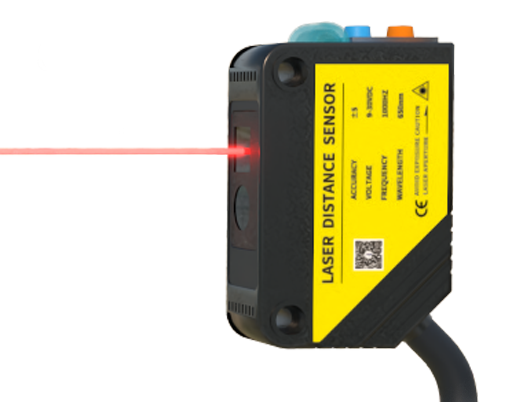
When integrating a micro retro-reflective laser sensor, several practical considerations are paramount. First, selecting the appropriate reflector size and type is crucial for maximizing the effective sensing distance. Second, proper alignment, while simplified by the reflector's forgiving nature, is still necessary for optimal performance; built-in indicators or communication interfaces (like IO-Link) greatly aid in setup and diagnostics. Third, environmental factors must be assessed. While lasers are robust, excessive dust, steam, or heavy vibration may require sensors with higher IP ratings or protective housings.
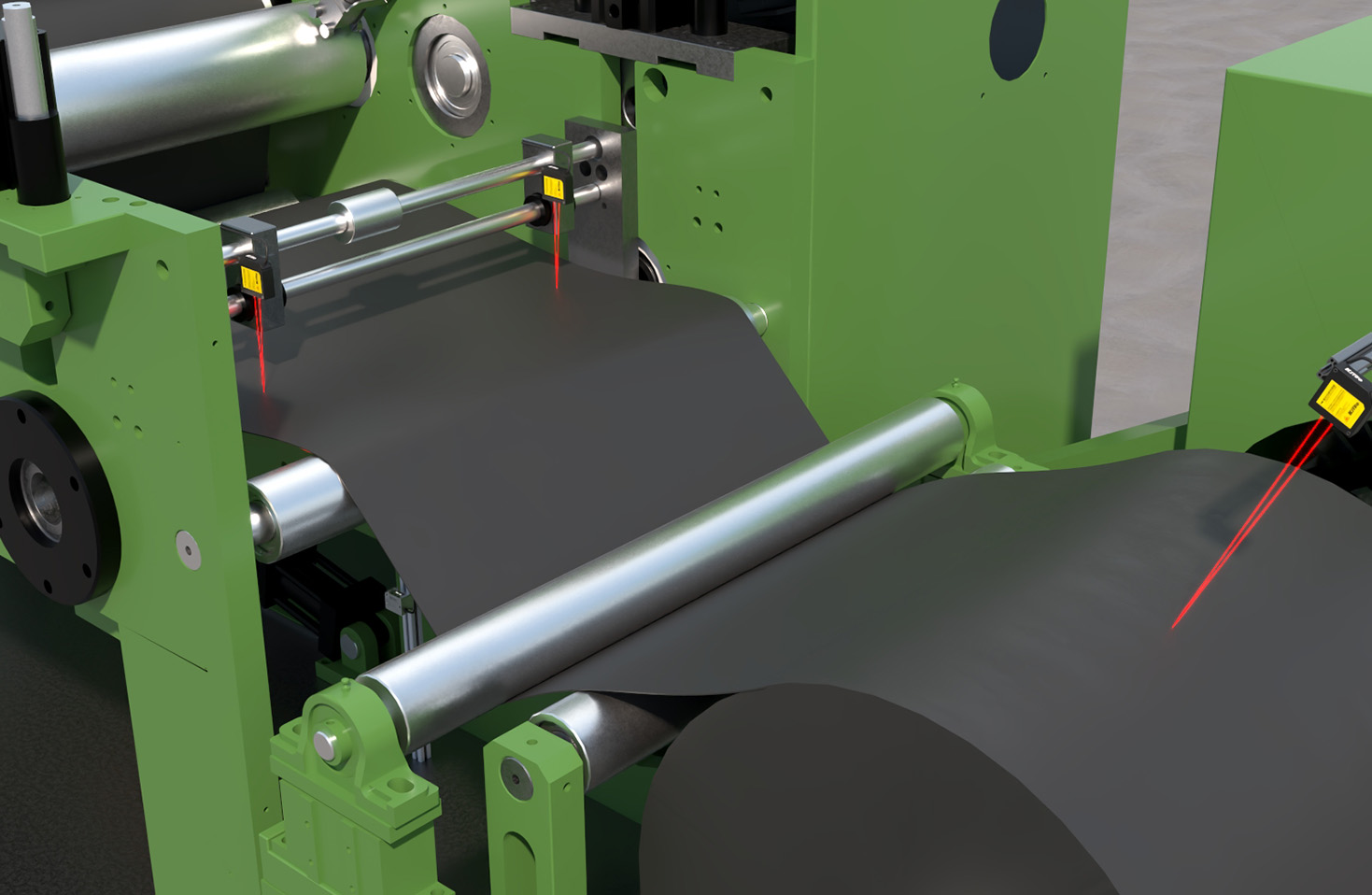
Looking forward, the integration of smart features is becoming standard. Modern micro laser sensors offer diagnostic data such as signal strength, operating temperature, and contamination level warnings, enabling predictive maintenance. This connectivity aligns with Industry 4.0 initiatives, allowing sensors to become data points within a larger networked system for process optimization.
In conclusion, the micro retro-reflective laser sensor represents a sophisticated fusion of optics, electronics, and mechanical design. It delivers a unique combination of precision, long-range capability, and spatial efficiency that is indispensable for modern automated systems. By providing consistent and accurate object detection in demanding and space-constrained environments, these sensors play a pivotal role in enhancing quality control, increasing production throughput, and ensuring operational reliability across advanced manufacturing sectors. Engineers and system integrators continue to adopt them as a go-to solution for applications where standard sensors simply cannot meet the stringent requirements of size, accuracy, and environmental resilience.