Proximity sensors are indispensable components in modern industrial automation, serving as the silent sentinels that detect the presence or absence of objects without physical contact. Their operation hinges on the emission of an electromagnetic field or a beam of electromagnetic radiation, and the subsequent detection of changes in the field or return signal. This non-contact detection capability makes them ideal for harsh environments, high-speed applications, and scenarios where object preservation is critical. The primary types include inductive, capacitive, ultrasonic, and photoelectric sensors, each with distinct operating principles and ideal use cases.
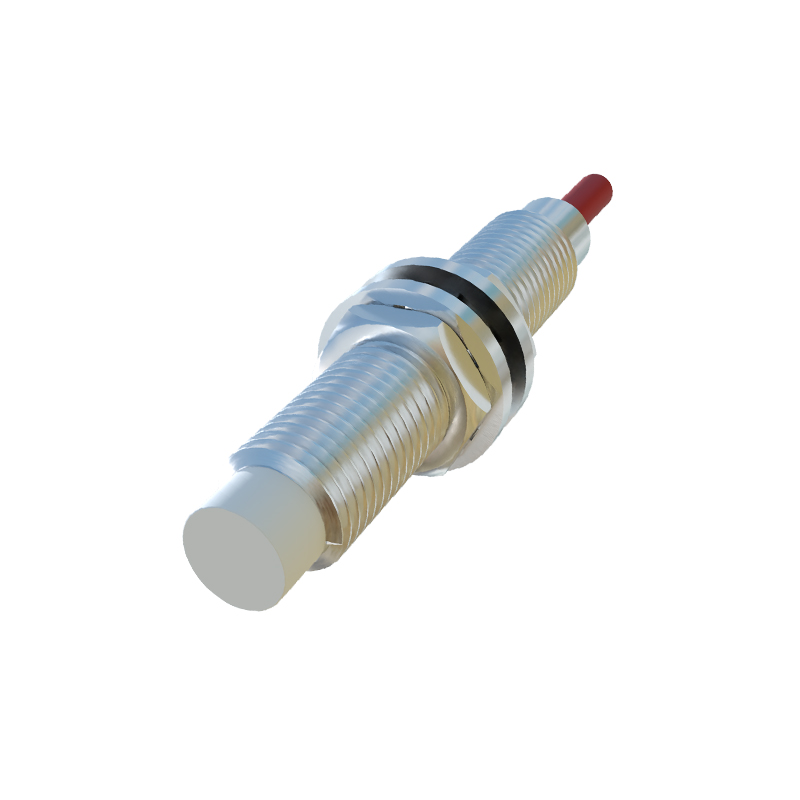
Inductive proximity sensors are the workhorses of metal detection. They generate an oscillating electromagnetic field from a coil. When a metallic object enters this field, eddy currents are induced on the object's surface, causing a change in the oscillation amplitude. This change is detected by the sensor's circuitry, triggering an output signal. These sensors are renowned for their robustness, high switching frequency, and immunity to environmental factors like dust, oil, and moisture. Typical applications include position sensing of metal parts on conveyor belts, end-of-travel detection in cylinders, and revolution counting on gear teeth.
Capacitive proximity sensors, in contrast, can detect both metallic and non-metallic materials, including liquids, powders, plastics, and wood. They function by generating an electrostatic field. Any object with a dielectric constant different from air will alter the capacitance of the sensing circuit when it approaches the active face. This sensitivity to a wide range of materials makes them versatile. They are commonly used for level detection in tanks (liquid or granular solids), material handling of non-metallic products, and presence detection of glass or plastic containers.
Ultrasonic sensors operate on a time-of-flight principle. They emit high-frequency sound waves (typically beyond human hearing) and measure the time interval between the emission and the reception of the reflected echo. The distance to the target is calculated based on the speed of sound. These sensors excel at precise distance measurement and can detect objects regardless of color, transparency, or material, though their performance can be affected by temperature, humidity, and the object's sound-absorbing properties. Key applications include palletizing, loop control in web processes, and fill level control in large silos.
Photoelectric sensors utilize light, usually infrared, visible red, or laser, to detect objects. They consist of an emitter and a receiver. The three main operating modes are through-beam, retro-reflective, and diffuse reflective. Through-beam models offer the longest sensing ranges and highest reliability, as the object breaks a beam between separate emitter and receiver units. Retro-reflective types use a single unit and a reflector, detecting an object when it interrupts the beam. Diffuse sensors rely on the reflection of light from the object itself, making them simpler to install but with shorter ranges. Photoelectric sensors are ubiquitous in packaging, material handling, and assembly line automation for counting, positioning, and small-part detection.
Selecting the appropriate proximity sensor requires careful consideration of several parameters. The sensing range, or nominal range (Sn), is the distance at which a standard target triggers the sensor under specified conditions. Factors like target material, size, and shape significantly influence the effective sensing distance, often requiring a derating factor. The housing material (e.g., nickel-plated brass, stainless steel, PBT plastic) must be chosen to withstand the chemical and mechanical stresses of the environment. Output types include NPN/PNP transistor outputs (sourcing or sinking), analog outputs (4-20 mA, 0-10V), and IO-Link for smart sensor communication. Environmental ratings, particularly the Ingress Protection (IP) code (e.g., IP67, IP69K), are critical for ensuring reliable operation in washdown or outdoor settings.
The integration of Industry 4.0 and IIoT (Industrial Internet of Things) has propelled the evolution of smart proximity sensors. Sensors with IO-Link communication provide far more than a simple switch signal. They enable remote parameter configuration, real-time diagnostics (like signal strength, temperature warnings, and contamination alerts), and process data transmission. This predictive maintenance capability minimizes unplanned downtime and optimizes production processes. Furthermore, the miniaturization of sensors continues, allowing for installation in increasingly confined spaces without sacrificing performance.
In conclusion, proximity sensors form a foundational layer of industrial sensing. Their selection and application demand a clear understanding of the target object's properties, the environmental conditions, and the specific requirements of the control task. From simple presence detection to complex distance measurement, the right proximity sensor enhances system reliability, safety, and efficiency. As technology advances, their intelligence and connectivity will further solidify their role as critical data points within the smart factory ecosystem.