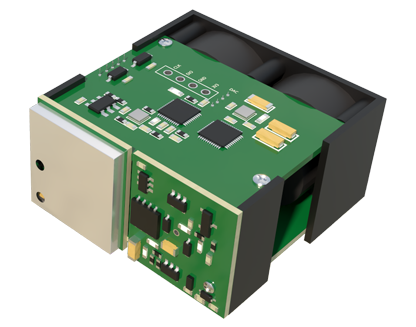
In the rapidly evolving landscape of industrial automation, Thunder Laser sensor components stand out as critical elements driving precision, efficiency, and reliability. These advanced sensors, leveraging cutting-edge laser technology, are engineered to meet the rigorous demands of modern manufacturing, robotics, and quality control systems. At their core, Thunder Laser sensors utilize coherent light beams to detect, measure, and monitor various parameters with exceptional accuracy. The fundamental principle involves emitting a laser pulse or continuous wave toward a target, then analyzing the reflected signal to determine distance, displacement, speed, or presence. This non-contact method minimizes wear and tear, ensuring longevity and consistent performance in harsh environments such as high-temperature factories or dusty warehouses.
Key components of Thunder Laser sensors include the laser diode, optics, photodetector, and signal processing unit. The laser diode serves as the light source, typically operating in the infrared or visible spectrum, chosen for its stability and low divergence. Optics, comprising lenses and mirrors, focus the laser beam precisely onto the target, enhancing resolution and reducing interference. The photodetector captures the reflected light, converting it into an electrical signal that is then processed by sophisticated algorithms in the signal processing unit. This unit filters noise, compensates for environmental factors like ambient light, and outputs actionable data in real-time. Innovations in these components have led to sensors with micron-level precision, high-speed response times up to milliseconds, and robust immunity to electromagnetic interference.
Applications of Thunder Laser sensor components span diverse industries. In automotive manufacturing, they enable precise alignment of parts and inspection of weld seams. In logistics, they facilitate automated guided vehicle (AGV) navigation and package sorting by detecting object positions accurately. The semiconductor industry relies on them for wafer alignment and thickness measurement, where even nanometer deviations can impact product quality. Additionally, in aerospace, these sensors contribute to structural health monitoring and assembly verification, ensuring safety and compliance with stringent standards. The adaptability of Thunder Laser sensors is further enhanced by modular designs, allowing customization for specific tasks such as 3D scanning or color recognition.
Advantages over traditional sensors, like inductive or capacitive types, are significant. Thunder Laser sensors offer superior accuracy, often down to 0.1% of the measurement range, and can operate over longer distances without physical contact. They are less affected by material properties, making them suitable for detecting transparent or shiny objects that challenge other technologies. Moreover, their digital interfaces, such as IO-Link or Ethernet/IP, enable seamless integration into Industry 4.0 frameworks, supporting predictive maintenance and data analytics. However, challenges persist, including sensitivity to extreme environmental conditions like heavy fog or direct sunlight, which can scatter laser beams. Ongoing research focuses on adaptive optics and multi-wavelength lasers to mitigate these issues, pushing the boundaries of what's possible in sensor technology.
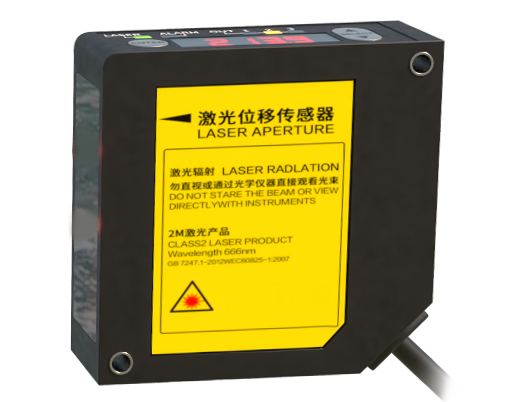
In conclusion, Thunder Laser sensor components represent a pinnacle of engineering innovation, essential for advancing industrial automation. By combining precision optics, reliable electronics, and intelligent software, they empower systems to achieve higher productivity and quality. As industries continue to embrace smart manufacturing, the role of these sensors will only grow, driven by trends toward miniaturization, energy efficiency, and enhanced connectivity. For engineers and decision-makers, investing in Thunder Laser technology means staying ahead in a competitive global market, where every micron and millisecond counts toward operational excellence.