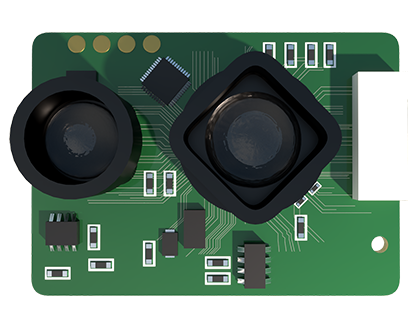
In the realm of industrial automation, process control, and advanced robotics, the demand for reliable, high-precision distance measurement over extended ranges is ever-growing. Among the plethora of sensing technologies available, laser sensors capable of operating at a 50-meter range represent a critical category, bridging the gap between short-range proximity sensors and ultra-long-range LiDAR systems. This article provides a technical exploration of 50m laser sensors, examining their operating principles, key performance parameters, and diverse industrial applications.
At their core, 50-meter laser sensors operate primarily on the time-of-flight (ToF) principle. The sensor emits a modulated laser pulse or a continuous-wave laser beam towards a target. A high-speed photodetector within the sensor then captures the reflected light. By precisely measuring the time delay between emission and reception (Δt), the sensor calculates the distance (d) using the formula d = (c * Δt) / 2, where c is the speed of light. For a 50-meter range, the time delay involved is on the order of a few hundred nanoseconds, necessitating extremely precise timing circuitry. Alternative phase-shift measurement techniques for continuous-wave lasers are also employed, offering high accuracy at the cost of more complex signal processing. The laser used is typically in the visible red or, more commonly, infrared spectrum (e.g., 850nm or 905nm), ensuring eye safety (Class 1 or Class 2) while providing sufficient power for long-range detection.
Several critical specifications define the performance and suitability of a 50m laser sensor for a given task. Measuring Range is explicitly defined, with 50m being the nominal maximum. The Accuracy and Repeatability are paramount; high-end models can achieve sub-millimeter repeatability even at maximum range, though accuracy is often specified as ±10mm to ±50mm depending on environmental conditions and target surface. Resolution indicates the smallest detectable change in distance. The Laser Spot Size increases with distance due to divergence; a sensor with low beam divergence maintains a smaller spot at 50m, allowing for more precise measurement of small objects. Response Time or measurement frequency, often in the kHz range, determines how quickly the sensor can update the distance value, crucial for dynamic applications. Furthermore, robust Environmental Robustness is non-negotiable. These sensors must maintain performance despite ambient light interference (sunlight, factory lighting), temperature fluctuations, dust, fog, and vibrations. Advanced models incorporate background light suppression algorithms and protective housings with high IP ratings (e.g., IP67).
The application landscape for 50m laser sensors is vast and varied. In Warehousing and Logistics, they are indispensable for automated storage and retrieval systems (AS/RS), providing precise positioning of cranes and shuttles within high-bay racks. They enable accurate pallet dimensioning and volume measurement at loading docks. In Construction and Civil Engineering, these sensors facilitate the monitoring of structural deformations, verticality of tall buildings, and level control on large construction sites. Mobile Machinery and AGVs (Automated Guided Vehicles) utilize them for long-range obstacle detection, navigation, and docking guidance in large facilities like ports or airports. Within Process Industries, they are used for measuring the fill level of bulk solids in large silos or monitoring the sag of conveyor belts over long spans. Security and Perimeter Protection systems deploy them as part of intrusion detection setups, creating an invisible tripwire over a 50-meter line.

Selecting the right 50m laser sensor requires a careful analysis of the application's needs against the sensor's specifications. Key considerations include the target's surface properties (dark, shiny, or matte), the required speed of measurement, the operating environment's harshness, and the necessary communication interface (analog output, IO-Link, Ethernet/IP, PROFINET). It is also crucial to understand that the stated 50m range is typically for a target with a high reflectance (e.g., 90% white). For low-reflectance surfaces, the effective range decreases, and manufacturers provide derating curves. Integration involves proper mounting to minimize vibration, alignment using the visible pilot laser (if available), and configuration via software to set measurement windows, filtering, and output parameters.
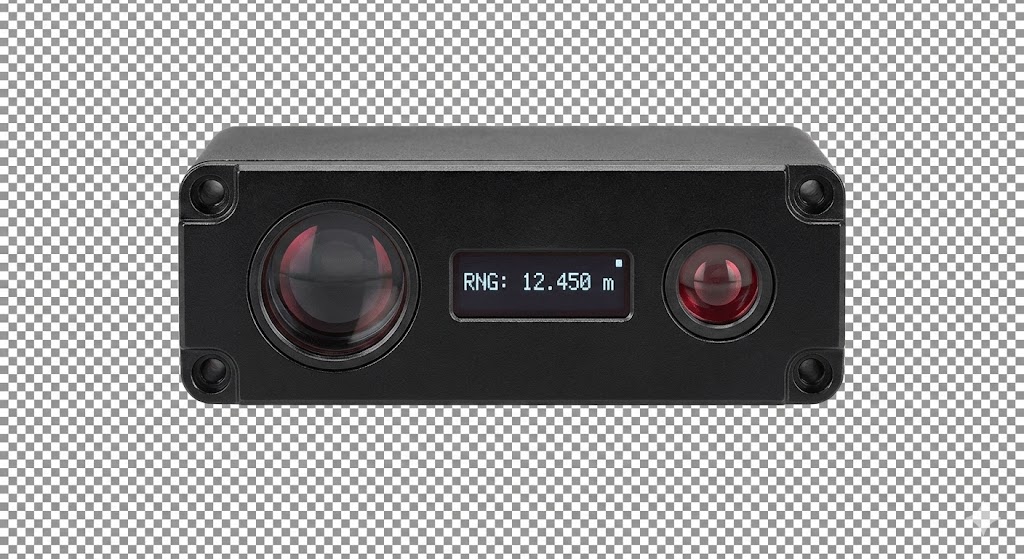
In conclusion, 50-meter laser sensors are sophisticated instruments that deliver critical long-range, non-contact measurement capabilities to modern industry. Their evolution continues, driven by advancements in laser diode efficiency, faster and more sensitive detectors, and smarter onboard signal processing. As industries push towards greater autonomy and precision, the role of these long-range optical sentinels will only become more central, enabling safer, more efficient, and more intelligent operational environments.