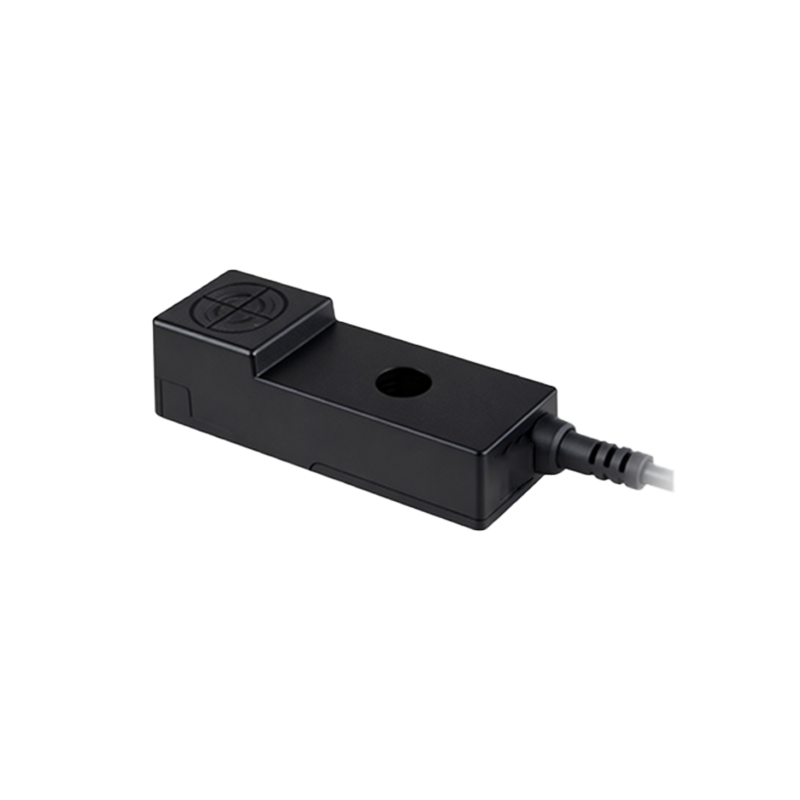
In modern industrial facilities, ensuring personnel safety around hazardous machinery and automated systems is a critical priority. Proximity sensors, specifically designed to detect human presence and prevent unauthorized access to dangerous zones, play a vital role in safeguarding workers. These devices are engineered to create an invisible protective field, triggering immediate safety responses when breached.
The core principle involves using various sensing technologies to monitor designated areas. Common types include capacitive, inductive, and photoelectric sensors, each suited for different applications. Capacitive sensors detect the presence of a person based on changes in an electrical field, making them ideal for non-metallic environments. Inductive sensors, responding to metallic objects, are often used on metal guards or doors. Photoelectric safety sensors, including light curtains and laser scanners, create beams of light; an interruption indicates an intrusion, prompting machinery to halt or enter a safe state.
A key standard governing these devices is IEC 61496, which specifies requirements for Electro-Sensitive Protective Equipment (ESPE). Compliance ensures the sensor system provides reliable performance, including fail-safe operation and resistance to environmental interference like dust, vibration, or ambient light. Integration with safety controllers and programmable logic controllers (PLCs) is essential. When a sensor detects an intrusion, it sends a signal to the safety circuit, which then executes a predefined safety function, such as stopping a robotic arm, disabling a press, or activating an alarm.
Selecting the appropriate sensor requires careful analysis of the risk assessment for the specific machinery. Factors include the required detection range, resolution (the smallest object to be detected), response time, and the environmental conditions. For instance, a light curtain guarding a stamping press must have a fine resolution to detect fingers and a fast response time to stop the press before contact occurs. Regular testing and maintenance are mandatory to ensure ongoing reliability. This includes functional checks, alignment verification for optical systems, and inspection for physical damage.

Advanced systems now incorporate Safety over EtherCAT (FSoE) or PROFIsafe protocols, enabling seamless communication within Industry 4.0 frameworks. These allow for detailed diagnostics and integration with broader factory safety networks. Ultimately, the correct application of personnel prevention proximity sensors forms a fundamental layer in a comprehensive safety strategy, protecting workers while maintaining operational efficiency. Their implementation not only meets regulatory obligations but also fosters a culture of safety within the industrial workplace.