In the world of industrial automation and control systems, capacitive proximity sensors are indispensable components for detecting a wide range of materials, from metals and plastics to liquids and granular substances. Their operation relies on changes in capacitance caused by the presence of an object within their electromagnetic field. However, a critical aspect often overlooked in their installation and operation is proper grounding. This article delves into the technical reasons why grounding is not merely a recommendation but a fundamental requirement for the reliable and safe performance of capacitive proximity sensors.
Firstly, grounding serves as a primary method for mitigating electrical noise and interference. Industrial environments are typically saturated with electromagnetic interference (EMI) generated by motors, variable frequency drives (VFDs), welding equipment, and other high-power electrical devices. This noise can capacitively couple into the sensor's circuitry, leading to erratic behavior such as false triggering, reduced sensing range, or complete operational failure. By establishing a low-impedance path to earth ground, unwanted noise currents are diverted away from the sensitive electronic components of the sensor. This ensures that the sensor responds only to the intended changes in capacitance caused by the target object, thereby enhancing signal integrity and measurement accuracy.
Secondly, grounding is paramount for safety. Capacitive sensors, like all electrical equipment, are subject to potential insulation failures or fault conditions. A proper grounding connection, typically through the sensor's metal housing or a dedicated grounding terminal, provides a safe path for fault currents to flow in the event of an internal short circuit or live-part contact with the enclosure. This prevents the sensor housing from becoming energized at a dangerous voltage level, protecting personnel from electric shock hazards. Compliance with international safety standards, such as IEC 60204-1, explicitly mandates the grounding of electrical equipment enclosures, making it a non-negotiable practice.
Furthermore, effective grounding stabilizes the reference potential for the sensor's internal electronics. A capacitive sensor measures capacitance relative to a stable electrical reference point. In floating or ungrounded systems, this reference can become unstable due to accumulated static charges or potential differences between the sensor and the controlled machinery. This instability directly translates to measurement drift and unreliable detection. A solid ground connection anchors this reference point to earth potential, providing a stable baseline for consistent and repeatable operation. This is especially crucial in applications involving non-conductive materials, where the sensor's sensitivity is finely tuned, and any reference drift can cause significant performance degradation.
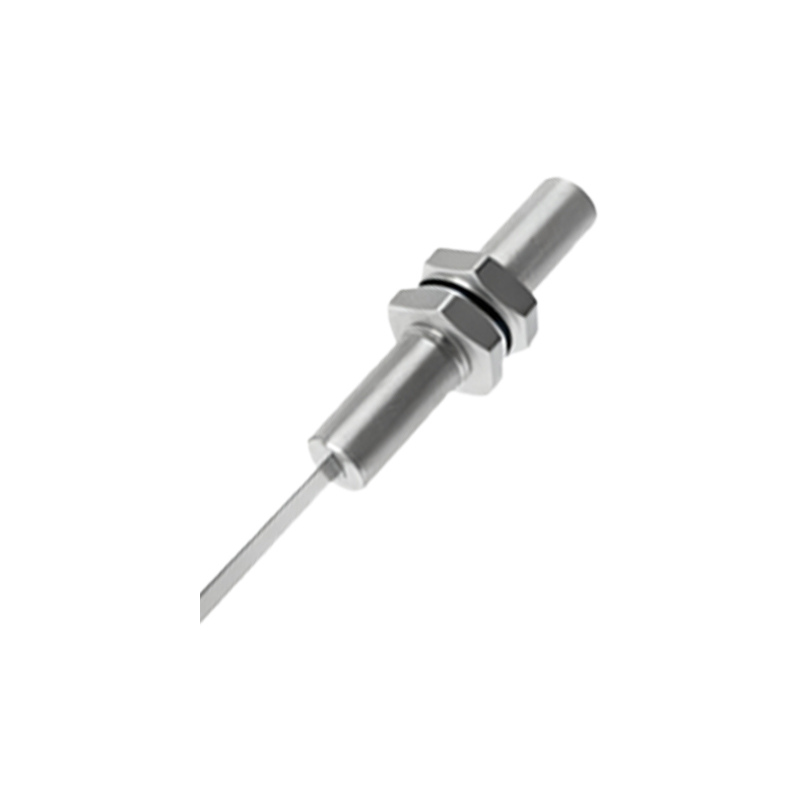
The method of grounding is as important as the act itself. For optimal performance, a dedicated grounding conductor should be used, ensuring a connection to a verified earth ground point with low impedance. The grounding wire should be as short and thick as possible to minimize its inductance and resistance. In sensor arrays or systems with multiple sensors, a star-point grounding scheme is often preferable to avoid creating ground loops, which can themselves become sources of interference. It is also essential to differentiate between functional grounding (for noise immunity) and protective grounding (for safety); while often achieved through the same conductor, both purposes must be satisfied.
Neglecting proper grounding can lead to a host of operational issues that are difficult to diagnose. Intermittent faults, reduced sensing distances, and unexplained output toggling are common symptoms. Troubleshooting such problems often leads technicians down time-consuming paths, replacing sensors or controllers, when the root cause is simply an inadequate or missing ground connection. Therefore, incorporating a robust grounding strategy from the initial design and installation phase is a best practice that prevents downtime and ensures long-term system reliability.
In conclusion, grounding capacitive proximity sensors is a critical engineering practice that underpins their functional accuracy, stability, and safety. It is a fundamental defense against electromagnetic interference, a cornerstone of personnel protection, and a prerequisite for stable electrical reference. Engineers and technicians must treat grounding not as an optional accessory but as an integral part of the sensor system, adhering to established electrical codes and manufacturer guidelines to ensure optimal performance in demanding industrial environments.