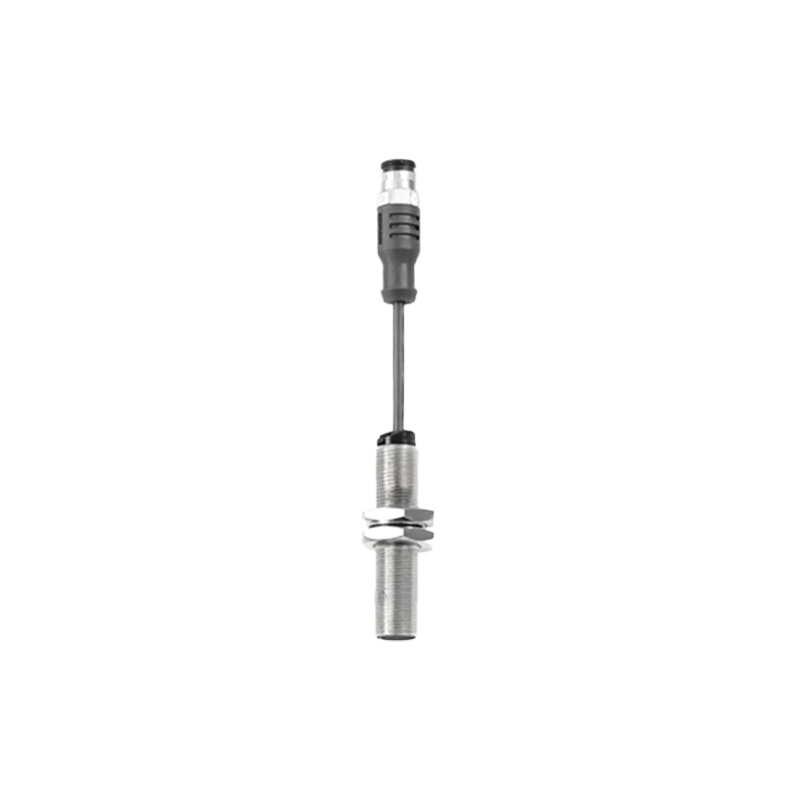
Proximity sensors are indispensable components in modern industrial automation, offering non-contact detection capabilities that enhance efficiency, safety, and reliability across various applications. These sensors function by emitting an electromagnetic field or beam and detecting changes in the field when an object enters its sensing range. Unlike mechanical switches, proximity sensors operate without physical contact, minimizing wear and tear and extending operational lifespan.
One primary function of proximity sensors is object detection. They can identify the presence or absence of metallic or non-metallic objects, depending on the sensor type. Inductive proximity sensors, for instance, detect ferrous metals like iron and steel, making them ideal for metal detection in manufacturing lines. Capacitive sensors, on the other hand, can sense both metallic and non-metallic materials, including liquids and plastics, enabling versatile use in packaging or material handling.
Another critical function is position sensing. Proximity sensors provide precise feedback on the position of machine parts, such as cylinders in pneumatic systems or robotic arms. By monitoring end positions, they ensure accurate movement and alignment, reducing errors in assembly processes. For example, in automotive manufacturing, sensors verify the correct placement of components like engine blocks or doors, maintaining quality control.
Speed monitoring is also a key application. Proximity sensors can measure rotational or linear speed by detecting objects passing at regular intervals. In conveyor systems, they track the speed of items, allowing for synchronization with other machinery. This function supports process optimization, as adjustments can be made in real-time to prevent bottlenecks or jams.
Safety enhancement is a vital function, particularly in hazardous environments. Proximity sensors act as safety devices by detecting unauthorized access to dangerous zones, such as around heavy machinery. When an object or person encroaches, the sensor triggers an emergency stop, preventing accidents. This aligns with industry standards like ISO 13849 for machine safety, ensuring compliance and protecting personnel.
Additionally, proximity sensors contribute to counting and sorting tasks. In logistics, they count packages on belts or sort items based on material type. By integrating with programmable logic controllers (PLCs), sensors enable automated decision-making, streamlining operations in warehouses or distribution centers. This reduces manual labor and increases throughput.
Environmental adaptability is another advantage. Many proximity sensors are designed to withstand harsh conditions, including extreme temperatures, moisture, and vibrations. For instance, in the oil and gas industry, sensors operate reliably in corrosive or explosive atmospheres when housed in appropriate enclosures. This durability ensures continuous performance in demanding settings.
Innovations in proximity sensor technology have expanded their functions. Smart sensors with IO-Link communication provide diagnostic data, such as temperature readings or wear indicators, facilitating predictive maintenance. This reduces downtime by alerting operators to potential issues before failures occur. Moreover, miniaturized sensors allow installation in tight spaces, broadening their applicability in compact machinery.
In summary, proximity sensors serve multiple functions: object detection, position sensing, speed monitoring, safety enhancement, counting, and sorting. Their non-contact nature, combined with robustness and adaptability, makes them essential for industrial automation. As industries evolve toward Industry 4.0, these sensors will continue to play a pivotal role in enabling smarter, more efficient systems. By leveraging their capabilities, engineers can optimize processes, improve safety, and drive innovation in various sectors, from manufacturing to energy.