In the vast and intricate world of industrial automation and control systems, sensors act as the fundamental sensory organs, providing critical data on the physical state of machinery and processes. Among these, proximity sensors hold a position of paramount importance due to their non-contact detection capabilities. This article delves into the precise classification of proximity sensors within the broader sensor taxonomy and explores their operational principles and typical industrial applications.
Fundamentally, a proximity sensor is a device that detects the presence or absence of an object within a specified range without any physical contact. This key characteristic places it firmly within the overarching category of non-contact sensors. Unlike limit switches or tactile sensors that require mechanical interaction, proximity sensors use various physical fields to sense objects, thereby eliminating mechanical wear, increasing reliability, and enabling high-speed operation. Within the non-contact sensor family, proximity sensors are further distinguished by their primary function: detecting the proximity or presence of a target object.
The classification of proximity sensors is primarily based on their underlying detection technology. The most common and widely used types include:
1. Inductive Proximity Sensors: These sensors generate an electromagnetic field. When a metallic object (ferrous or non-ferrous) enters this field, it induces eddy currents within the object, causing a change in the sensor's oscillation amplitude. This change is detected and converted into a switching signal. Inductive sensors are exclusively for detecting metals. Their effective range, or sensing distance, is influenced by the target metal's type and size. They are ubiquitous in manufacturing for tasks like part counting, position verification on conveyor belts, and detecting the end position of a cylinder rod in pneumatic systems.
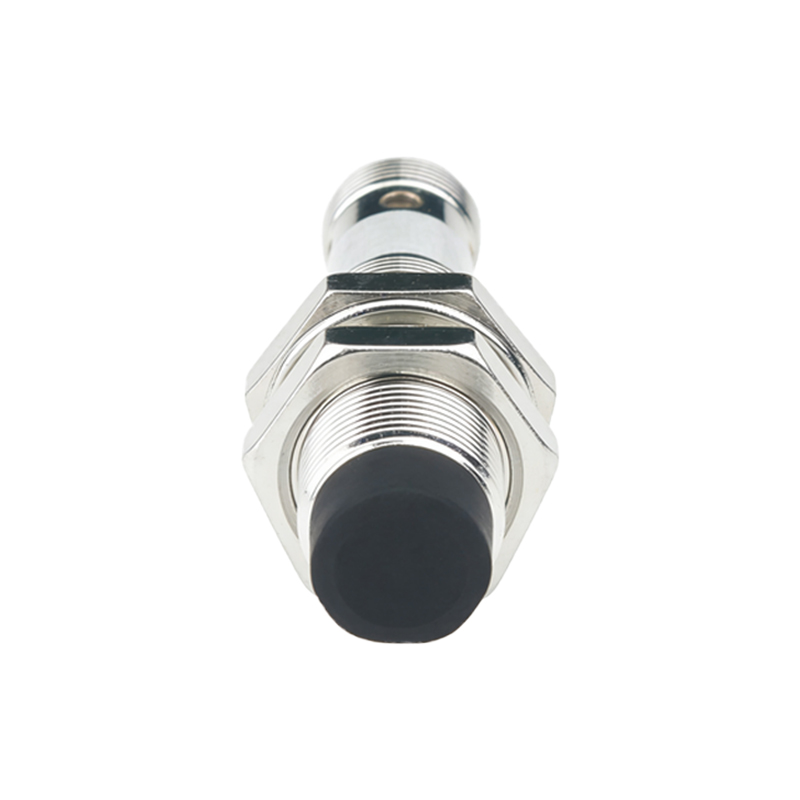
2. Capacitive Proximity Sensors: These sensors function by generating an electrostatic field. They can detect both metallic and non-metallic materials such as plastics, glass, wood, liquids, and granular substances. The principle involves the target object altering the capacitance of the sensor's internal circuit when it approaches the active surface. This change in capacitance triggers the output. Capacitive sensors are ideal for level detection in tanks (for liquids or powders), material handling, and detecting non-metallic objects on production lines.
3. Ultrasonic Proximity Sensors: Operating on a sonar-like principle, these sensors emit high-frequency sound waves and evaluate the echo reflected from a target object. They measure the time interval between sending the signal and receiving the echo to determine the distance to the object. Ultrasonic sensors can detect a wide variety of materials, regardless of color, transparency, or surface texture, and are effective over longer ranges. Common applications include distance measurement, pallet stacking height control, and liquid level sensing in harsh environments where other sensors might fail.
4. Photoelectric Sensors: While often considered a distinct category, many photoelectric sensors (specifically diffuse-reflective types) perform proximity sensing functions. They emit a beam of light (visible red, infrared, or laser) and detect changes in the received light intensity caused by the presence of an object. They are highly versatile for detecting objects of different materials, colors, and sizes at varying distances. Applications range from bottle detection on filling lines to registration mark sensing in printing.
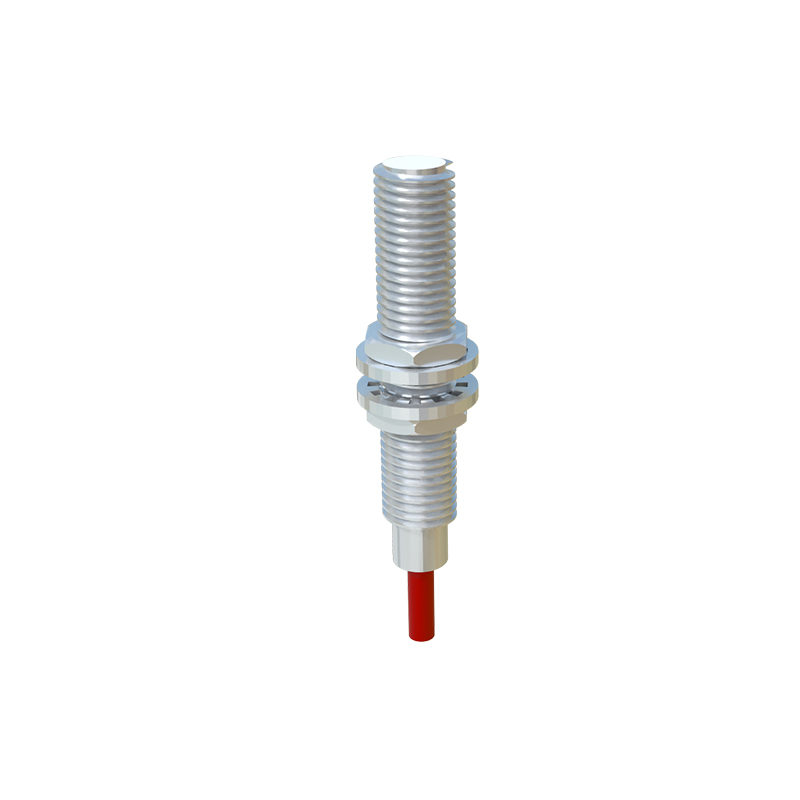
5. Magnetic Proximity Sensors (Reed Switches or Hall Effect): These sensors detect the presence of a permanent magnet. They are often used in conjunction with a magnet mounted on a moving part, such as a pneumatic cylinder piston. When the magnet approaches, it activates the sensor. They are renowned for their simplicity, reliability, and ability to operate in sealed environments, making them perfect for position feedback in hydraulic and pneumatic cylinders.
From an application and electrical output perspective, most industrial proximity sensors are classified as digital or discrete sensors, providing a simple ON/OFF (or HIGH/LOW) signal to a Programmable Logic Controller (PLC) or other control unit. This contrasts with analog sensors, which provide a continuous range of values. The standard output configurations are typically PNP (sourcing) or NPN (sinking) transistor outputs, though some models offer analog current (4-20mA) or voltage (0-10V) outputs for distance-proportional signaling.
In conclusion, proximity sensors are a critical sub-category of non-contact, discrete sensors within the industrial automation landscape. Their classification hinges on their detection technology—inductive, capacitive, ultrasonic, photoelectric, or magnetic—each best suited for specific material types and environmental conditions. The selection of the correct proximity sensor type is a crucial engineering decision, directly impacting the efficiency, reliability, and safety of automated systems. Understanding this classification empowers engineers and technicians to design and maintain robust control systems that form the backbone of modern manufacturing, packaging, and material handling operations.