In industrial automation, manufacturing, and harsh environment applications, proximity sensors play a critical role in non-contact detection of objects. Among these, waterproof proximity sensors are essential for reliable operation in wet, dusty, or washdown conditions. Understanding their classification standards is vital for engineers and system designers to select the appropriate sensor for specific operational demands. This article outlines the primary classification standards based on protection ratings, sensing technology, output types, housing materials, and installation methods.
The most fundamental classification for waterproof proximity sensors is based on international protection (IP) ratings, as defined by IEC standard 60529. The IP rating consists of two digits: the first indicates protection against solid particles, and the second denotes protection against liquids. For waterproof sensors, the second digit is of paramount importance. Common ratings include IP67, IP68, and IP69K. An IP67-rated sensor is protected against temporary immersion in water up to 1 meter for 30 minutes, making it suitable for occasional splashes or brief submersion. IP68 offers continuous immersion under conditions specified by the manufacturer, often at greater depths and durations. IP69K, defined by DIN 40050-9, provides protection against high-pressure, high-temperature water jets, typically used in food processing or heavy industrial cleaning environments. Selecting the correct IP rating ensures longevity and prevents failure due to water ingress.
Beyond ingress protection, proximity sensors are classified by their underlying sensing technology. Inductive sensors are widely used for detecting metallic objects. They generate an electromagnetic field and react to changes caused by conductive materials. Capacitive sensors can detect both metallic and non-metallic objects (such as plastics, liquids, or wood) by sensing changes in capacitance. Ultrasonic sensors use sound waves to detect objects and measure distance, functioning well in environments with moisture or vapor, provided the transducer face is kept clean. Each technology has distinct advantages; inductive sensors offer high precision for metals, capacitive sensors are versatile for various materials, and ultrasonic sensors provide excellent range and are less affected by target color or transparency.
Output configuration is another key classification criterion. The primary output types are digital (discrete) and analog. Digital outputs, including NPN (sinking), PNP (sourcing), and Namur (intrinsically safe for hazardous areas), provide a simple on/off signal when an object is within the sensing range. Analog outputs, such as 4-20 mA or 0-10 V, deliver a continuous signal proportional to the distance to the target, enabling precise position monitoring. Additionally, sensors may feature IO-Link communication, a digital point-to-point serial connection that enables advanced parameter setting, diagnostics, and process data exchange, enhancing Industry 4.0 integration.
The construction and housing material significantly impact a sensor's suitability for waterproof applications. Common materials include stainless steel (e.g., 303, 304, or 316 grades), brass with nickel plating, and engineering plastics like PBT or PPS. Stainless steel housings, particularly grade 316, offer superior corrosion resistance against chemicals and saltwater, ideal for marine, pharmaceutical, or chemical industries. Plastic housings are lightweight, resistant to many corrosive substances, and often used in food and beverage applications. The choice of material must consider not only waterproofing but also chemical compatibility, mechanical strength, and temperature resistance.
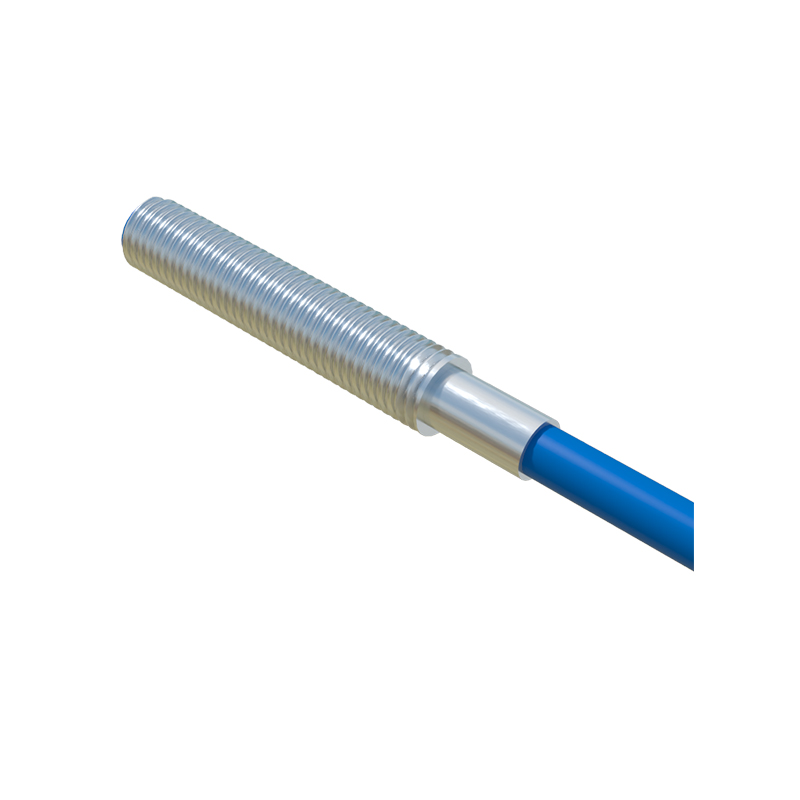
Installation and form factor also define sensor classes. Standard cylindrical shapes (e.g., M8, M12, M18, M30 threaded barrels) are common, with varying sensing ranges. Rectangular or block-style sensors offer alternative mounting options in space-constrained areas. Some sensors are designed with built-in cables, while others feature quick-disconnect (QD) connectors, which themselves must be rated appropriately for the environment (e.g., IP67 or IP69K). The sensing face design is crucial; a flush-mounted sensor can be embedded in metal without interference, while non-flush models offer longer sensing ranges but require clearance around the active face.
When specifying a waterproof proximity sensor, engineers must synthesize all these classification aspects. A comprehensive selection process involves: determining the required IP rating based on exposure to water, pressure, and temperature; choosing the sensing technology compatible with the target material; selecting an output type that interfaces with the control system (PLC); specifying a housing material that withstands environmental chemicals and physical stress; and deciding on a form factor and installation method that fits the mechanical design. Adherence to standards such as IEC, UL, or ATEX (for explosive atmospheres) further ensures safety and reliability.
In conclusion, waterproof proximity sensors are not a monolithic product category. Their classification is multidimensional, rooted in international standards and practical engineering requirements. A clear understanding of IP ratings, sensing principles, output signals, construction materials, and mechanical designs empowers professionals to make informed decisions. This ensures optimal sensor performance, reduces downtime in challenging conditions, and contributes to the