Proximity sensors, often unseen yet integral components, fundamentally belong to the expansive and critical domain of industrial automation and sensing technology. Their primary function is to detect the presence or absence of an object within a predetermined distance without any physical contact. This non-contact operation is their defining characteristic, placing them squarely within the family of non-contact sensors, a key subgroup of industrial sensors.
The classification of proximity sensors is primarily based on their underlying detection principle. The most common types include inductive, capacitive, ultrasonic, and photoelectric sensors. Inductive proximity sensors belong to the category of electromagnetic sensing devices. They generate an electromagnetic field and are exclusively used for detecting metallic objects. When a metal target enters this field, it induces eddy currents, causing a change in the sensor's oscillation amplitude, which triggers a switching signal. These sensors are workhorses in manufacturing, used for tasks like counting metal parts, detecting piston position in cylinders, or ensuring machine safety.
Capacitive proximity sensors, on the other hand, belong to the broader class of electrostatic sensors. They can detect both metallic and non-metallic materials, including liquids, powders, plastics, and wood. They operate by generating an electrostatic field. The presence of any object with a dielectric constant different from air alters the capacitance of the sensor's circuit, leading to detection. This makes them indispensable in industries like food processing, chemical handling, and packaging, where material variety is high.
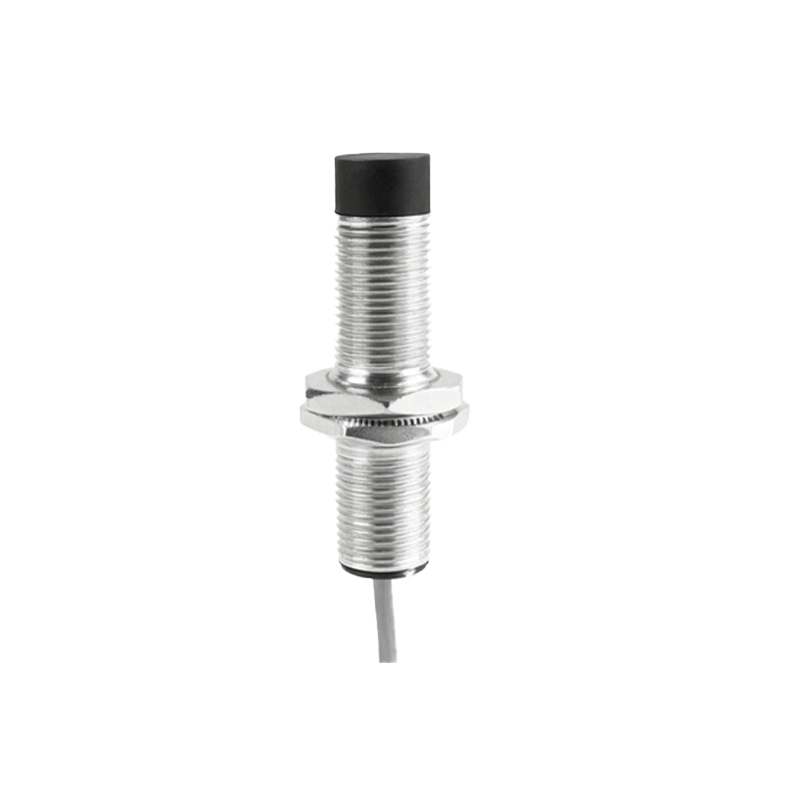
Ultrasonic proximity sensors utilize sound waves beyond the human hearing range. They belong to the sonic or acoustic sensing technology category. These sensors emit high-frequency sound pulses and measure the time taken for the echo to return. This time-of-flight principle allows them to measure distance as well as simple presence detection, making them suitable for challenging environments with dust, smoke, or varying light conditions, such as in material handling or level sensing in tanks.
Photoelectric sensors, a highly versatile group, belong to optoelectronic technology. They operate by emitting a beam of light (visible, infrared, or laser) and detecting changes in the received light intensity. They are further subdivided into through-beam, retro-reflective, and diffuse-reflective types. Their ability to detect objects of almost any material over long ranges makes them prevalent in packaging, automotive assembly, and conveyor belt systems.
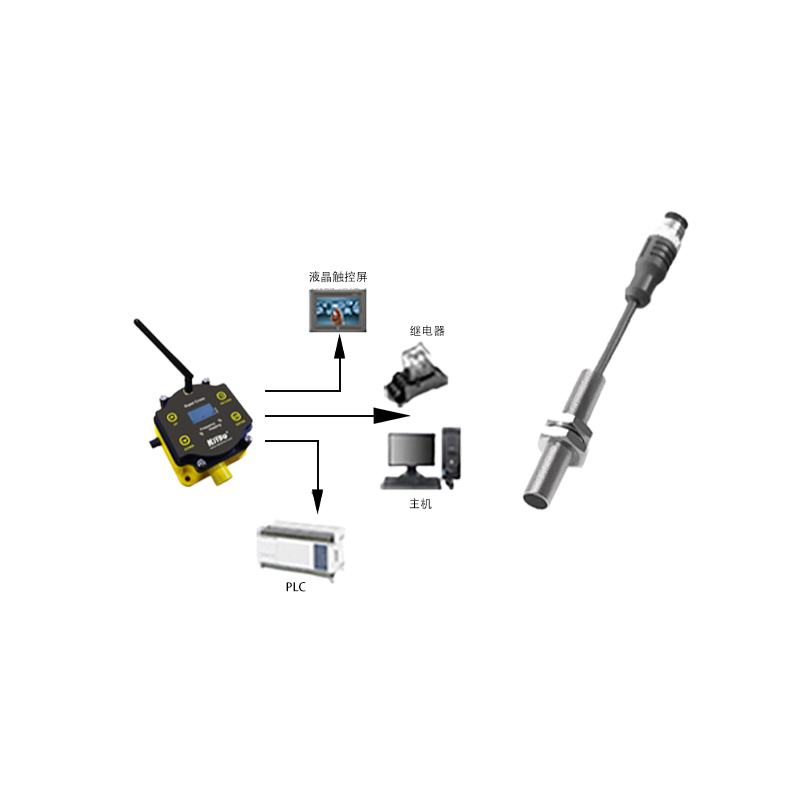
The overarching "belonging" of proximity sensors is to the ecosystem of automated control systems. They act as the "eyes" of a programmable logic controller (PLC) or other control unit. The digital or analog signal they provide is a fundamental input that dictates machine logic—starting, stopping, sequencing, or sorting operations. This role is crucial in enabling the high-speed, precise, and reliable operation characteristic of modern assembly lines, robotic cells, and automated guided vehicles (AGVs).
Beyond heavy industry, proximity sensor technology belongs to and enables countless consumer electronics applications. The sensor that turns off a smartphone screen during a call, the automatic faucet in public restrooms, and the reversing assist systems in vehicles all rely on miniaturized proximity sensing principles. Here, they belong to the field of human-machine interface (HMI) and user experience enhancement.
In conclusion, proximity sensors cannot be confined to a single narrow category. Their technical essence belongs to applied physics, utilizing electromagnetic, electrostatic, acoustic, and optical principles. Their functional purpose places them firmly within industrial automation, robotics, and control engineering. Their implementation spans across electromechanical system design. As a foundational enabling technology, they belong to the very infrastructure of modern manufacturing, logistics, and even daily convenience, providing the essential data point of "object here" or "object gone" that drives automated decision-making in an increasingly automated world.